


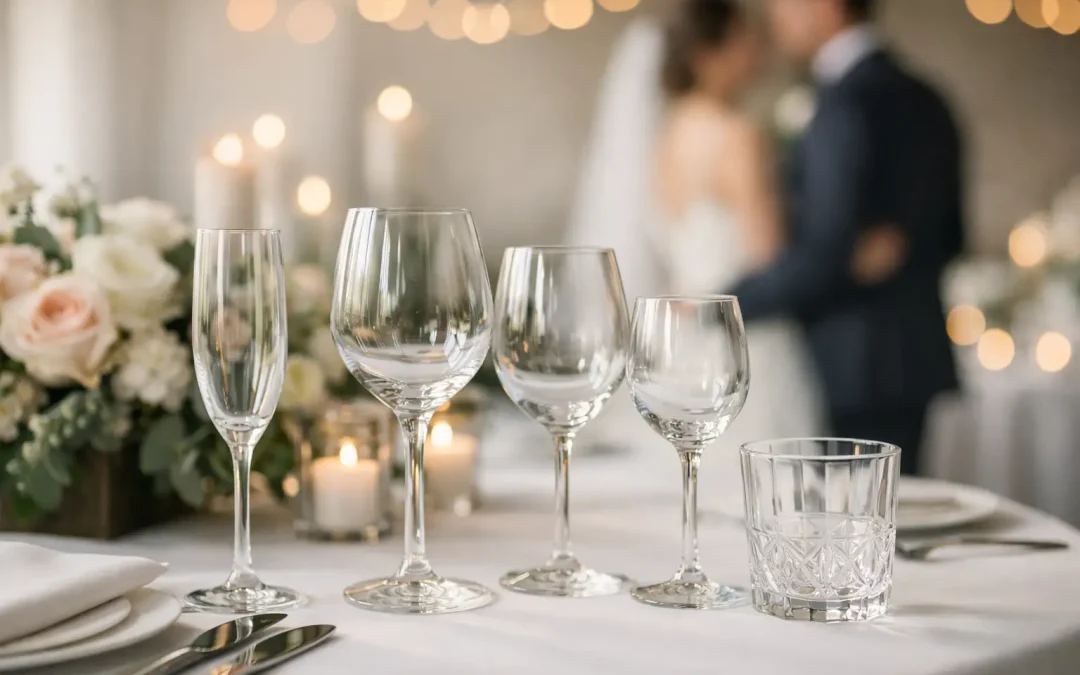
A beautiful table can lose its polish fast when the glassware is off. Too few pieces, and service feels clunky. Too many, and the setting starts to look crowded, especially at weddings where every place setting, tray pass, and bar moment needs to work together. If you are asking what glassware do wedding guests need, the answer is less about having every possible glass and more about matching the glassware plan to the way your celebration will actually unfold.
For most weddings, guests need three core drinking moments covered: water, wine, and bar service. From there, the right count depends on your menu, whether you are serving a signature cocktail, how formal dinner will be, and whether guests will stay seated for much of the evening or move between cocktail hour, dinner, and dancing. A well-planned assortment feels generous and refined without becoming excessive.
What glassware do wedding guests need at a minimum?
At a minimum, most wedding guests need a water glass and a wine glass at their seat, plus access to bar glassware for cocktail hour and the reception. That baseline works well for a wide range of celebrations, from polished coastal tented weddings to ballroom receptions with plated dinners.
If you are serving both red and white wine tableside, you may choose separate wine glasses for each. If the event is more relaxed, one universal wine glass often keeps the tabletop cleaner and still feels elevated. This is one of the easiest places to balance style and practicality.
For couples planning a full open bar, guests will also need the appropriate glassware for mixed drinks, spirits, beer, or sparkling pours. Those pieces do not always need to be preset at the table. In many cases, they are best managed through the bar so guests only take what they are actually using.
Start with the flow of the wedding
The smartest way to decide what glassware guests need is to map the event in order. Think about what guests will be holding during cocktail hour, what will already be on the table at dinner, and what happens once dancing begins.
Cocktail hour usually calls for versatile bar glassware. A rocks glass handles many signature cocktails beautifully, from an old fashioned to a spritz variation served over ice. A stemmed coupe or flute may make sense if you are greeting guests with sparkling wine or a passed champagne tower moment. If beer is part of the offering, pint glasses or another beer-appropriate option may need to be included as well.
Dinner service changes the equation. Guests need a reliable water glass throughout the meal, and they often need at least one wine glass if wine is being poured or left on the table. If your caterer is pouring a champagne toast at dinner, the toast can happen in the existing wine glass or a dedicated flute, depending on the look you want and the scale of service.
After dinner, the bar tends to take over again. That is why weddings do not always require every glass type at every place setting. The best plans keep the table intentional and let the bar handle the rest.
The core glassware categories that matter most
Water glasses are nonnegotiable. They are used from the moment guests sit down, they anchor the place setting visually, and they support service throughout the evening. A classic water goblet feels formal, while a clean tumbler can suit a more modern or relaxed design. Either can work beautifully if it complements the dinnerware and overall table styling.
Wine glasses come next. For many weddings, one all-purpose wine glass is enough. It works for red, white, and even sparkling if the service style is streamlined. If the reception is especially formal or wine is a featured part of dinner, separate red and white glasses can create a more tailored experience. That said, more stems are not always better. On smaller tables, too many glasses can make the setting feel cramped.
Bar glasses should be chosen based on the menu rather than habit. A rocks glass is one of the most flexible options and covers a large share of cocktails. A highball glass is useful if the bar menu leans toward mixed drinks with soda, tonic, or juice. If the signature drink is a martini or coupe-based cocktail, that specific silhouette may be worth incorporating because presentation is part of the experience.
Champagne glasses are often overestimated. If there is a formal sparkling welcome or a dedicated toast moment, flutes or coupes may be appropriate. If not, guests do not necessarily need a separate champagne glass in addition to wine and water. Many receptions can simplify here without sacrificing elegance.
How formal service affects what wedding guests need
The more formal the dinner service, the more likely guests are to need multiple pieces of glassware at their seat. A plated meal with wine pairings naturally requires a different setup than a buffet reception with one signature cocktail and a casual bar.
For black-tie or highly structured weddings, a seat may include a water glass, a white wine glass, a red wine glass, and sometimes a champagne glass. That can look stunning when the table is generously sized and the service is carefully choreographed. It can also feel excessive if the menu does not support it.
For semi-formal weddings, many hosts prefer a simpler and more versatile arrangement: one water glass and one wine glass preset at each place setting, with all other beverages handled at the bar. This approach keeps the table elegant, supports smooth dinner service, and avoids overordering.
For more relaxed receptions, especially outdoor celebrations, guests may need only a water glass at their seat while wine and cocktails are offered from service stations or the bar. In Charleston-area settings where heat and humidity can influence the guest experience, keeping water readily available matters just as much as selecting the prettiest stemware.
What glassware do wedding guests need for different bar styles?
A full bar needs more variety than a limited bar, but that does not mean you need an oversized rental order. It means the glassware should fit the beverage program.
If you are offering beer, wine, and two signature cocktails, the mix can stay fairly tight. You may need wine glasses, water glasses, rocks glasses, and perhaps highballs, depending on the cocktails. If one signature drink is sparkling, coupes or flutes may also come into play.
If the bar includes neat pours, top-shelf spirits, and a broad cocktail list, guests may benefit from more specialized pieces. Even then, flexibility still matters. Many luxury weddings intentionally narrow the bar menu because a focused selection often feels more polished and easier to execute.
If the event uses specialty stations, such as a raw bar or caviar presentation, consider how those moments interact with drink service. Sometimes guests need an additional small glass for a chilled accompaniment. Other times, it is better to keep the tabletop restrained and let those experiences happen in designated areas.
Avoiding the two most common mistakes
The first mistake is assuming more glassware automatically looks more upscale. In reality, an overcrowded place setting can feel fussy and impractical. Guests need room for dinnerware, flatware, bread plates, menu cards, and florals. Glassware should support the table, not compete with it.
The second mistake is planning only for aesthetics and not for operations. If guests carry a cocktail from hour to hour, if the bar is far from the dining space, or if the catering team needs quick resets, those details affect quantity and type. A glassware plan should look beautiful and work smoothly under real event conditions.
This is where an experienced rental partner becomes valuable. The right team can help align the number of glasses, the service style, and the visual tone so the event feels easy for guests and effortless for the host.
A practical rule of thumb for most weddings
For a typical wedding reception, a strong starting point is one water glass and one wine glass per seated guest, plus enough bar glassware to support cocktail hour and reception service based on your final drink menu and guest count. Add specialty glasses only when the menu or service format clearly calls for them.
If there is a champagne toast, decide whether it truly needs its own glass. If both red and white wine will be poured during dinner, consider whether separate stems are worth the extra tabletop space. If your signature cocktail is central to the experience, choose a glass that gives it presence.
That balance is usually what creates the most polished result. Not the biggest assortment. Not the most formal possible setup. Just the right pieces, in the right places, for the way your wedding will actually be hosted.
When glassware is chosen with intention, guests may never think about it directly, and that is often the best outcome. They simply enjoy a drink that feels right in hand, a table that feels considered, and an evening that moves with grace from the first toast to the last dance.