


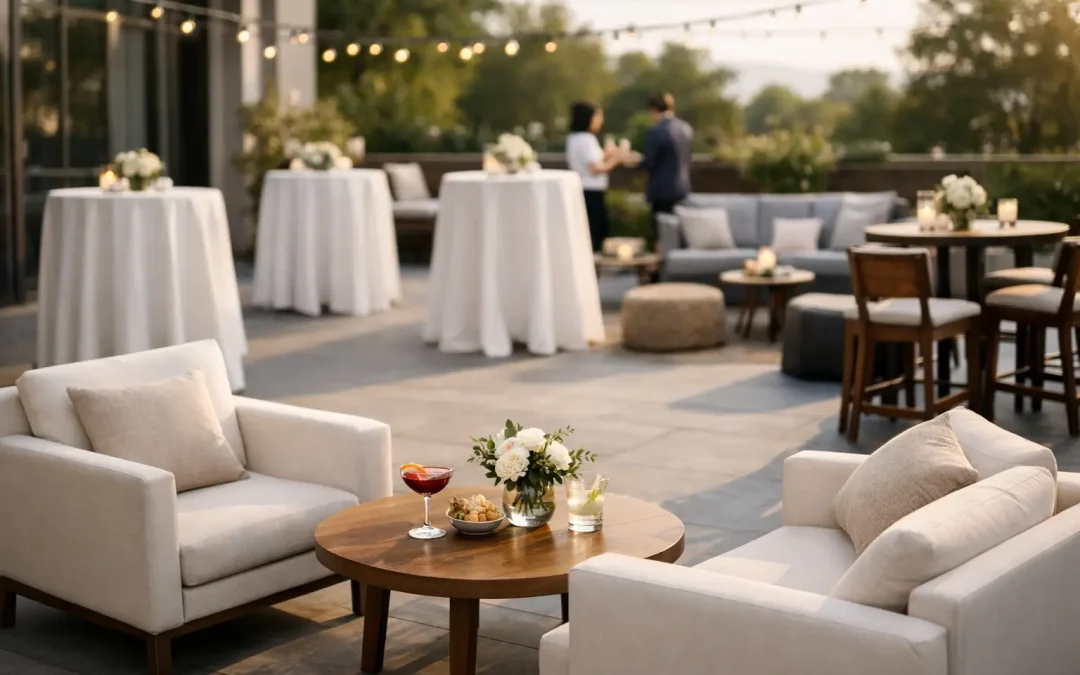
The fastest way to make cocktail hour feel crowded, awkward, or underwhelming is to treat it like an afterthought. A strong cocktail hour furniture layout does more than fill space – it sets the tone between ceremony and reception, gives guests a place to gather, and keeps service moving without making the room feel overly staged.
For weddings, corporate events, and private celebrations, this part of the floor plan needs to balance atmosphere with function. Guests should be able to get a drink without waiting in a traffic jam, find a spot to perch without hunting for a chair, and move naturally through the space. When the layout is right, the event feels gracious. When it is not, even beautiful furniture can feel misplaced.
What a cocktail hour furniture layout needs to do
Cocktail hour is not a seated dinner, but it is also not an empty room with a bar in the corner. It works best when the furniture creates gentle structure. That usually means offering a mix of standing zones, casual seating, and clear paths between key elements like the bar, passed appetizers, and entry points.
The goal is variety, not excess. Too many pieces can make the space feel tight and overly precious. Too few can leave guests balancing plates and drinks with nowhere to settle. A thoughtful layout gives people options. Some guests want to stand and mingle. Others want a quieter seat for a conversation, a place to rest between events, or a comfortable perch for older family members.
That mix matters even more at events where cocktail hour carries visual weight. If guests are spending a full hour in the space, the furniture should feel intentional enough to support both hospitality and design.
Start with movement before furniture
Before choosing lounges, cocktail tables, or bar placement, start with circulation. Think about how guests will arrive, where they will first look, and what they need within the first few minutes. If the bar is the main draw, it should be visible and accessible. If passed hors d’oeuvres are central to service, servers need open lanes that do not force them through packed seating clusters.
This is where many layouts go wrong. Hosts focus on filling a room evenly, when cocktail hour usually needs negative space. Empty floor area is not wasted. It gives guests room to gather in small groups, pass one another comfortably, and make those natural micro-movements that keep an event from feeling stiff.
At outdoor events, movement deserves even more attention. Lawn surfaces, tent poles, weather shifts, and sunset timing can all affect where people naturally drift. In Charleston especially, heat and humidity can make guests favor shaded lounge areas and shorter walks between the bar and seating.
How to balance lounge seating and standing space
A polished cocktail hour furniture layout usually includes both. Lounge seating softens the room and brings a residential warmth that feels elevated, but it should not swallow the entire footprint. If every square foot is dedicated to sofas and club chairs, the event can start to feel more like a lobby than a celebration.
Standing-height tables are what keep cocktail hour social. They create easy touchdown points for drinks, encourage mingling, and help disperse guests across the space. They are especially useful near bars and food stations, where people want a place to pause without committing to a full seat.
The most effective approach is contrast. Use lounge groupings around the perimeter or in focal pockets, then let cocktail tables bridge the open center. That gives the room texture while keeping the middle active. It also prevents one common problem: guests claiming lounge pieces early and unintentionally turning a social hour into a seated one.
If the guest count is high, smaller lounge moments often work better than one oversized arrangement. Several seating clusters feel more inviting and support more organic conversation. They also spread people out, which helps the room breathe.
Bar placement changes everything
The bar is usually the strongest anchor in the layout, so its location shapes the entire experience. Tucking it into a far corner may seem tidy, but it often creates long, compressed lines and leaves the rest of the space underused. Centering it too aggressively can be just as challenging if it interrupts circulation.
In most venues, the bar performs best when it is easy to spot but does not block the main pathway. Think visible, not dominant. Guests should be able to approach from more than one side when possible, especially at larger events. That simple adjustment reduces congestion and allows the surrounding furniture to function as intended.
If there are two bars, resist placing them side by side for symmetry alone. Splitting them across the footprint often improves flow and keeps one side of the event from becoming overcrowded. The same principle applies to beverage stations or specialty activations. They should support circulation, not compete with it.
Cocktail hour furniture layout by event type
The right layout depends on what the hour needs to accomplish.
For weddings, cocktail hour often serves as a transition while the couple takes photos or the reception space is finalized. Guests need comfort, but they also need gentle entertainment through movement, conversation, and well-placed service. Here, a layered plan works well: one statement bar, several high-top tables, and a few lounge clusters that feel romantic without becoming too formal.
For corporate events, the layout often needs to support networking first. That usually means fewer deep lounge seats and more standing-height surfaces. People are more likely to circulate when they can set down a drink, exchange introductions, and move on naturally. Softer seating still has a place, but it should feel selective rather than dominant.
For private parties, the balance can lean more relaxed. Birthday dinners, showers, and holiday gatherings often benefit from slightly more seating and conversational groupings, especially if guests know one another well. Even then, keeping some open standing zones prevents the space from feeling static.
Scale matters more than style alone
Beautiful furniture can still feel wrong if the scale is off. Low-profile pieces may disappear in a grand venue. Oversized sectionals can overwhelm a smaller courtyard or tent. A good cocktail hour furniture layout considers ceiling height, room width, guest count, and the visual weight of each piece.
This is also where restraint becomes valuable. Not every event needs a large lounge installation. Sometimes a few well-placed sofas, paired chairs, and accent tables create more impact than filling the room with furniture. The best layouts look edited.
It helps to think in zones instead of individual items. A lounge grouping should read as one destination. A set of high-top tables should support standing conversation in a specific area. When every piece has a role, the room feels composed rather than scattered.
Details that make the layout feel finished
The furniture itself is only part of the experience. Spacing, sightlines, and tabletop support all affect whether the layout feels easy to use. Guests should not have to choose between holding a plate and holding a drink. Every seating cluster needs enough surfaces for glassware, and every standing area benefits from at least a few tables nearby.
Lighting matters too, particularly for late afternoon or evening events. A layout that feels airy in daylight can become hard to navigate after sunset if pathways and lounge areas are not thoughtfully lit. The same goes for weather planning. If cocktail hour is outdoors, furniture placement should account for sun exposure, breeze, and ground conditions.
This is where full-service planning has real value. A refined setup is not just about selecting attractive pieces. It is about knowing how they perform in an actual event environment, from garden ceremonies to waterfront receptions to indoor venue turnarounds. Republic Event Rentals approaches layout with that practical lens, which is often what separates a pretty plan from one that works beautifully in real time.
The best layouts feel effortless
Guests rarely comment on circulation patterns or seating ratios, but they absolutely feel them. They notice when they can move easily, find a drink quickly, and settle into conversation without hovering awkwardly. That ease is the mark of a successful cocktail hour furniture layout.
If you are planning one, think less about filling the room and more about shaping the experience. Give people a reason to linger, a place to gather, and enough breathing room for the event to unfold naturally. When the layout is considered from the start, cocktail hour becomes more than a transition – it becomes one of the most memorable parts of the celebration.
A well-planned space should make guests feel cared for before they ever notice why.