

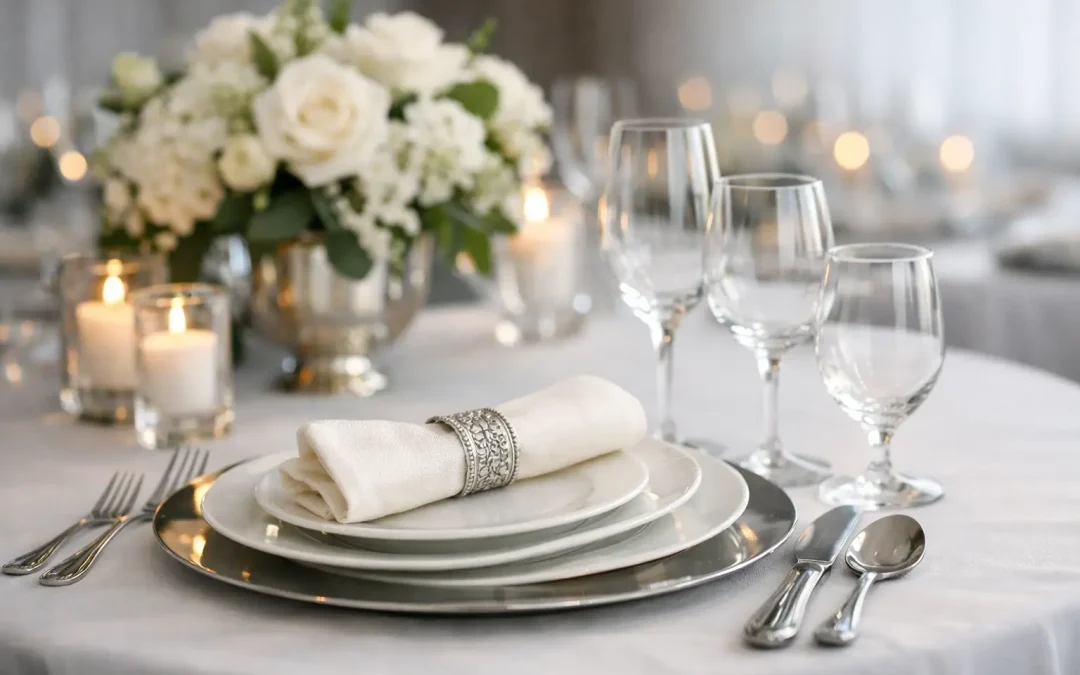
The table tells guests what kind of evening they’re walking into before the first course ever lands. A crisp charger, the right glassware, and a well-scaled plate can make a dinner feel polished and intentional. That is why a formal dinnerware rental guide matters for more than logistics – it shapes the entire guest experience.
For hosts planning weddings, seated corporate dinners, holiday gatherings, or milestone celebrations, dinnerware is rarely just dinnerware. It sets tone, supports service, and helps every other design choice make sense. The right rental plan keeps the table elegant without becoming fussy, and practical without looking generic.
What a formal dinnerware rental guide should help you decide
Most people start by choosing plates based on appearance alone. That makes sense at first, but formal table settings work best when style and function are considered together. A beautiful rimmed plate can look striking in photos, yet if it feels too oversized for the table or leaves no room for glassware, the setting starts to feel crowded.
A useful formal dinnerware rental guide should answer a few core questions. How many courses are being served? Will food be plated in the kitchen or served family-style? Is the look classic, modern, coastal, or black-tie? Are you hosting in a ballroom, under a tent, or in a private home where table size may vary? Those decisions affect not only what you rent, but how much you need and how the overall table will feel once guests are seated.
This is where professional guidance saves time. Formal settings depend on proportion. The relationship between chargers, dinner plates, salad plates, flatware, stemware, linens, and centerpiece scale matters more than any single item on its own.
Start with the service style, not the plate pattern
Before selecting a finish or color, define how the meal will be served. A plated dinner usually calls for a more structured setup. You may need chargers for presentation, dinner plates for the main course, salad or appetizer plates, dessert ware, and coordinated flatware for each course. Stemware often includes at least water and wine, and in some cases a champagne flute or coupe.
A buffet or station-style dinner can be a bit more flexible. You may still want a formal look at the table, but the number of pieces per guest can sometimes be reduced depending on the menu and flow of service. That said, simpler service does not always mean less dinnerware. If guests are moving through multiple stations, replacement plates or specialty pieces may still be necessary.
Family-style service has its own requirements. The table should feel generous, but not overloaded. Serving platters and bowls take up valuable space, so the place setting often needs a cleaner footprint. In that case, a refined dinner plate, thoughtfully chosen flatware, and carefully edited glassware can be more effective than a heavily layered setup.
Choosing the right dinnerware style for a formal event
Formal does not have to mean traditional in the strictest sense. For some events, formal looks like white porcelain with a subtle rim and polished flatware. For others, it may mean a more tailored contemporary setting with matte finishes, textured chargers, or softly tinted glassware. The goal is cohesion.
If your event design includes patterned linens, lush florals, or statement chairs, the dinnerware often benefits from restraint. Clean, classic plates allow the rest of the table to breathe. On the other hand, if the room is architecturally simple or the palette is intentionally minimal, dinnerware can carry more visual interest through shape, edge detail, or tone.
In coastal settings especially, there is often a temptation to make everything thematic. A better approach is usually to keep the look elevated and reference the setting with a light hand. Soft neutrals, delicate glassware, and polished textures tend to age better in photographs than overt motifs.
How many pieces do you actually need?
This is one of the most practical parts of any formal dinnerware rental guide, and one of the easiest places to over-order or under-order.
For a standard formal seated dinner, most hosts need a charger if the event is fully styled, a dinner plate, a salad or appetizer plate, dessert ware if dessert is served seated, appropriate flatware for each course, and at least two glasses per guest. Coffee service may add cups, saucers, and spoons. Bread service may require bread plates and butter knives. Suddenly a simple headcount turns into a layered inventory plan.
The exact quantity depends on service and timing. If your caterer is bussing and resetting during the event, the counts may differ from an event where every course requires fresh pieces held in reserve. Some menus also call for specialty items such as soup bowls, pasta plates, or coupe bowls. If late-night bites are served, that may be another category entirely.
It is also wise to account for staff needs and a modest cushion for breakage or last-minute adjustments. Not every event requires heavy overage, but formal events tend to run more smoothly when there is some margin built in.
A formal dinnerware rental guide for matching the full table
Dinnerware should never be selected in isolation. The best tables feel composed because every element relates to the next. Plate color affects linen choice. Flatware finish influences candle holders and serving pieces. Glassware shape can make the table feel either airy or visually dense.
This is especially true when guest tables are smaller or when centerpiece design is more elaborate. A wide charger paired with multiple glasses, layered napkins, menus, and full florals can leave very little negative space. Formal design still needs breathing room.
When planning the table, consider the full place setting at actual scale. A rental partner with a curated inventory can help you avoid combinations that look beautiful individually but feel busy together. That kind of editing is often what separates a pretty table from one that feels truly elevated.
Venue, weather, and local logistics matter more than most hosts expect
A formal indoor dinner and a formal tented dinner do not function exactly the same way. Wind, humidity, uneven surfaces, lighting, and access for setup all influence what works best. In Charleston, where outdoor celebrations and tented events are common, local conditions can affect everything from linen performance to glassware handling.
If your venue has limited staging space, that may impact how many backup pieces can be stored on-site. If the kitchen is temporary, your catering team may prefer service ware that supports efficient plating and clearing. If the event includes a long load-in path or historic property access rules, the timing and handling plan around rentals becomes even more important.
This is where full-service support adds real value. Delivery, setup, and breakdown are not just conveniences. They protect the design, reduce stress, and help the event run the way it was intended.
When to keep it simple and when to layer it up
Not every formal event needs the most elaborate possible place setting. A black-tie wedding with a multi-course plated dinner may call for full layering and a highly styled tabletop. A refined rehearsal dinner or executive client event may look better with fewer elements and stronger restraint.
The trade-off is usually between visual richness and table clarity. More layers create drama, but they can also make service more complex and tables feel crowded. A simpler setting can feel fresher and more modern, but if it is too sparse for the room or occasion, it may fall flat.
The best choice depends on the guest experience you want to create. If the evening is centered on ceremonial moments and a slower dining cadence, added layers often make sense. If conversation, movement, and ease are priorities, a cleaner table can still feel formal when the pieces are thoughtfully chosen.
Common rental mistakes to avoid
The most common mistake is waiting too long. Formal tabletop pieces, especially coordinated quantities for larger guest counts, are often among the first items to be reserved for peak dates.
Another issue is underestimating the importance of consistency. Mixing styles can work beautifully when done with intention, but piecing together mismatched inventory from multiple sources often creates small visual differences that become obvious on the table.
Hosts also sometimes focus on guest-facing pieces and forget the supporting items. Cake service, bar glassware, serving platters, coffee cups, and specialty accessories all contribute to a finished event. Formal dining rarely succeeds on plates alone.
Finally, do not assume every venue setup allows for the same design plan. A luxury table should still function comfortably for guests and service staff. If chairs are tight, tables are narrow, or centerpieces are oversized, the place setting may need to be refined.
Making the rental process easier
The smoothest rental experience usually starts with a clear vision and a few practical details: guest count, venue, meal style, and overall event tone. From there, an experienced rental team can help translate inspiration into actual counts and combinations that work in the room, not just on a mood board.
If you are planning a wedding, social dinner, or corporate event with elevated expectations, it helps to work with a partner who understands both design and execution. A company like Republic Event Rentals brings those two sides together, which is often what formal events need most.
A beautifully set table should feel effortless to the guest. Behind that ease is careful planning, smart editing, and the right rental support. When dinnerware is chosen with purpose, the whole event feels more gracious from the first toast to the final course.
The best place setting is not always the most elaborate one. It is the one that fits the evening so well that everything else around it feels naturally in place.