

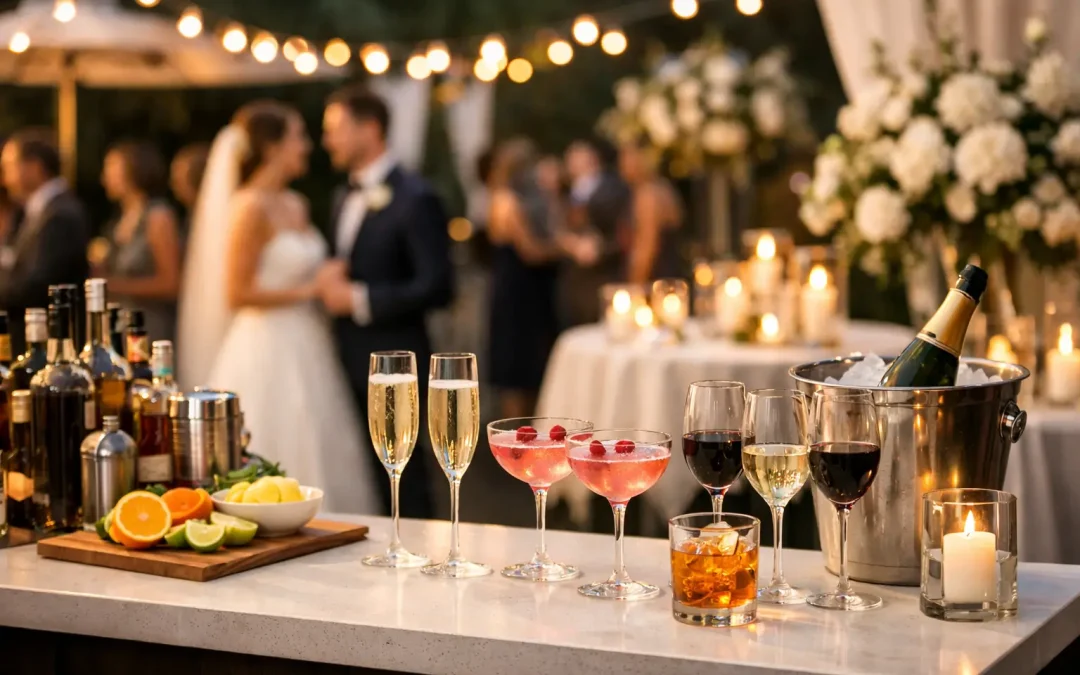
The bar does more than pour drinks. At a wedding reception, it becomes a gathering point, a design feature, and often one of the most photographed spaces in the room. Choosing the best reception bars for weddings means thinking beyond shape or finish. You are choosing how guests move, where conversations happen, and how the overall celebration feels from cocktail hour through the last dance.
A beautiful bar can anchor the room just as effectively as a dance floor or sweetheart table. But the right choice depends on your guest count, service style, venue layout, and the atmosphere you want to create. What looks stunning in a ballroom may not be the smartest option for a sailcloth tent, and a sleek modern bar may feel out of place at a garden reception built around softer, more traditional details.
What makes the best reception bars for weddings?
The best bars balance appearance with performance. Couples often start with the visual side, which makes sense. The bar should support the design direction of the wedding and feel intentional within the broader floor plan. That might mean a tailored white bar for a coastal formal reception, a warm wood bar for a tented celebration, or a paneled statement bar that feels almost architectural.
Still, beauty alone is not enough. A wedding bar needs to function well under pressure. Bartenders need room to work efficiently, guests need a clear place to queue without blocking traffic, and the setup has to suit the menu being served. Beer, wine, and signature cocktails require a different footprint than a full liquor bar with specialty glassware and garnishes.
That is why the best choice is rarely about a single style being objectively better than another. It is about fit. The right bar is the one that complements the room, supports service, and makes the reception feel easier for everyone in it.
Popular wedding bar styles and when they work best
A classic straight bar remains one of the most versatile options. It works well in nearly any venue and gives planners flexibility with placement. For smaller receptions, a single straight bar can be enough. For larger weddings, two matching straight bars often create better guest flow than one oversized station. The trade-off is that a straight bar can feel more utilitarian if it is not styled thoughtfully within the room.
Curved bars bring a softer, more elevated look. They can feel especially polished in formal receptions because they break up hard lines and create a more graceful focal point. Guests also tend to circulate around them naturally. The main consideration is space. Curved bars usually need a little more breathing room, so they are best when the floor plan is generous enough to let the shape stand out.
Paneled and architectural bars are often the strongest choice for couples who want the bar to read as part of the decor, not just a service station. These styles photograph beautifully and can help tie together upscale tabletop, lounge seating, and floral design. They are a smart fit when the reception has a layered, design-forward look. The only caution is balance. If every element in the room is highly decorative, an elaborate bar can start to compete rather than complement.
Wood bars bring warmth and texture, which makes them especially appealing for outdoor weddings, tented receptions, and venues with historic character. They feel welcoming and grounded without sacrificing polish. In Charleston-area settings, where natural light, gardens, and open-air celebrations are common, wood bars often feel especially at home. They pair well with woven accents, candlelight, and softer linen palettes.
White or light-toned bars offer a crisp, refined look that suits many wedding styles. They can feel formal, coastal, clean-lined, or romantic depending on how they are accessorized. One reason they remain so popular is that they do not visually weigh down the room. If your reception already includes dramatic floral installations or darker furnishings, a lighter bar can keep the overall palette feeling balanced.
Size matters more than most couples expect
One of the most common bar mistakes is choosing based only on style and underestimating capacity. A gorgeous bar that is too small for the guest count will create lines and frustration. A bar that is too large can dominate the room and pull attention away from the spaces where you actually want guests to gather.
As a general rule, larger weddings benefit from multiple bar points rather than a single central bar. This keeps guests from clustering in one area and helps service stay efficient. It can also support different experiences throughout the evening. One bar near cocktail hour, another near the dance floor, or a satellite bar for beer and wine can make the reception feel much more comfortable.
For smaller weddings, one thoughtfully placed bar is often enough, especially if the menu is streamlined. If you are serving a full open bar, however, even a more intimate guest count may need a larger service footprint than you expect. It depends on timing, drink complexity, and whether guests will all be ordering at once between major reception moments.
Placement can make or break the room
Even the best reception bars for weddings can underperform if they are placed poorly. The bar should feel easy to find without interrupting the natural movement of the event. If it is tucked too far away, guests may hesitate to use it. If it is too close to the dance floor, lines can spill into the party and create congestion.
The strongest layouts usually give the bar enough visibility to become part of the atmosphere while preserving room for circulation. In tented receptions, side placement often works better than centering the bar in the middle of the structure. In indoor venues, wall-adjacent positioning can be efficient as long as the queue does not cut across entrances, catering paths, or lounge areas.
This is where local venue knowledge matters. Ceiling heights, flooring conditions, power access, and service routes all affect what works well in practice. A beautiful concept on paper still has to perform on event day.
Matching the bar to the wedding style
A reception bar should feel connected to the rest of the event, not like a rental decision made in isolation. The finish, shape, and scale should support the broader design language. If the wedding is formal and black tie, cleaner silhouettes and tailored materials usually make more sense than rustic or heavily distressed finishes. If the celebration is garden-inspired and relaxed, warmth and texture may feel more natural than something high-gloss and ultra-modern.
Glassware and surrounding rentals also play a role. A bar can feel far more elevated when it is paired with the right back bar, cocktail tables, lounge pieces, and service accessories. The most polished setups are cohesive. Nothing feels random, even if the look itself is relaxed.
That is one reason full-service rental support is so valuable. When the bar is selected as part of a larger rental plan, the entire reception tends to feel more intentional. Republic Event Rentals approaches bars this way, as part of the guest experience and overall environment rather than a stand-alone piece.
Practical details couples should not overlook
A great-looking bar still needs practical support. Ice storage, bartender workspace, waste management, glassware staging, and access for restocking all need to be considered early. These are not glamorous details, but they affect service speed and guest experience almost immediately.
Outdoor weddings deserve extra planning. Heat, humidity, wind, and uneven ground can all influence bar selection and placement. Materials that look perfect indoors may be less ideal in open-air conditions, and service areas often need additional infrastructure to stay polished through the evening.
It is also worth considering what the bar will look like before and after peak service. The best setups maintain their appearance even when busy. That may mean enough surface area to avoid clutter, thoughtful placement of bar tools, or a layout that hides the more utilitarian aspects of beverage service from guest view.
How to choose with confidence
If you are deciding between several options, start with three questions. First, how many guests need to be served, and how quickly? Second, what role should the bar play visually within the reception? Third, what does the venue realistically support?
Those answers usually narrow the field quickly. A statement bar may be the right move if the room needs a focal point. A simpler bar may be smarter if the reception already has many visual moments competing for attention. Multiple smaller bars may serve guests better than one large installation, even if the single-bar concept looks cleaner in a rendering.
The best wedding bar is not necessarily the trendiest or the most expensive. It is the one that fits the event with ease, looks polished from every angle, and helps hospitality feel effortless. When that balance is right, guests may not talk about the bar in technical terms, but they will feel the difference all night long.
A well-chosen reception bar has a quiet kind of impact. It supports the flow, sharpens the design, and gives people one more reason to settle in, raise a glass, and stay awhile.