

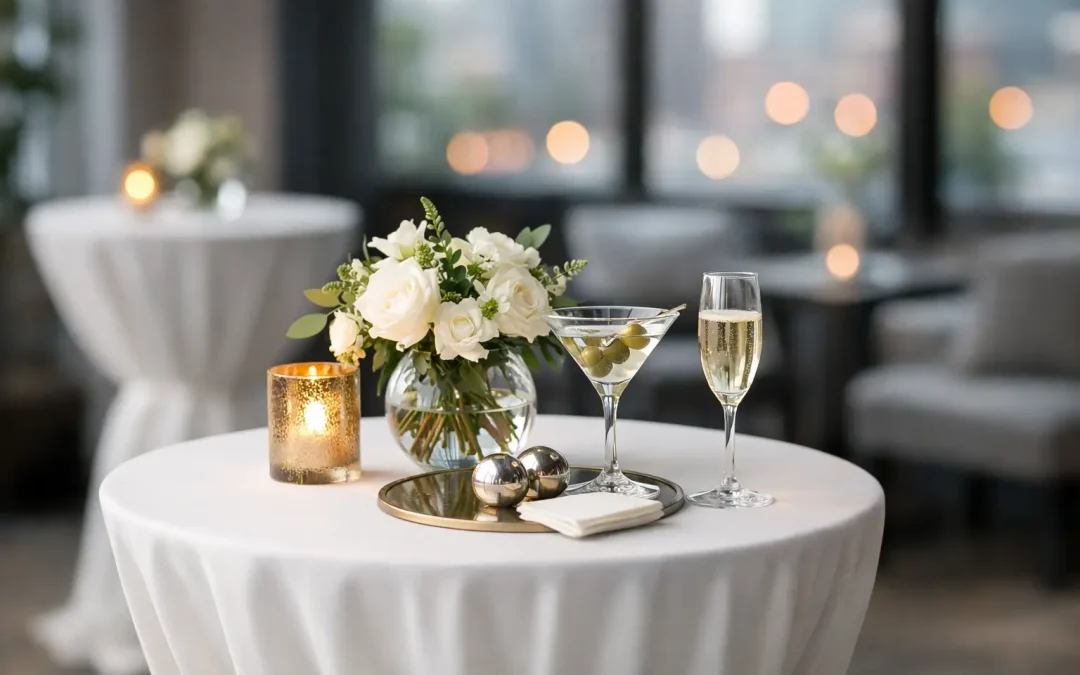
A cocktail table can quietly carry a room or make the whole layout feel unfinished. Guests notice when these small gathering spots feel intentional – when the linen has the right drape, the floral is scaled correctly, and the tabletop leaves enough space for an actual drink. If you are wondering how to style cocktail tables for a wedding, party, or corporate event, the goal is not to overdecorate. It is to create a setting that feels easy, attractive, and inviting from every angle.
Cocktail tables do a specific job at an event. They encourage conversation, support drinks and small plates, and help shape the flow of the room. Because they are functional first, styling them well requires restraint. A beautiful table that guests cannot comfortably use is not really successful styling.
How to style cocktail tables with purpose
Start by deciding what role the cocktail tables are playing in the event design. At a formal reception, they may add height variation and create elegant mingling zones. At a corporate event, they often need to feel clean, branded, and efficient. At a shower or holiday gathering, they can bring softness and personality without competing with the main dining setup.
That purpose should guide every design choice that follows. If the room already has dramatic floral installations, the cocktail tables can stay understated. If the venue is more architectural and minimal, these tables may need a bit more warmth through linen, candlelight, or texture. Styling is rarely about adding more. It is about balancing what the room already has.
Begin with the right linen
The linen sets the tone faster than any other element. A fitted spandex cover feels very different from a full-length textured linen with a soft puddle at the floor. For elevated events, fabric choice matters as much as color.
If you want a refined, classic look, a floor-length linen in a neutral tone is usually the safest place to start. Ivory, white, taupe, champagne, and soft gray work well because they support the broader palette without demanding attention. If the event calls for more depth, consider muted color or subtle pattern rather than something loud and overly thematic.
There is also a practical side to this choice. Outdoors, especially in coastal settings, wind can turn lightweight linens into a frustration. In that case, a more secure fit may be the better option, even if the visual effect is slightly simpler. The right decision depends on the venue conditions, not just the inspiration photos.
Match the linen to the event style
A black-tie wedding can support richer fabric and fuller drape. A modern cocktail hour may look better with a cleaner silhouette. For a corporate event, crisp linens often feel more polished than anything overly romantic. The trick is to make the tables feel connected to the rest of the event, not decorated as a separate category.
Keep centerpieces scaled and usable
The most common mistake in cocktail table styling is choosing a centerpiece that is too tall, too wide, or too heavy for the tabletop. Guests need room for glassware, appetizer plates, and their hands. If the arrangement takes over the surface, the table stops being useful.
A good cocktail table centerpiece should create presence without crowding. That might mean a small floral arrangement, a cluster of bud vases, a single statement bloom in a sculptural vessel, or a candle grouping with a little greenery. There is no single correct formula, but scale is everything.
Tall arrangements can work beautifully if the base remains narrow and the design begins high enough to preserve sightlines. Lower arrangements can feel intimate and elegant if they leave enough open surface area. What matters is proportion – both to the tabletop and to the room.
Candles, florals, or both?
It depends on the time of day and the atmosphere you want. Daytime events often benefit from florals or textural elements that feel fresh and airy. Evening events usually look more complete with some candlelight, whether that comes through votives, hurricanes, or enclosed taper arrangements.
If you are using both, keep one element dominant. Too many flowers plus too many candles plus added decor can make a small surface feel busy. Cocktail tables are strongest when every detail has room to breathe.
Use color with restraint
Color is where cocktail tables can either sharpen the whole event design or start to work against it. A strong color choice can be beautiful, but only when it connects to the larger palette in a deliberate way.
If the room already includes colorful florals, patterned napkins, or statement lounge pieces, the cocktail tables may need a quieter approach. If the event design is mostly neutral, these tables can carry a deeper accent through linen, specialty glassware, or a floral pop.
In many cases, texture does more than color. Velvet, subtle woven fabrics, pleating, rattan details, brushed metallics, and cut glass can make a cocktail table feel layered without making it loud. That is often the difference between a table that looks expensive and one that simply looks busy.
Don’t forget the base and the room around it
When people think about how to style cocktail tables, they usually focus only on the top. But the silhouette of the table itself matters, along with the spacing around it. A beautiful linen and centerpiece cannot fix a layout that feels cramped or awkward.
Leave enough room between tables so guests can circulate comfortably with drinks in hand. If some tables will be surrounded by stools and others will remain standing height only, that mix should feel intentional. A crowded arrangement can make even a large venue feel stressful.
The table base also affects the final look. Some styles feel sleek and modern, while others lean more traditional or garden-inspired. If the base will be visible, it should coordinate with the rest of the furnishings in the space. If it will be covered, make sure the linen length and shape still feel clean once installed.
Add one detail that feels considered
The best-styled cocktail tables usually include one subtle detail that makes the design feel finished. That might be a tonal napkin tied around the stem of a votive, a small decorative tray beneath the centerpiece, or specialty candleholders that echo the flatware or bar setup.
This is where polish comes from. Not excess, but consistency. When the metal finish, glass tone, floral vessel, and linen texture all feel related, the event looks thoughtfully designed even if the styling remains fairly simple.
For branded or corporate events, this detail may be less decorative and more strategic. A custom matchbook, a discreet logo element, or a color cue pulled from the brand palette can be enough. The table should still feel hospitable first.
Style differently for each event type
Not every event needs the same cocktail table treatment. Weddings often call for softness, romance, and visual cohesion with ceremony and reception elements. Private parties may invite more personality, especially if the host wants a layered residential feel. Corporate events tend to work best when the styling is streamlined and elevated, with enough detail to avoid feeling generic.
Venue type matters too. In a historic property, ornate florals and rich linens may feel appropriate. In a waterfront tent or open-air setting, lighter textures and more restrained arrangements often feel fresher. Charleston-area events, in particular, benefit from styling that respects the climate and setting. Humidity, breeze, and changing light can all influence what will actually look polished throughout the event, not just at the start.
When simple is the better choice
There are times when the smartest move is to do less. If the cocktail hour includes dramatic passed hors d’oeuvres, live music, and a strong architectural venue, the tables do not need much. A clean linen, a modest floral moment, and candlelight may be all that is required.
This is especially true when there are many cocktail tables in the room. Repeating a simple design across a large footprint often creates more elegance than trying to make every table a focal point. The eye reads consistency as luxury when the materials are right.
Think beyond the photo moment
A styled cocktail table should photograph well, but it also needs to work for the full life of the event. Will candles stay protected outdoors? Will the floral hold in the heat? Will linens remain neat after guest traffic begins? Those are not glamorous questions, but they are the ones that protect the overall look.
That is where a full-service rental partner can make a noticeable difference. The right table, linen, and accessory choices are only part of the equation. Setup precision, venue familiarity, and an understanding of how events actually move can help the design feel effortless for guests and hosts alike.
If you are planning an event with cocktail tables, think of each one as a small hospitality moment. It should welcome guests in, support the experience, and reflect the tone of the occasion without asking for too much attention. When that balance is right, the whole room feels better.