


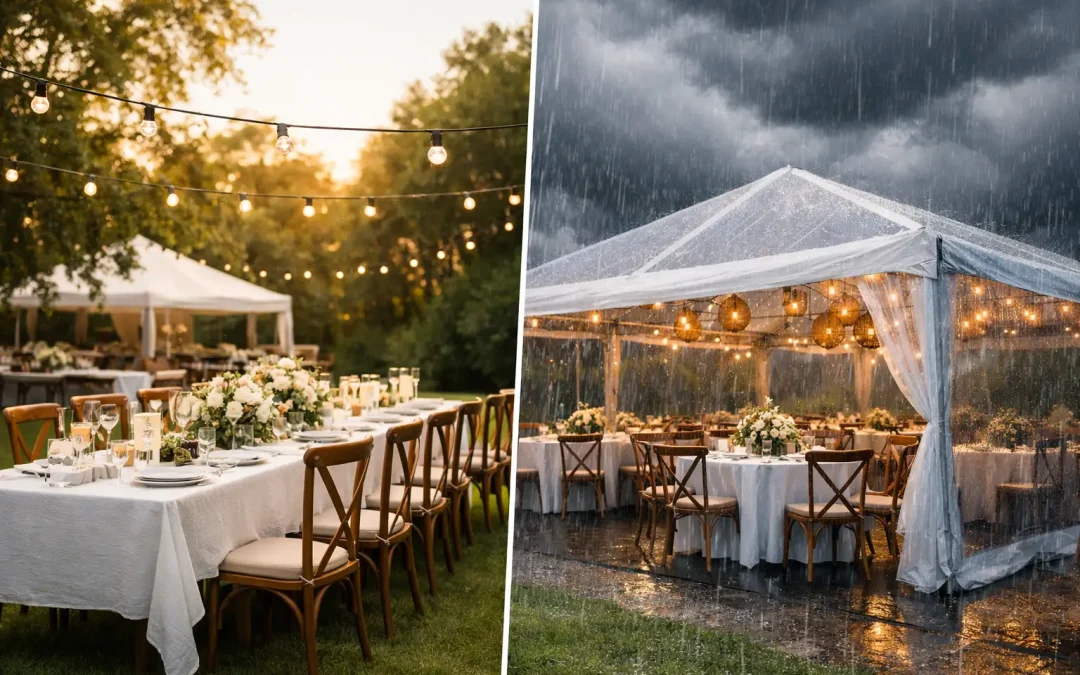
A waterfront lawn at golden hour can look perfect right up until the breeze shifts, the ground softens, or the temperature drops faster than expected. That is why knowing how to weatherproof outdoor reception plans matters just as much as choosing the right table setting or lounge furniture. In Charleston and the surrounding Lowcountry, beautiful outdoor events are absolutely possible, but they work best when the design accounts for real conditions, not just the forecast.
An elegant reception should feel effortless to your guests. Behind that feeling, though, is a series of practical decisions about coverage, surfaces, comfort, lighting, and flow. Weatherproofing is not about overbuilding or making an event feel closed in. It is about protecting the guest experience while preserving the style of the celebration.
How to weatherproof outdoor reception design from the start
The best outdoor receptions are planned with weather in mind from the first layout draft, not added in as a last-minute fix. If your rain plan looks like an entirely different event, it usually means the weather strategy was treated as a backup instead of part of the design.
Start with the site itself. A garden, private estate, beach-adjacent property, and historic venue lawn each behave differently in humidity, wind, and rain. Drainage matters. Shade matters. The distance between the catering area, bar, restrooms, and guest seating matters too. Even a mild weather shift feels larger when guests have to cross wet grass in formal shoes or wait at an exposed bar line.
This is where local experience changes the outcome. In coastal South Carolina, the question is rarely whether weather will influence the event. It is how much, and at what point in the evening. Planning for that reality lets you keep the atmosphere refined instead of reactive.
Tent coverage is often the foundation
If you are serious about how to weatherproof outdoor reception spaces, start with the tent. For many events, it is the single most effective way to protect the experience without giving up the beauty of an outdoor setting.
That does not mean every reception needs to feel enclosed. A tent can be open and airy while still offering shelter from light rain, direct sun, and dew later in the evening. The right style depends on the venue, guest count, and the tone of the event. A sailcloth tent, for example, can feel soft and architectural in a way that suits upscale weddings and social celebrations, while a clear-top option may appeal when you want more sky visibility.
The trade-off is that a tent solves some problems while introducing others. You may need thoughtful lighting so the space still feels warm after sunset. You may need sidewalls on hold if wind or rain intensifies. You may also need to account for installation timing, staking conditions, and the footprint required for catering or service access.
For receptions with a seated dinner, dance floor, and bar, partial coverage can work beautifully, but only if the uncovered areas are intentional. Guests should not have to guess where they can stand when the weather changes.
Flooring matters more than most hosts expect
A reception can have impeccable florals, beautiful linens, and polished dinnerware, and still feel uncomfortable if the ground beneath it is unstable. Flooring is one of the clearest differences between an outdoor event that simply looks good and one that truly functions well.
Soft or uneven ground affects dining tables, bars, lounge arrangements, and catering service. It also affects guest confidence. People notice when heels sink into turf, chairs wobble, or the walk to the restroom becomes slick after a quick shower.
Depending on the site, flooring may mean a full tent floor, a subfloor beneath key areas, or a dedicated dance floor and pathways that keep traffic moving cleanly. The right choice depends on terrain and budget, but skipping this layer often creates more visible disruption than hosts anticipate. If the reception includes older guests, formal attire, or a high-end dining experience, stable surfaces are worth prioritizing.
Temperature control should feel subtle, not improvised
Outdoor comfort is not only about rain. Heat, humidity, and chill can change the tone of a reception quickly, especially during shoulder seasons or waterfront evenings.
For warm-weather events, shade and airflow do a great deal of the heavy lifting. Open tent sides, thoughtful orientation, and a layout that avoids crowding the bar or dance floor can help guests stay comfortable. If the sun is a factor during cocktail hour or an early dinner, covered seating and umbrella placement may matter more than hosts realize.
For cooler nights, outdoor heaters can preserve the mood without making the setting feel overengineered. Placement is key. Guests should feel the difference without staring at a cluster of heaters that looks like an emergency purchase. Concentrate warmth where people linger longest, such as dining zones, lounges, and transitional areas near the bar.
It is also smart to think about timing. A reception that begins in pleasant weather can feel very different two hours later. Planning for the coldest part of the event, not just the start time, usually leads to better decisions.
Protect the guest journey, not just the main tent
One of the most common planning mistakes is weatherproofing the central reception space while leaving the guest experience exposed everywhere else. Guests remember the full sequence of the evening, from arrival to departure.
If valet, shuttles, or parking are part of the event, think about what happens when guests step out of the car. Is there a covered entry point or a clean path to the reception? If the ceremony and reception are in separate areas, what does that transition look like if the ground is damp or rain begins? If restrooms are offsite or require a walk, does that route still feel polished after dark?
These details matter because they shape whether an event feels thoughtfully hosted. A beautiful tent loses some of its impact if the route to it is muddy, poorly lit, or confusing. Pathway lighting, clear flooring transitions, and practical covered zones can make the entire event feel more composed.
Weatherproofing should still support the aesthetic
There is a lingering assumption that practical event infrastructure comes at the expense of style. In reality, the strongest outdoor receptions blend both. The tent line, the flooring finish, the bar placement, the lounge grouping, and the lighting plan all contribute to the design language of the event.
That is especially true for upscale weddings, corporate dinners, and private celebrations where the setting needs to feel intentional in every direction. A weather-ready plan should still align with the palette, the formality of the occasion, and the venue’s natural character.
This is where curated rentals make a difference. If the furniture, tabletop pieces, bars, and service elements are selected alongside the infrastructure, the result feels cohesive. If the weather plan is added separately and late, it can look disconnected. The goal is not to hide the logistics. It is to integrate them so gracefully that guests simply experience comfort and beauty.
Build a weather plan that is decisive
A vague backup plan creates stress because no one knows when to shift from hope to action. A stronger approach is to establish clear decision points in advance. That might mean a cutoff time for installing sidewalls, a threshold for moving cocktail hour under cover, or a service adjustment if wind affects open-flame candles or delicate place settings.
Planners, hosts, rental partners, and caterers should all be working from the same framework. Who makes the call? By when? What changes operationally if the weather shifts midday? These are not dramatic questions. They are the mechanics that protect the event from last-minute scrambling.
For Charleston-area receptions, it also helps to respect what the forecast cannot tell you perfectly. A clear day can still bring heavy dew, wind gusts, or a sharp evening temperature drop. Weatherproofing is not only about severe conditions. It is about planning for the smaller variables that affect comfort, service, and presentation.
When full weatherproofing is worth the investment
Not every outdoor reception needs the same level of protection. A casual backyard celebration with a short guest list may be able to flex more easily than a formal wedding with custom linens, plated service, and a tightly choreographed timeline.
As the event becomes more design-forward, more guest-focused, and more logistically complex, weatherproofing becomes less optional. If you are investing in elevated rentals, specialty catering, entertainment, and a carefully styled guest experience, it makes sense to protect those choices with the right infrastructure.
That is often where a full-service partner brings real value. The right team can help align the practical pieces with the visual ones so you are not forced to choose between beauty and preparedness. Republic Event Rentals approaches outdoor events with that balance in mind, especially in settings where local weather patterns can change the equation quickly.
A well-planned outdoor reception should still feel open, graceful, and true to the occasion, even when the conditions are less than perfect. The goal is not to outsmart the weather completely. It is to host so thoughtfully that your guests feel cared for from the first arrival to the final dance.