


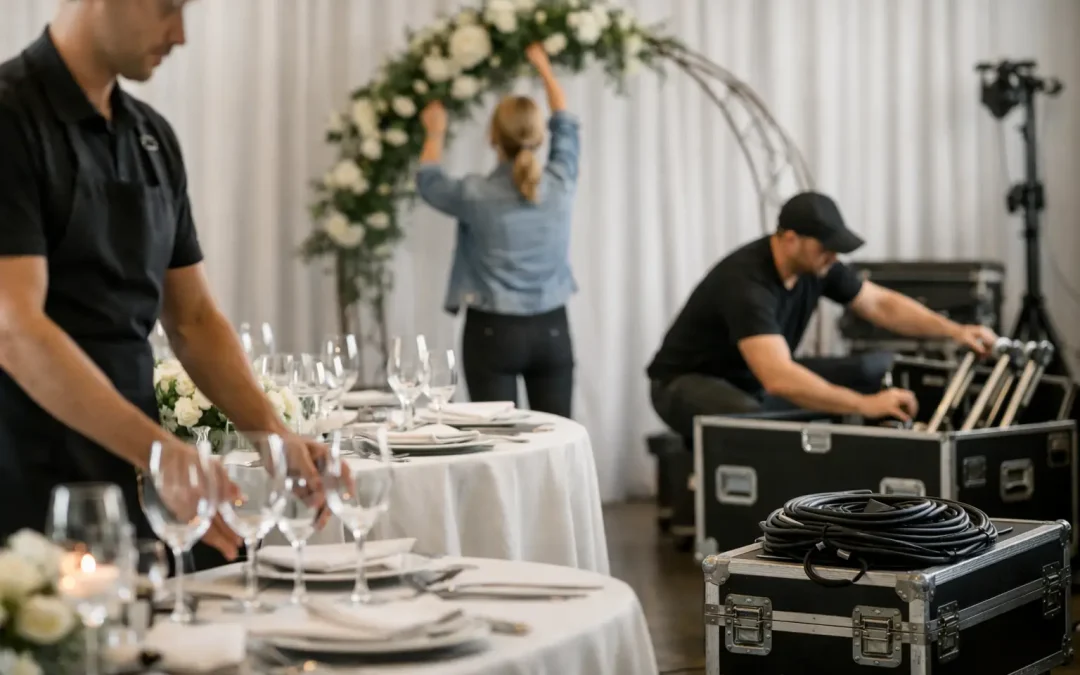
The difference between a beautiful event and a stressful one usually shows up hours before the first guest arrives – and again after the last glass is cleared. A smart event setup and breakdown guide helps you protect the look of the event, the pace of service, and the experience for everyone involved, from planners and vendors to hosts and guests.
For weddings, corporate gatherings, and private celebrations, setup and breakdown are not side tasks. They are part of the event design. The layout of the tables affects service flow. The order of installation affects what stays clean, intact, and on schedule. The breakdown plan affects vendor pickups, venue rules, labor costs, and how late your team is still working after the room is empty.
Why an event setup and breakdown guide matters
When setup is rushed or loosely coordinated, even a well-designed event can feel unsettled. Linens go on before dusty surfaces are cleaned. Lounge seating blocks catering access. Glassware arrives on tables too early and has to be reset. A dance floor install gets delayed because tables were placed first. None of these problems are dramatic on their own, but together they create friction.
A thoughtful plan gives every vendor a workable sequence. It also keeps the event looking polished from the start. Premium rentals deserve proper handling, and refined design details only read as intentional when the room is built with care.
Breakdown deserves the same attention. Venues often have strict load-out windows, noise limits, freight elevator schedules, and cleanup requirements. If those details are handled casually, the end of the night can become more complicated than the event itself.
Start with the venue, not the wishlist
The best setup plans begin with the realities of the site. Before selecting final rental counts or floor plans, confirm access times, loading areas, power availability, staging restrictions, and any rules around tenting, open flame, or outdoor placement. Historic properties, waterfront spaces, and private homes each bring their own conditions.
This is especially true for coastal events, where weather, ground conditions, and humidity can change the setup approach. An outdoor dinner may need heaters, tenting, or a backup layout even if the forecast looks kind. A lawn may photograph beautifully but still require careful planning for flooring, bar placement, and guest circulation.
Once the venue parameters are clear, the event setup becomes much easier to sequence. You can decide what must be installed first, what can wait until styling begins, and where vendors can work without slowing one another down.
Build the setup timeline backward
One of the most useful parts of any event setup and breakdown guide is a realistic timeline. That means working backward from guest arrival, not forward from vendor load-in.
If guests arrive at 6:00 p.m., the room should not be functionally complete at 5:55. It should be complete early enough for lighting checks, tabletop refinements, photography, and a final walkthrough. For a more layered event with tenting, catering infrastructure, lounge groupings, specialty bars, or large tablescapes, that cushion matters even more.
A simple setup might only need a few focused hours. A wedding reception with multiple vendor teams can require a full day or more, depending on access and installation complexity. The right answer depends on the venue, rental volume, and level of finish. A private dinner for 30 and a tented celebration for 300 should not share the same assumptions.
What usually gets installed first
Infrastructure should lead. Tents, flooring, large bars, staging elements, dance floors, and major power-dependent pieces usually go in before dining tables, chairs, and tabletop rentals. After that, linens, place settings, glassware, and décor can be layered in with less risk of disruption.
This order sounds obvious, but it is one of the most common places where event timing slips. If decorative details go in before the room is structurally ready, the setup crew often has to work around finished surfaces, which slows everything down and increases the chance of damage.
Leave room for styling and service
A polished room needs editing time. Chairs may need to be adjusted for symmetry. Napkins may need to be refolded after humidity softens them. Candle placement, lounge spacing, and bar styling often look different in person than they do on a floor plan.
That last hour before guest arrival should be calm enough for refinements, not crowded with heavy lifting.
Match staffing to the complexity of the event
Labor is where many hosts either overspend or come up short. The right staffing plan depends less on guest count alone and more on installation complexity. A 75-person dinner with specialty tabletop, layered linens, outdoor access challenges, and a full lounge area may require more setup attention than a straightforward 150-person ballroom event.
This is where full-service rental support has real value. Delivery is only one part of the equation. Professional setup ensures that tables are properly spaced, bars are positioned for service, lounge furniture feels intentional rather than scattered, and rentals are handled with the level of care they deserve.
Breakdown staffing matters just as much. After a long event, the temptation is to simplify load-out decisions on the fly. That usually creates confusion. A dedicated breakdown plan keeps rental returns organized, protects fragile inventory, and helps the venue turn over efficiently.
Design choices affect setup more than most hosts expect
Some event designs are naturally easier to execute than others. Long farm tables create a different setup rhythm than rounds. Mixed seating styles add interest but also require more placement decisions. A tented event offers flexibility, yet it introduces more moving parts than an indoor venue with built-in infrastructure.
None of that means you should design only for convenience. It means the design should be supported by the right operations plan. If you want a layered, elevated look, the schedule and staffing should reflect it.
For example, tabletop-heavy events need more setup time than many clients expect. Chargers, dinnerware, flatware, stemware, specialty glassware, folded napkins, and place cards create a beautiful guest experience, but every place setting also adds precision work. The same is true of lounge vignettes, statement bars, and specialty food presentation pieces.
The more tailored the visual story, the less sensible it is to treat setup like a basic delivery window.
Breakdown planning should happen before the event day
Hosts often spend weeks refining arrival and almost no time thinking about departure. That is understandable, but it creates avoidable stress.
A strong breakdown plan answers a few practical questions in advance. What leaves the venue that night, and what stays until morning? Who is responsible for clearing personal items, florals, candles, and signage? When do rental crews have access to the space? Are there quiet hours or neighborhood restrictions that affect load-out timing?
For private residences, this planning is especially important. Home events can feel more flexible, but they often have tighter access points, more delicate landscaping, and less room for staging packed rentals. A clean, organized breakdown protects the property and keeps the experience feeling gracious to the very end.
Protect rentals during load-out
Not every item should be struck the same way. Glassware, flatware, china, upholstered pieces, and specialty serving elements all need proper handling. A rushed breakdown can turn a smooth evening into avoidable damage, missing items, or pickup delays.
Guests also affect the timing. At weddings and parties, people linger. If breakdown begins too aggressively, the atmosphere shifts. If it begins too late, vendor windows tighten. A good team knows how to balance guest comfort with an efficient close.
Common setup and breakdown mistakes
Most event issues are not caused by one major failure. They come from a handful of smaller assumptions. One is underestimating setup time because the room looked simple on paper. Another is skipping a final walkthrough before vendors leave the site. A third is forgetting that outdoor events need contingency planning even on promising days.
Another common mistake is treating breakdown like cleanup alone. It is really a coordinated exit strategy. Rentals, catering equipment, floral installations, signage, gifts, and personal décor all move differently. If responsibilities are vague, the end of the night gets messy fast.
When full-service support is the better choice
There are events where pickup and drop-off can work well. Then there are events where professional setup and breakdown are worth every bit of the investment. If your event includes layered rentals, a refined floor plan, multiple vendors, a tented environment, or a venue with access restrictions, support on both ends usually creates a better outcome.
That support is not only about convenience. It protects the look of the event. It helps the timeline hold. It gives hosts, planners, and venue teams more room to focus on hospitality instead of troubleshooting.
For clients who want an elevated event without spending the day managing chairs, glassware, and load-out logistics, partnering with a team that understands both design and operations changes the experience.
A well-run event should feel effortless to the guest. That kind of ease is rarely accidental. It comes from thoughtful setup, disciplined breakdown, and a team that knows beauty works best when the logistics are just as polished.