


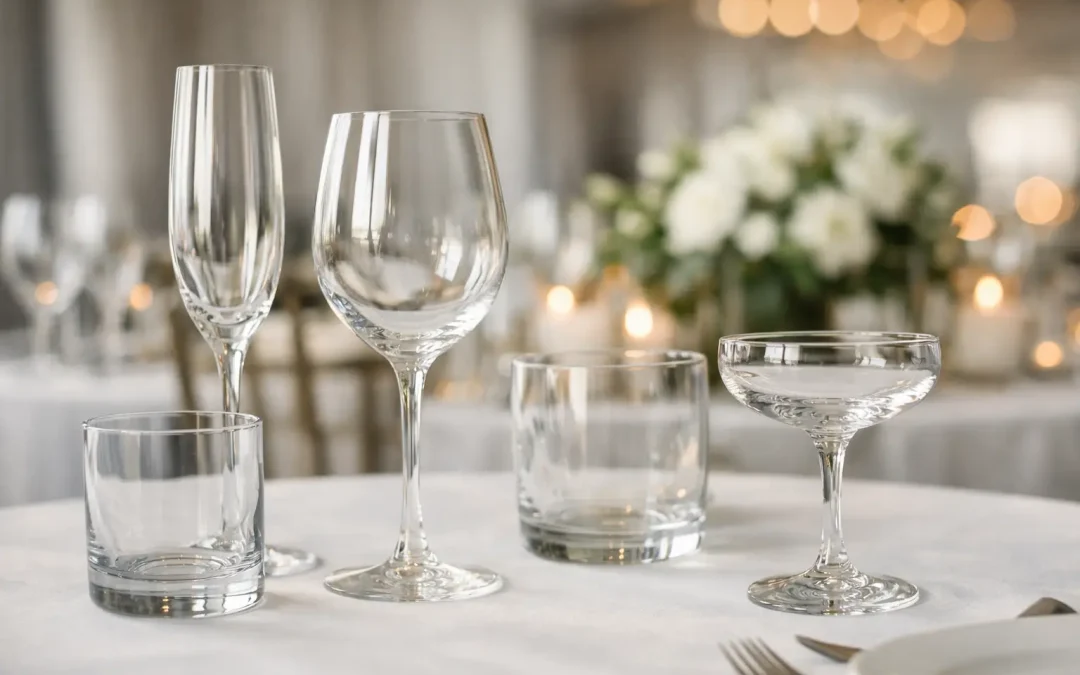
The quickest way to make a reception table feel either beautifully finished or slightly off is the glassware. If you are wondering how to choose reception glassware, start here: the right pieces should support what you are serving, suit the style of the event, and hold up gracefully through the pace of the evening.
At a wedding, gala, corporate dinner, or private celebration, glassware does more than carry a drink. It affects place settings, bar flow, tray-passed service, table proportions, and the overall look in photos. A crystal-clear water goblet gives a table presence. A delicate coupe shifts the mood in a more fashion-forward direction. A sturdy rocks glass signals a different kind of hospitality altogether. The goal is not to choose the most pieces. It is to choose the right ones.
How to choose reception glassware for the event you are hosting
The first decision is function. Before you think about shapes and finishes, think about what guests will actually be drinking from arrival to last call. A seated dinner with wine service needs something different than a cocktail-style reception with a signature drink and limited bar menu. A formal black-tie wedding may call for a fuller tabletop, while a coastal welcome party might feel better with a lighter, more relaxed mix.
Start with the beverage plan. If you are serving water, wine, champagne, and a full bar, you may need a more layered assortment. If the bar is focused on beer, wine, and one signature cocktail, the selection can be edited down without making the event feel underdressed. This is where many hosts overshoot. More glass types can look impressive, but they also require more table space, more handling, and more coordination during service.
Guest experience matters just as much. If people will be moving between cocktail hour, dinner, dancing, and outdoor spaces, stemless or sturdier options may make better sense in some areas. If the evening is centered on a plated meal in an elegant venue, stemware often adds the right amount of polish.
Match glassware to your menu and bar service
A practical way to choose is to map the glassware directly to the drink program. Water glasses are almost always essential, especially for seated events in Charleston’s warmer months. From there, consider wine service. If both red and white will be poured tableside, many receptions still use one versatile wine glass rather than separate red and white stems. It keeps the table cleaner and simplifies service.
For sparkling wine, think about how it will actually be served. If guests are getting a welcome pour on arrival or a toast during dinner, flutes are classic and efficient. If the event leans more editorial and style-driven, coupes can be beautiful, though they are not always the most practical choice for every service format. That is one of those moments where aesthetics and logistics may pull in different directions.
Cocktails need their own consideration. A neat or on-the-rocks pour belongs in a rocks glass. A simple highball drink is best in a taller glass with room for ice and garnish. If you are offering just one signature cocktail, you may be able to choose one hero glass that supports the drink and enhances presentation. If you are planning a broad bar menu, versatility becomes more valuable than specificity.
Beer is often overlooked in glassware planning. For some receptions, that is fine – especially if bottled or canned beer is a quieter part of the bar. But if beer is a meaningful offering, dedicated beer glassware can make the experience feel more intentional.
Consider the style of the reception
Glassware should work with the event design, not sit apart from it. On a formal table, tall stems and refined silhouettes complement layered place settings, candlelight, and tailored linens. For garden parties, waterfront receptions, and more relaxed celebrations, softer shapes or stemless profiles can feel more natural.
Color and texture also play a role, though restraint usually serves luxury events best. Clear glass remains the most versatile choice because it works across nearly every palette and allows the florals, china, flatware, and food presentation to stand out. Tinted or patterned glass can be striking, but it tends to be most successful when it is part of a fully considered design plan rather than an isolated statement.
Scale matters more than many people expect. Oversized goblets can crowd a smaller round table, while very petite stems may disappear in a grand ballroom setting. The right proportion helps the table feel balanced from every angle, including overhead photography and wide reception shots.
How to choose reception glassware without overcrowding the table
A beautiful table is not the same as a busy one. One of the most common missteps in reception design is adding too many glassware pieces for the available space. Between chargers, dinner plates, flatware, napkins, menus, floral centerpieces, candles, and place cards, glassware can quickly tip the setting from elegant to cramped.
This is especially important with family-style meals, abundant floral designs, or narrower farm tables. In those settings, edited glassware often looks more elevated than a full cluster of stems. You may only need a water glass and one wine glass at each place setting, with champagne brought out later for the toast. That approach keeps the table cleaner and gives your catering team more room to work.
For cocktail receptions, think beyond the dinner table entirely. Guests need a glass that is comfortable to hold while mingling. A pretty stem can look lovely on a styled bar, but if the evening is highly social and mobile, a stable glass can simply perform better.
Think through venue conditions and Charleston weather
In the Lowcountry, local conditions should shape rental decisions. Outdoor receptions, tented dinners, waterfront venues, and historic properties each bring their own practical needs. Wind matters with lightweight stems. Heat affects drink temperature and ice melt. Humidity changes how quickly glasses show condensation during service.
That does not mean you have to sacrifice style for function. It means the best glassware choices account for both. A flute may be perfect for an indoor toast but less ideal for a breezy lawn cocktail hour. Stemless water glasses may feel more secure on a sailcloth tented reception table where guests are moving in and out often. The setting should guide the selection.
This is one reason full-service rental support is so valuable. When a partner knows the local venues, service styles, and seasonal realities, the recommendations tend to be sharper and more efficient.
Rent enough, but not just enough
Quantities deserve careful attention. It is tempting to rent based strictly on guest count, but receptions rarely operate that neatly. Glasses cycle through cocktail hour, dinner, bar service, and toasts, and breakage or delays in clearing can happen at any event.
A smart plan usually includes enough quantity to support service transitions without stress. The exact overage depends on the bar program and whether glasses will be reused or refreshed between phases of the event. A seated dinner with limited drink options may need less cushion than a lively wedding with specialty cocktails, champagne service, and dancing late into the night.
If there is one place not to cut too tightly, it is glassware. Running short affects service almost immediately, and guests notice.
Coordinate with your china, flatware, and bar setup
Reception glassware should never be selected in isolation. It needs to relate to the rest of the tabletop and the broader event design. A modern plate with clean lines may pair beautifully with sleek, minimal stemware. A more romantic tablescape with textured linens and candlelight may call for softer silhouettes.
The bar itself matters too. If you are investing in a beautiful bar façade, custom menu, or specialty moments like a champagne greeting, the glassware should feel equally considered. This is where consistency helps. You do not need every glass to match exactly across the event, but the visual language should feel connected.
For many hosts and planners, this is the point where expert guidance saves time. A curated inventory and a team that can think through the event as a whole often leads to a cleaner, more polished result than choosing each category separately.
A simple framework for making the final choice
If you need a clear decision path, narrow your selection in this order: beverage menu, service style, table size, design aesthetic, then venue conditions. That sequence keeps the essentials in place before you get pulled into purely decorative choices.
If two options feel equally beautiful, choose the one that works harder operationally. The most successful receptions are the ones where guests experience everything as effortless. The glass in their hand should feel right for the drink, right for the setting, and right for the occasion without calling attention to itself.
At its best, glassware is one of those details that quietly elevates the entire evening. Choose pieces that serve the event well, and the whole reception will feel more gracious, more cohesive, and more memorable.