


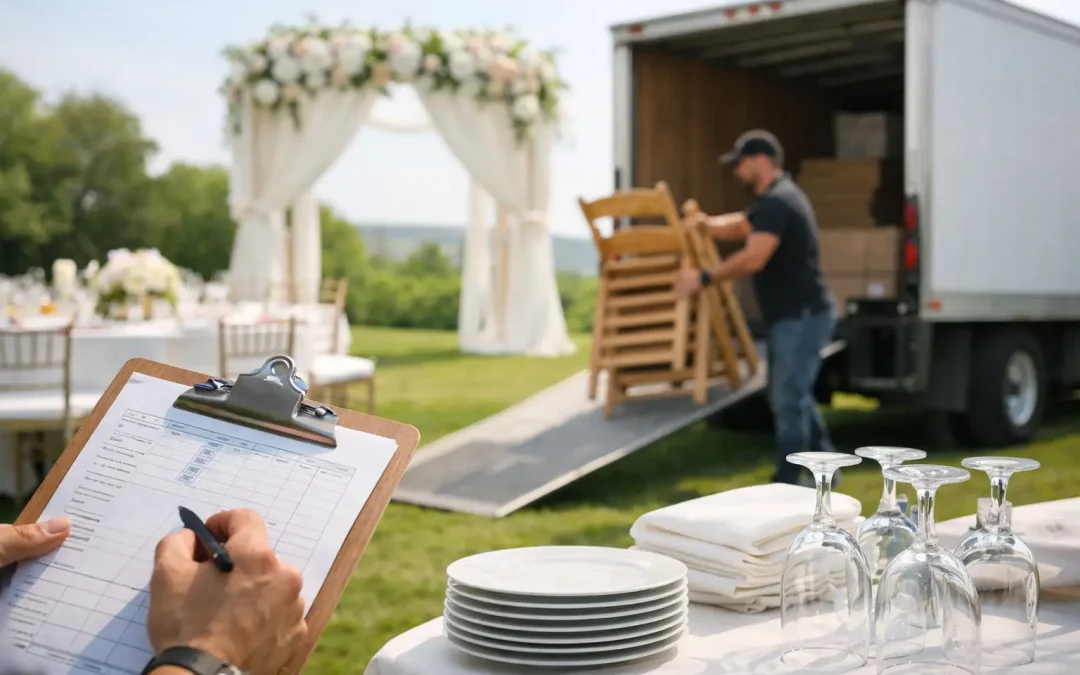
If you are asking when should wedding rentals arrive, the short answer is earlier than most couples expect. Rentals are not just a delivery item on a checklist. They affect setup flow, vendor access, venue readiness, and how calm or chaotic the final 24 hours feel.
For a polished wedding day, most rentals should arrive one to three days before the event, depending on the venue, the rental category, and how much installation is involved. A few pieces can come closer to the celebration, but waiting until the last minute leaves very little room for weather delays, access issues, or layout adjustments.
When should wedding rentals arrive for the smoothest setup?
The right timing depends on what is being delivered. A stack of dining chairs is very different from a tent installation or a full lounge grouping with custom floor plans. The more infrastructure a rental provides, the earlier it should be on site.
Tents, flooring, staging, bars, dance floors, and large-scale furniture installations usually need to arrive first. These items shape the event footprint and often require time for placement, leveling, anchoring, and coordination with the venue. In Charleston and across the Lowcountry, weather also plays a bigger role than many people assume. Soft ground, coastal wind, and shifting forecasts can all affect installation timing.
Tables and chairs often arrive after major infrastructure but still well before the wedding day if the venue allows it. This gives the planner, florist, catering team, and rental crew enough room to build the reception layout without working on top of one another.
Tabletop items such as dinnerware, flatware, glassware, and linens may arrive a bit later, especially if there is limited secure storage on site. These pieces are usually installed once tables are in place and can be staged closer to the event, but they still should not be treated as same-hour deliveries unless the timeline is extremely controlled.
A realistic wedding rental timeline
For most weddings, a practical schedule looks like this.
3 to 5 days before the wedding
This window is common for tenting, flooring, large custom builds, and other foundational pieces. If your wedding is outdoors or at a private property, early arrival is especially helpful. It allows time for tent permits if needed, power planning, weather checks, and any site-specific adjustments.
This is also the best window when multiple vendors need access to the same space. Once the tent and major structural elements are installed, everyone else can work more efficiently.
1 to 2 days before the wedding
This is often the ideal range for tables, chairs, lounge furniture, bars, and decorative furniture. By this point, the venue is usually ready, and your planner or design team can confirm exact placement. Delivering these items the day before typically creates enough buffer without crowding the site for too long.
For many full-service weddings, this is the sweet spot. It gives the event team time to style the space thoughtfully rather than rushing through a same-day drop.
The day before or morning of
Smaller accessory rentals and select tabletop items can sometimes arrive in this window, especially at venues with storage limitations. But this only works when the timeline is tight, access is clear, and setup responsibility is fully coordinated.
If you are relying on same-day delivery for essential pieces, every minute needs to be accounted for. One delayed truck or one vendor running behind can create a chain reaction.
What changes the delivery timeline?
Not every wedding needs the same schedule. The best arrival time depends on a few practical details.
Venue rules
Some venues have strict delivery windows and limited loading access. Historic properties, downtown locations, private clubs, and waterfront venues often have tighter schedules than couples expect. You may only be allowed to install during certain hours, or the venue may host another event immediately before yours.
That can compress the timeline and require a more strategic delivery plan. In those cases, your rental partner needs to know the venue rules early so the schedule works in real life, not just on paper.
Rental type
A clear acrylic chair does not need the same handling as a sailcloth tent. Delicate tabletop, specialty linens, catering stations, heaters, and lounge collections each come with different packing, staging, and setup needs. The more specialized the item, the more carefully the arrival time should be planned.
Weather and season
In coastal South Carolina, weather is not a side note. Heat, humidity, afternoon rain, and wind can all influence installation timing. Outdoor weddings benefit from extra cushion in the schedule because crews may need to adjust plans based on site conditions.
Busy wedding seasons matter too. During peak spring and fall weekends, delivery routes are tighter and vendor calendars are fuller. Earlier scheduling helps protect your event from unnecessary pressure.
Storage and security
Early arrival sounds ideal until there is nowhere safe to keep the rentals. If your venue cannot secure glassware, linens, or specialty pieces overnight, those items may need to arrive later. This is one of the biggest reasons timelines vary.
A good rental plan balances convenience with protection. There is no advantage to delivering early if the venue cannot store the items properly.
When should wedding rentals arrive at a private property?
Private home weddings usually need more lead time than venue weddings. The property may need a site visit, surface protection, generator planning, restroom support, tenting, and a more custom load-in strategy. Unlike a traditional venue, a private property is rarely event-ready from the start.
For that reason, major rentals often begin arriving several days in advance. The setup is more layered, and there is usually more to build. Even elegant backyard weddings require infrastructure behind the scenes to feel effortless for guests.
This is where an experienced local rental team makes a noticeable difference. Republic Event Rentals regularly works with Charleston-area properties and understands how to pair elevated design with the kind of operational planning private events demand.
Should anything arrive on the wedding day?
Sometimes yes, but only selectively.
Freshly pressed linens, certain catering support items, or last-stage tabletop pieces may arrive the day of if the venue timeline calls for it. This can work well in highly managed environments where setup crews are already in place and access is simple.
What should not arrive too late are the essentials your entire floor plan depends on. If tables, chairs, tenting, or major furniture pieces show up hours before guest arrival, there is very little margin for problem-solving. Even a minor issue like a blocked loading dock or a floor plan revision can become stressful.
The goal is not just getting the rentals there. The goal is giving your team enough time to place everything correctly and make the room feel intentional.
A common mistake couples make
Many couples assume delivery timing is mostly about convenience. In reality, it is about sequence.
Florals cannot be styled properly until tables are placed. Place settings cannot be installed until linens are on. Caterers need to know where service stations and bars will live. Musicians and entertainment may need a clear path before lounge furniture or dance floors are finalized. Every setup decision connects to another one.
That is why the best rental timelines are built backward from the event design and vendor schedule. If your wedding has a custom layout, outdoor elements, or multiple event spaces, the timing deserves extra attention.
The best rule of thumb
If you want a simple guideline, plan for core wedding rentals to arrive at least one day before the wedding, and earlier for tents, flooring, and any significant infrastructure. Then adjust based on venue rules, storage, and setup complexity.
That approach gives you flexibility without overcomplicating the schedule. It also creates room for the kind of careful installation that makes a wedding feel elevated rather than rushed.
Beautiful rentals always get noticed, but what guests really remember is how comfortable and well-paced the event felt. Giving your rental team enough time to do their work is one of the easiest ways to protect that experience from the very start.