

The tent shape you choose changes more than the floor plan. It affects how guests move, how your tables fit, what the event looks like in photos, and even what is possible at your venue. When clients ask about frame tents vs pole tents, they are usually trying to solve for two things at once – appearance and logistics.
For weddings, corporate gatherings, and polished private events, that decision deserves more than a quick side-by-side. Both tent styles can create a beautiful setting, but they function differently. The right choice depends on your site, your guest count, your layout, and the kind of experience you want people to have from the moment they arrive.
Frame tents vs pole tents: the core difference
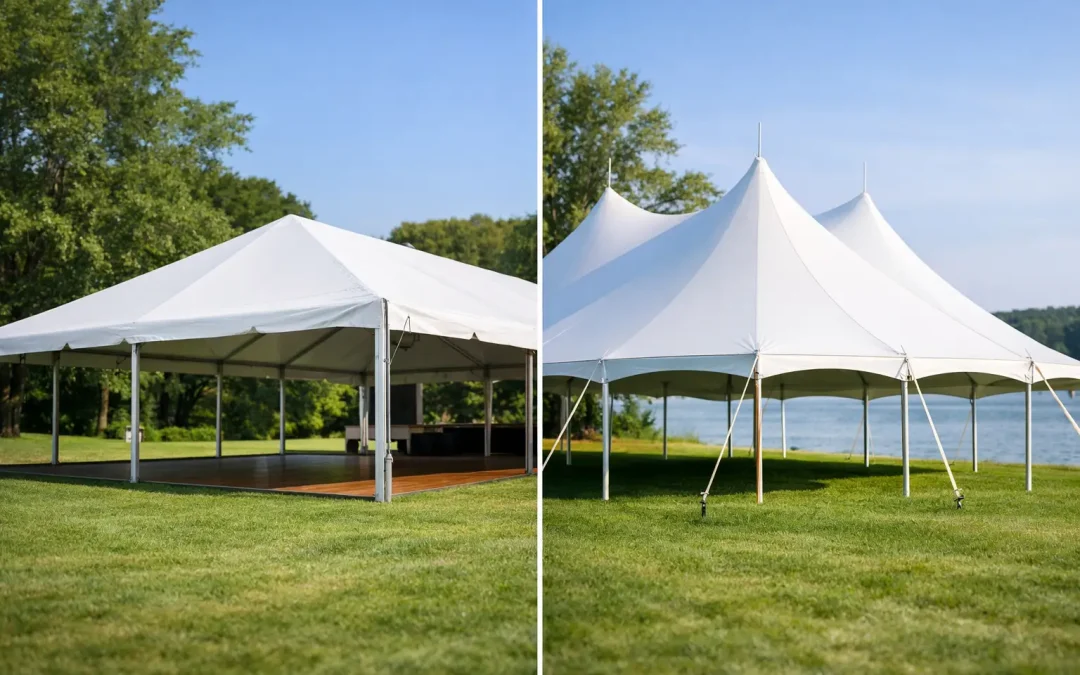
A frame tent is supported by a metal framework, which allows it to stand without center poles throughout the interior. A pole tent is supported by perimeter poles and center poles, which create the classic peaked silhouette many people picture when they think of a tented celebration.
That structural difference has a direct impact on layout and flexibility. With a frame tent, the open interior gives you more freedom for dining tables, dance floors, bars, lounge seating, and ceremony setups. With a pole tent, the center poles become part of the design equation. They can add charm and height, but they also require more intentional planning around placement and guest flow.
Neither option is automatically better. One may simply be better for your particular event.
When a frame tent makes more sense
Frame tents are often the practical favorite when the site itself is challenging. Because the structure does not rely on center poles and staking in the same way a pole tent does, frame tents can work well on patios, courtyards, driveways, tighter footprints, and surfaces where flexibility matters.
They are also ideal when you want a clean, unobstructed interior. If your event includes long banquet tables, a centered dance floor, a substantial bar, a stage, or lounge groupings, a frame tent gives you more usable square footage. There is no need to design around center poles, which can be especially helpful for formal receptions and corporate events where symmetry matters.
From a visual standpoint, frame tents tend to feel tailored and architectural. They suit events with a refined, modern, or highly curated look. If the goal is a polished environment where every furnishing placement feels deliberate, this style often supports that level of control.
There is a trade-off, though. Frame tents can be more complex to install, and that can affect pricing depending on the site and scope. If access is difficult or the build requires added labor, the convenience of the structure may come with a higher investment.
When a pole tent is the better fit
Pole tents are beloved for a reason. They create a graceful, sweeping profile with high peaks and a softer, more romantic presence. For weddings and social celebrations held on open lawns or large properties, they often deliver the classic tented atmosphere people are after.
The center poles are not necessarily a drawback. In many event designs, they become part of the charm. Florals, greenery, draping, lighting, and thoughtful table placement can turn those structural elements into focal points rather than obstacles. If you are leaning into a timeless, garden-inspired, or distinctly celebratory look, a pole tent can be a beautiful choice.
Pole tents also often make sense on grassy sites with plenty of room for staking and proper anchoring. In those conditions, they can be an efficient option for larger guest counts.
Still, the open lawn setting matters. A pole tent needs the right footprint, and the surrounding area must support the installation. If your venue space is limited, if hardscape is involved, or if there are site restrictions, the style may be less practical than it first appears.
Style matters, but so does the floor plan
One of the most common planning mistakes is choosing a tent based only on the exterior look. The peak of a pole tent may be exactly what you imagined, but if the center poles disrupt your reception layout, the room can feel less comfortable than expected. On the other hand, a frame tent may seem more understated from the outside, yet work beautifully once tables, lighting, linens, and florals are in place.
This is where the event design and the operational plan need to work together. A tent is not just overhead coverage. It is the framework for dining, service, entertainment, and guest experience.
If you are hosting a seated dinner with a dance floor, band, bar, and lounge area, interior flexibility becomes a major advantage. If you are planning a ceremony or cocktail-style gathering on a broad lawn, the visual drama of a pole tent may be exactly right.
Venue conditions can decide for you
Sometimes the site answers the question before you do. Surface type, slope, access points, overhead clearance, staking limitations, and nearby structures all influence what is feasible.
This is especially true in coastal areas, where weather patterns, ground conditions, and venue layouts can be less forgiving than they appear in photos. A beautiful property may have soft ground, tight installation access, or space constraints that make one tent style much more suitable than the other.
That is why local expertise matters. A team familiar with Charleston-area venues and event conditions can often identify practical issues early, before they become expensive changes later. What works at an open waterfront lawn may not work in a historic courtyard or a residential backyard with limited access.
Cost is part of the conversation, but not the whole story
Clients often ask which option is cheaper. The honest answer is that pricing depends on size, site, installation requirements, flooring, lighting, sidewalls, and other event infrastructure. In some cases, a pole tent may be the more economical path. In others, a frame tent may save time and complexity because it fits the site better.
The better question is which tent gives you the best overall value for your event. If one structure creates layout problems, requires design compromises, or limits how service teams can move, the lower initial price may not feel like savings by the end of the planning process.
A well-chosen tent supports both beauty and ease. That usually delivers more value than a tent selected on price alone.
How to choose between frame tents vs pole tents
Start with the setting. Ask where the tent will go, what the ground or surface is like, and whether staking or anchoring limitations exist. Then consider your layout. Think through dinner seating, entertainment, service paths, lounge furniture, bars, and guest circulation.
After that, look at the mood you want to create. Do you want a crisp, open interior with maximum flexibility, or a romantic silhouette with high peaks and a more traditional tented feel? Both can be elevated. They simply create different experiences.
It also helps to be honest about your priorities. If the visual identity of the event depends on that iconic peaked profile, a pole tent may be worth designing around. If your event requires a highly functional interior with precise placement for furnishings and entertainment, a frame tent may make the day run more smoothly.
For many hosts and planners, the best approach is to decide with a full event picture in mind rather than choosing the tent first and forcing everything else to adapt.
The best tent is the one that supports the whole event
There is no universal winner in the frame tents vs pole tents question. A pole tent can feel breathtaking on the right lawn. A frame tent can make an ambitious layout feel effortless. The difference is not just structural – it shapes how the event looks, flows, and feels.
At the luxury end of event planning, those details matter. The tent should complement the design, respect the venue, and make the guest experience feel natural from start to finish. When those pieces align, the structure fades into the background in the best way, and what guests remember is how beautiful and easy the entire event felt.
If you are weighing both options, the smartest next step is to look at your site and your layout together. The right tent choice rarely starts with a catalog image. It starts with understanding how you want the event to live in the space.