


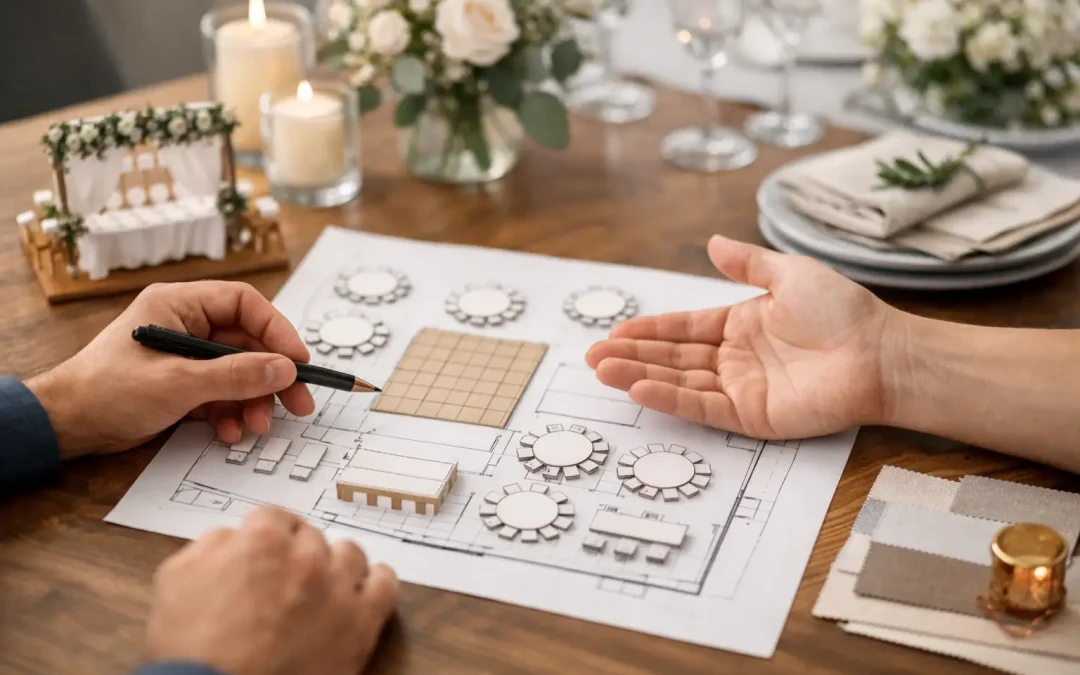
The prettiest reception room can still feel off if guests do not know where to go, servers cannot move comfortably, or the dance floor pulls energy away from the tables. That is why learning how to plan reception layout matters so much. A strong layout is not just about fitting furniture into a room. It shapes how the event feels from the first cocktail to the last dance.
For weddings, corporate dinners, and private celebrations alike, the best layouts balance beauty with movement. Guests should be able to find their seats easily, mingle without crowding, and enjoy each part of the evening without awkward transitions. When the room is planned well, the whole event feels more gracious.
How to plan reception layout starts with the guest experience
Before choosing table shapes or deciding where the bar should go, start with the way you want the event to unfold. A reception is a sequence of moments. Guests arrive, gather, sit, dine, toast, move around, dance, and linger. The layout should support that rhythm rather than fight it.
A formal seated dinner needs a different footprint than a lively cocktail-style celebration with lounge seating and passed hors d’oeuvres. A wedding with a band and full dance floor has different demands than a nonprofit luncheon with a stage and presentation screen. The room needs to match the event’s priorities.
This is where many layouts go wrong. People often begin with capacity alone and ask how many tables can fit. That matters, of course, but a crowded floor plan can make an elegant event feel cramped. A slightly more open layout often creates a more elevated guest experience, even if it means reducing the table count or rethinking furniture choices.
Start with the fixed elements first
Every reception space has constraints. Some are obvious, like walls, doors, and columns. Others matter just as much, including catering access, restrooms, built-in bars, power sources, and venue rules around tents, dance floors, or staging.
Map those elements before placing a single table. Guests and staff need clear paths to entrances and exits. Catering teams need workable service lanes. If the event includes a band, DJ, photo booth, or specialty food station, those pieces need real estate too.
Charleston venues in particular can bring beautiful character and practical quirks at the same time. Historic properties, waterfront sites, and outdoor settings often require thoughtful spacing because weather, uneven ground, or architectural features can affect how a room functions. A layout that looks perfect on paper may need adjustments once real event operations are considered.
Build the room around the focal points
Most receptions have two or three visual anchors. That might be a sweetheart table, a dance floor, a band stage, a bar, or a view you want to preserve. Decide what should draw attention, then arrange the room so those elements feel intentional rather than scattered.
If dinner and dancing are equally important, the dance floor usually works best in a central or highly visible location. That helps maintain energy and keeps guests connected to the action. If the event is more dining-forward, the layout may center on tables with entertainment positioned off to one side.
Sightlines matter here. Guests should be able to see key moments without craning around floral installations, speakers, or tall furniture. This is especially important for toasts, first dances, and presentations. A reception layout should frame those moments naturally.
Choose table shapes based on flow, not just style
Round tables are a classic choice because they encourage conversation and soften the room visually. They work especially well for weddings and social receptions where guest comfort is the priority. They do, however, take up more space than some hosts expect.
Long rectangular tables create a strong design statement and can make a room feel more tailored. They are often a smart choice when the goal is a more editorial look or when a space is narrow and benefits from linear organization. They can also help maximize floor space, though they may not suit every guest count or service style.
A mixed layout can be the right answer when you want both visual interest and function. Long tables for family or VIP seating, paired with rounds for the rest of the room, can feel layered and polished. The trade-off is that mixed layouts require careful spacing so the room still feels cohesive.
Leave more room than you think you need
One of the easiest ways to improve a reception layout is to respect circulation. Guests should not have to squeeze between chairs, and servers should not be navigating obstacle courses with trays and plates.
A beautiful room needs negative space. That means aisles wide enough for movement, enough clearance around the dance floor, and breathing room near bars and buffet stations. Tight spacing can make even luxury rentals feel diminished because the room stops feeling relaxed.
This applies to lounge furniture too. A lounge area should feel inviting, not wedged into leftover square footage. It needs enough separation from dining tables so it functions as a real secondary zone. When placed well, lounge seating gives guests a place to converse, step away from the music, or enjoy a cocktail without leaving the event energy behind.
Think in zones, not just rows of furniture
The most successful receptions usually have distinct but connected zones. Dining, dancing, cocktails, and lounging each need their own place within the event. That does not mean the room should feel segmented or rigid. It means guests should intuitively understand where each experience happens.
For example, placing the bar near but not inside the dining area can help pre-dinner mingling without creating congestion during service. A lounge grouping near the dance floor keeps it social and active. A raw bar or caviar station works best where guests can approach it easily without blocking circulation.
This is also where specialty rentals can elevate the layout. A thoughtfully placed bar, statement dining chairs, layered linens, or a dedicated catering station can define zones with style rather than signage alone. Good reception design often feels effortless because the layout is doing quiet work behind the scenes.
How to plan reception layout for service and staffing
A reception is not only experienced by guests. It also has to work for the professionals making it happen. If servers cannot access tables efficiently, if the bar line cuts through the main aisle, or if catering has no clear path from prep to floor, service quality suffers.
Buffets and stations need particularly careful planning. They should be easy to find, but not placed where lines will interrupt conversation or block important views. The same goes for cake displays, escort card tables, and coffee service. Convenient does not always mean central.
If the event includes full-service rentals and setup support, this planning gets easier because the floor plan can be evaluated through both a design and operations lens. That combination often prevents the small missteps that guests may not name directly, but definitely feel.
Match the layout to the mood of the event
A black-tie wedding reception calls for a different spatial rhythm than a birthday party under a tent. Formal events tend to benefit from symmetry, clear focal points, and more defined seating. Social parties often feel better with looser movement, varied seating types, and spaces that invite mingling.
Corporate events deserve the same level of intention. If guests are networking, avoid overly dense seating that keeps people fixed in place all evening. If the program includes remarks or awards, make sure tables face the presentation area comfortably. A polished corporate reception should feel efficient without becoming stiff.
The best layouts reflect the personality of the event. They support the dress code, the food style, the entertainment, and the pace of the evening. When all of those details align, the event feels cohesive before a guest ever notices the tableware.
Test the room on paper, then in real life
Even an excellent floor plan benefits from a second pass. Walk through the event from a guest’s perspective. Where do they enter? Where do they pause? Can they find the bar quickly? Is there enough room around the head table? Does the dance floor feel connected or isolated?
Then consider the practical version of the same exercise. Where does catering come from? Where do rentals get installed? What happens if weather shifts an outdoor cocktail hour indoors? The most dependable layouts have a little resilience built in.
That is often the difference between a room that only photographs well and one that hosts beautifully. A polished reception should look refined, but it also needs to work minute by minute.
When you are planning a reception layout, aim for more than maximum capacity or visual impact alone. Aim for comfort, clarity, and flow. If guests can settle in easily, move naturally, and enjoy each part of the evening without friction, the room is doing exactly what it should.