


A beautifully set table can lose its impact fast when the flatware feels like an afterthought. If you are wondering how to choose event flatware, the right answer is rarely just silver or gold. It comes down to how your event will be served, how formal the experience should feel, and how every piece works with the rest of the table.
Flatware is one of those details guests may not mention by name, yet they notice it immediately. The weight in hand, the finish against the plate, and the number of pieces at each setting all shape the experience. For weddings, private dinners, corporate events, and larger celebrations alike, the goal is simple – choose flatware that looks intentional and functions effortlessly.
How to choose event flatware starts with the menu
Before you think about finish or style, think about what guests are actually eating. A plated filet dinner has different needs than a cocktail-style reception, and a brunch buffet asks for something different than a formal multi-course meal.
If your menu includes steak or another substantial entrée, make sure the setting includes a knife that feels appropriate for the task. For salads, pastas, and composed first courses, the scale of the fork matters more than many hosts expect. A dessert course may call for a smaller fork or spoon, while seafood service can require specialty pieces if the menu is especially detailed.
This is where over-ordering can happen. Not every event needs five pieces of flatware per guest. In many cases, a well-edited place setting feels more refined than one crowded with utensils guests never use. If the event is formal and the menu is coursed, multiple pieces make sense. If the event is relaxed, fewer pieces often create a cleaner and more welcoming table.
Match the service style, not just the aesthetic
Hosts often choose flatware based on appearance first, which is understandable. But the service style should lead the decision.
For a plated dinner, flatware becomes part of a complete place setting. Each piece should feel balanced with the plate, glassware, and linen. For buffet service, the table can be slightly more relaxed, but durability and ease still matter. Guests are carrying plates, serving themselves, and moving through the event, so the flatware should feel comfortable and intuitive.
Cocktail receptions are their own category. If guests are eating while standing, oversized or overly formal pieces can feel awkward. In that case, select only what supports the menu and the flow of the event. The most elegant choice is often the one that makes hosting feel effortless.
Formal events need structure
At a black-tie wedding or a seated gala, flatware helps establish rhythm and order at the table. Multiple courses, charger plates, and layered place settings call for pieces that feel substantial and coordinated. A more polished silhouette and thoughtfully chosen finish can elevate the entire guest experience.
Casual luxury still needs intention
For rehearsal dinners, garden parties, birthday celebrations, or outdoor gatherings, you do not need to abandon refinement. You simply want flatware that feels less rigid. A streamlined pattern, softer finish, or slightly more relaxed place setting can still look elevated without appearing overly formal.
Consider the overall table design
Flatware should support the design, not compete with it. If your dinnerware has a strong pattern, ornate rim, or bold color, a simpler flatware style usually works best. If the plates and linens are understated, flatware can carry more visual character.
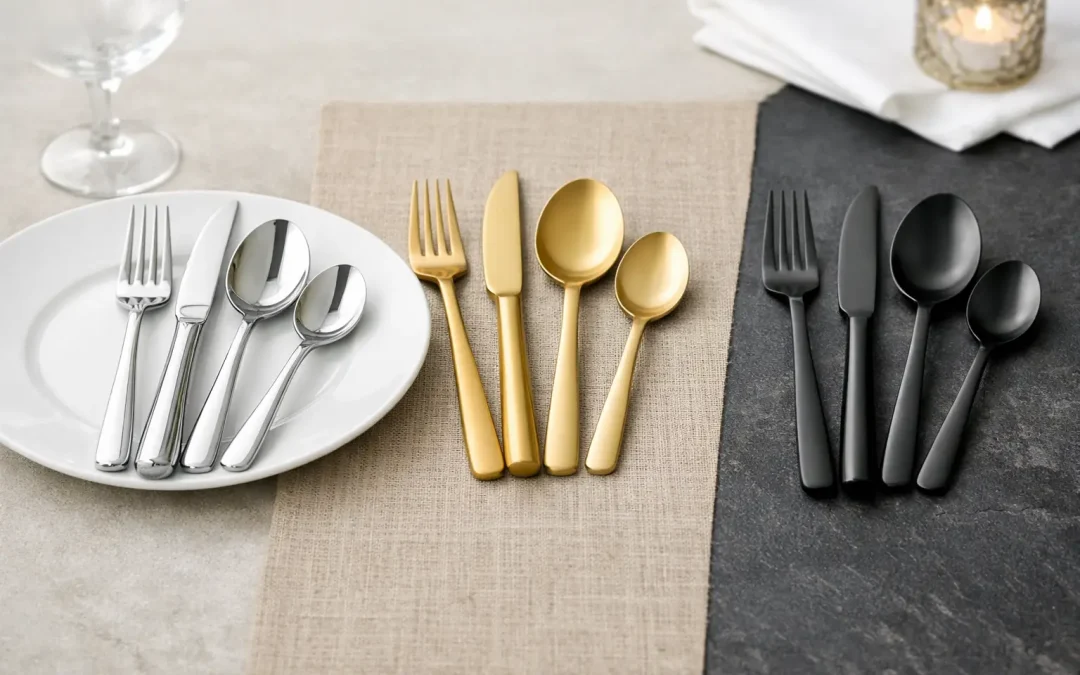
Finish plays a major role here. Polished silver remains classic because it is versatile and works with nearly everything. Brushed or satin finishes feel slightly softer and more contemporary. Gold can bring warmth and drama, especially for romantic or celebratory tables, but it needs balance. If every element is highly decorative, the setting can start to feel busy.
Black or darker-toned flatware can be striking in the right context, especially for modern events or evening gatherings. Still, it is not universally flattering across every design palette. The more directional the finish, the more carefully it should be paired with the rest of the tabletop.
Think about the conversation between flatware and other rentals. Does it echo the tone of the glassware? Does it suit the shape and scale of the dinner plate? Does it feel at home beside the chairs, linens, and centerpieces? The strongest tables usually feel cohesive rather than perfectly matched.
Scale matters more than people expect
One of the quickest ways a place setting can feel off is when the flatware is too small or too large for the plate. A delicate fork beside an oversized charger can disappear visually. Heavy, oversized pieces on a smaller place setting can feel crowded.
This is especially important for elevated events where proportion does much of the design work. Flatware should feel comfortable in hand, but it should also look appropriate at the table. That balance between visual scale and actual usability is what gives a setting its polish.
If your event includes larger-format dinnerware, layered plates, or a more dramatic tablescape, select flatware with enough presence to hold its own. For intimate dinners or lighter table designs, something more refined and streamlined may feel better.
Think about venue, climate, and timing
Not every event happens in a ballroom. Outdoor celebrations, tented receptions, waterfront dinners, and historic venues all come with practical realities that affect tabletop decisions.
In Charleston and other coastal settings, moisture and wind can influence how a table is set and how pieces perform throughout service. Heavier flatware can feel more grounded on an outdoor table, while a simpler setup may be easier to maintain during a breezy cocktail hour or tented dinner. If the event moves from day to evening, the finish may read differently as the light changes.
This does not mean practical choices have to look utilitarian. It simply means the best flatware decision accounts for the setting as well as the design plan.
How to choose event flatware for different guest experiences
Guest count should shape your decision, but not in the most obvious way. A 20-person seated dinner gives you room for finer detail and more layered place settings. A 250-person wedding or corporate event calls for consistency, efficiency, and a rental plan that supports smooth service.
Large events benefit from flatware that is versatile and easy to scale across the entire room. Smaller events can sometimes support more specialized choices because each setting is more intentionally styled. Neither approach is better. They simply serve different goals.
It also helps to think about your guests themselves. Are they sitting for a leisurely dinner, or are they moving through a fast-paced social event? Is the mood highly traditional, or more modern and relaxed? Flatware should fit the guest experience just as much as the visual concept.
Do not treat flatware as a last-minute add-on
By the time hosts reach rentals, they often have already chosen the venue, flowers, menu, and paper goods. Flatware gets pushed late in the process, even though it affects both design and service. That is where mismatches happen.
Choosing flatware earlier gives you more control over the finished look. It also helps avoid practical problems, like realizing too late that the place setting needs a different knife, a dessert piece, or a finish that better complements the rest of the tabletop.
Working with a full-service rental partner can make this much easier. Instead of selecting each tabletop piece in isolation, you can look at dinnerware, glassware, linens, and flatware as one cohesive plan. For clients who want a table that feels elevated without feeling overworked, that coordination matters.
A simple way to make the final decision
If you are between two styles, choose the one that best answers these questions: Does it support the menu? Does it fit the service style? Does it suit the formality of the event? Does it look balanced with the rest of the table?
If the answer is yes across all four, you are likely looking at the right choice. If one option is more dramatic but less practical, or more formal than the event itself, it may photograph well and still feel wrong in person.
The best flatware does not call attention to itself for the wrong reasons. It makes the table feel finished, the meal feel considered, and the entire event feel cared for. When every detail is meant to welcome guests, even the fork at their place setting should feel thoughtfully chosen.