


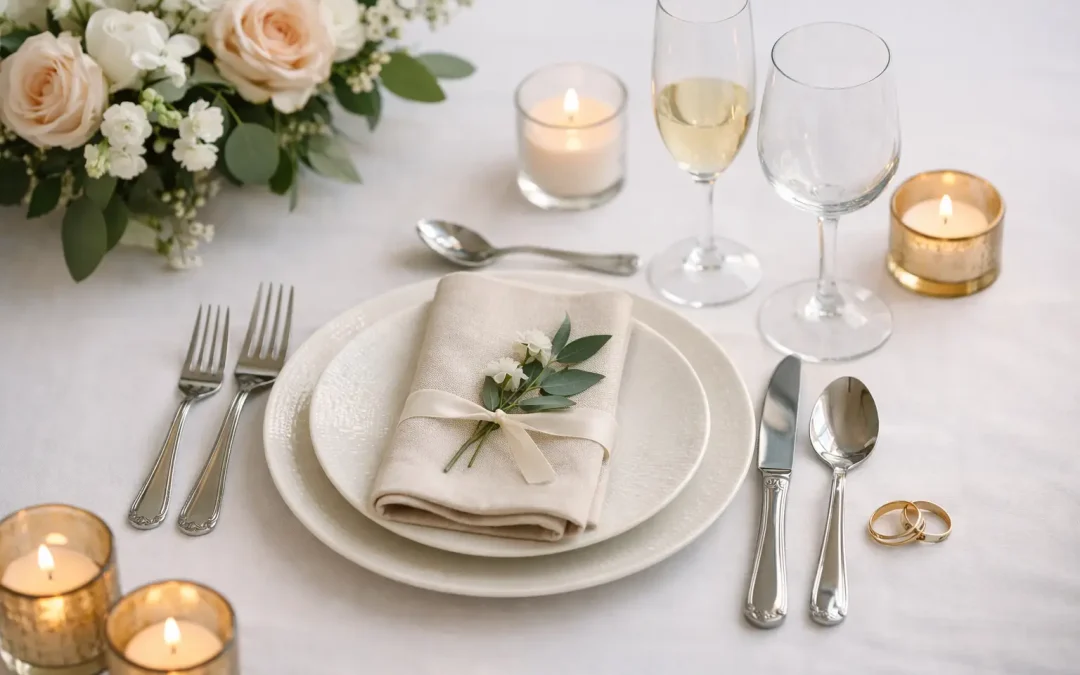
The fastest way to tell whether a reception table feels finished is to look at the wedding place settings. Before guests notice the floral recipe or the menu wording, they take in the plate, the napkin, the glassware, and the spacing at each seat. That single view sets the tone for dinner and says a great deal about how the evening will feel.
For couples planning a Charleston wedding, that matters more than most people expect. A beautiful room can still feel slightly off if the tabletop is too sparse, too crowded, or disconnected from the rest of the design. The right place setting does more than hold a meal. It creates rhythm across the room, supports service, and gives every guest a seat that feels considered.
What wedding place settings really do
A strong place setting works on two levels at once. It delivers style, and it quietly manages function. The charger frames the plate and anchors the seat. Flatware guides the eye and supports the courses being served. Glassware adds shine, height, and balance. Linens soften the table and bring color or texture into the composition.
That is why wedding place settings should never be chosen as isolated pieces. A gold flatware set may look stunning on its own, but if the china is ornate and the linen is heavily patterned, the table can start to feel overly busy. On the other hand, a more restrained combination can look expensive and intentional when the proportions, finishes, and tones are aligned.
For a seated wedding dinner, each setting should feel like part of the full guest experience, not just a decorative detail. It affects how comfortable guests feel, how easy service becomes, and how polished the room appears in photos.
Start with the mood of the reception
The most successful wedding place settings begin with a clear read on the event itself. A formal black-tie reception calls for a different tabletop than a coastal tented celebration or an intimate garden dinner. None of these approaches is better than the others. The goal is cohesion.
If the room is romantic and layered, the place setting can carry more detail. Think textured linens, a charger with presence, cut crystal stemware, and folded napkins that feel tailored. If the event leans clean and contemporary, the better choice may be a crisp white plate, polished flatware, refined stemware, and minimal ornamentation.
Charleston weddings often sit in a particularly appealing middle ground. Couples want elegance, but they also want the setting to feel relaxed and inviting rather than stiff. That usually means balancing classic tabletop pieces with softer coastal or garden-inspired elements. Rattan chargers, airy linens, colored glassware, or a subtle patterned napkin can all work beautifully when the rest of the design supports them.
Build the table from the plate outward
When clients are overwhelmed by tabletop options, the easiest place to start is the plate. The dinner plate, charger, or both will occupy the most visual space at each seat, so they naturally lead the rest of the decisions.
If you select a bold charger, the plate should usually become the quieter partner. If the china itself has a decorative rim or unique silhouette, the surrounding elements may need to pull back. This is where restraint often creates a more luxurious result. Not every piece has to be the statement piece.
From there, glassware and flatware should complement the plate rather than compete with it. A warm metallic flatware finish can soften a table that might otherwise feel too stark. Clear, classic stemware can bring needed simplicity to a richly layered design. If the menu includes multiple courses, the setting also needs to reflect how dinner will actually be served. A gorgeous layout still has to make sense for the meal.
Linens are often the difference-maker
Many couples focus first on dinnerware, but linens are frequently what make wedding place settings feel complete. They bring softness to hard surfaces, introduce color in a controlled way, and help tie the tabletop to the floral palette and broader room design.
A floor-length table linen creates a more formal foundation, while a textured runner can keep a farm table or wood table feeling natural and relaxed. Napkins offer one of the easiest ways to add personality without overwhelming the table. Velvet, gauze, hemstitched cotton, or a soft pattern can change the mood immediately.
The trade-off is that more texture and color usually require more editing elsewhere. If the napkin is richly toned and the linen has visible movement, simpler china and clean glassware often create the right balance. If the tabletop foundation is neutral, you have more room to layer decorative elements without the table looking overdesigned.
Scale matters more than trends
One of the most common mistakes in wedding place settings is ignoring scale. A large charger on a small round table can crowd the entire setting. Too many glasses at each seat can make dinner feel cramped before the first course arrives. Oversized menus, favors, or napkin accents can also take over the place setting and interfere with service.
This matters especially for receptions where guest counts are high and table footprints are tight. What looks lovely in a styled photo may not function well once full floral arrangements, bread plates, water service, and shared elements are added.
The best approach is to think in proportions. The place setting should feel generous, but guests still need room to move comfortably. Chairs should pull in with ease. Servers should be able to place and clear courses efficiently. Beauty and practicality are not competing priorities here. They support one another.
How to layer details without overdoing it
Personal touches can make a table memorable, but they work best when they are selective. A menu card, a place card, or a small favor can add charm. All three, combined with elaborate napkin styling, specialty chargers, and multiple glasses, may start to feel crowded.
This is where thoughtful editing is a service to the design. If your flowers are lush and your tabletop already has strong texture, a simple printed menu may be enough. If the floral design is intentionally restrained, a layered paper element or custom place card can bring interest to the table.
Couples are often surprised to learn that a cleaner place setting can feel more elevated than a heavily accessorized one. Luxury rarely comes from quantity alone. It usually comes from quality, proportion, and consistency.
Match the setting to the venue and season
Wedding place settings should also respond to the environment. A ballroom, historic home, waterfront lawn, and sailcloth tent each call for a slightly different approach. The venue architecture, light, and surroundings all affect how tabletop elements will read in person and in photographs.
Season matters too. Summer receptions in the Lowcountry often benefit from lighter visual weight – airy napkins, bright glassware, and place settings that feel fresh rather than dense. Cooler months may allow for deeper color, richer fabrics, and a more layered tabletop. Neither is inherently more formal. The setting simply needs to feel right for the time and place.
This is where working with a rental partner who understands local venues can be especially valuable. Republic Event Rentals, for example, approaches tabletop design with both aesthetics and execution in mind, which is exactly what refined events require. The prettiest table in the room still has to perform under real event conditions.
A practical rule for choosing wedding place settings
If you are deciding between options, ask a simple question: does this table setting support the feeling we want guests to have when they sit down? That usually reveals the right answer faster than chasing trends.
If you want the dinner to feel warm and welcoming, softer textures and approachable layering may be the better choice than high-contrast formality. If you want the reception to feel tailored and dramatic, a cleaner palette with sharper lines may do more than adding extra decorative pieces. If you want timelessness, classic shapes and balanced finishes will usually outlast trend-driven combinations.
The strongest wedding place settings are not the busiest or the most expensive. They are the ones that make the table feel coherent, cared for, and ready to host.
When every guest sits down to a place setting that feels intentional, the whole reception benefits. Dinner service feels smoother, the room photographs beautifully, and the celebration carries the kind of ease guests remember. That is the real goal – not simply a pretty table, but a table that welcomes people beautifully.