


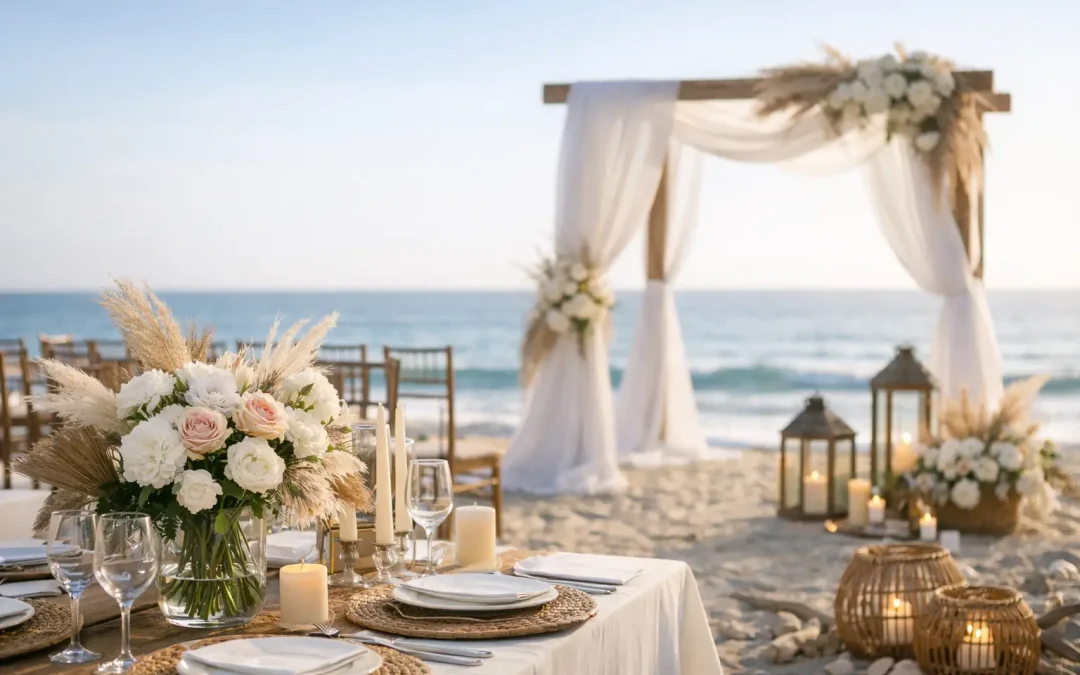
Some coastal weddings still lean too literal – seashells on every table, bright turquoise everywhere, and decor that feels more themed than tailored. The most compelling coastal wedding decor trends are moving in a different direction. They borrow from the shoreline, the light, and the relaxed elegance of a waterfront setting without turning the event into a beach motif.
For couples planning a polished celebration, that shift matters. Coastal design now feels more collected, textural, and venue-aware. It is less about obvious references and more about atmosphere – soft color movement, natural materials, thoughtful layering, and pieces that feel elevated from ceremony to reception.
Coastal wedding decor trends are getting more refined
The clearest shift is restraint. Couples still want a sense of place, especially in destinations with strong architectural and natural character, but they are asking for decor that complements the setting rather than competes with it. That often means cleaner lines, richer neutrals, and a more editorial approach to rentals and tablescapes.
This is especially relevant for coastal venues where the backdrop already does a great deal of visual work. If you have water views, mature oaks, marsh light, or an airy sailcloth tent, the decor does not need to shout. It needs to support the setting with the right furnishings, tabletop choices, and lighting moments.
1. Soft, grounded color palettes are replacing obvious beach tones
One of the strongest coastal wedding decor trends is the move away from bright nautical color stories. Instead of cobalt, aqua, and stark white, couples are choosing palettes built around sand, oyster, driftwood, sea glass, sage, misty blue, and muted stone.
These tones photograph beautifully and feel more luxurious because they are layered rather than high-contrast. They also give planners and hosts more flexibility. A softer palette works just as well in a formal tented reception as it does in a waterfront garden or historic property.
That said, muted does not have to mean flat. The most successful palettes usually include one point of structure – perhaps a deeper blue napkin, darker wood chair, or antique brass accent – to keep the room from feeling washed out.
2. Natural textures are doing more than decorative accents
Texture is carrying a lot of the design weight right now. Woven details, washed linen, cane-backed seating, raw wood, rattan lighting, and stone-inspired tabletop pieces all help create a coastal look without relying on novelty.
This is where rentals can shape the guest experience in a very visible way. Chairs, bars, lounge furniture, tabletop, and linens all contribute to the feel of the event before guests notice a single floral arrangement. A reception with layered textiles and warm materials tends to feel more intimate and finished than one built only around color.
There is a trade-off here. Too many rustic textures can start to pull the event away from refined coastal and into casual beach house. The balance usually comes from mixing organic materials with polished silhouettes, tailored place settings, and strong service pieces.
The best coastal wedding decor trends start with the table
Guests remember the table because they spend hours there. That is why current coastal wedding decor trends are showing up most clearly in tabletop design – not through gimmicks, but through thoughtful combinations that feel relaxed and elevated at the same time.
3. Layered place settings feel collected, not overly matched
Perfectly matched tabletop still has its place, but many couples are leaning toward settings with more character. Chargers, dinner plates, flatware, glassware, and napkins are being combined in ways that feel curated rather than uniform.
For a coastal wedding, that could mean pairing clean white or ivory dinnerware with textured linen napkins, pale smoked glassware, and warm metallic flatware. The effect is elegant without feeling stiff. It also allows the design to reflect the natural variation you see in coastal environments – subtle, tonal, and layered.
4. Linen selection is becoming a major design decision
Linens are no longer an afterthought. They are often what softens a venue, sharpens the palette, or gives a reception its sense of movement. In coastal settings, couples are favoring fabrics and tones that feel airy but intentional, such as quiet neutrals, muted stripes, or soft color variation with visible texture.
The right linen can also help bridge styles. If a venue feels formal, a more relaxed fabric keeps the event approachable. If the setting is very open or natural, a tailored linen can add the structure needed for a luxury presentation.
Furniture is shaping the atmosphere, not just filling space
Another major shift is the way couples are using event furniture. It is not simply functional anymore. Furniture is being selected as part of the visual story, especially in cocktail hour and lounge areas.
5. Lounge moments are becoming more architectural
Well-placed lounge groupings help coastal weddings feel more inviting and more considered. Rather than scattering a few soft seats wherever space allows, couples are building defined conversation areas with a clear shape, strong anchor pieces, and materials that connect back to the rest of the design.
That might include upholstered seating in soft neutrals, wood or cane accent tables, and a bar setup that feels integrated rather than separate. In open-air settings, these pieces also help large spaces feel warmer and more intentional.
The practical side matters too. Lounge areas are most effective when they are placed with guest flow in mind. A beautiful setup that blocks circulation or sits unused in direct sun will not deliver the experience couples want.
6. Ceremony setups are more tailored to the landscape
Ceremony decor is getting lighter in touch. Instead of overbuilding an altar against a naturally beautiful view, many couples are opting for designs that frame the setting rather than cover it. A clean aisle, well-scaled chairs, restrained floral placement, and a focused focal point often create a stronger result than something oversized.
This is especially true in coastal environments where wind, light, and uneven ground all affect what will actually work. A ceremony can be visually stunning and still be practical, but those choices need to be made early. The right chair style, layout, and installation approach matter just as much as the flowers.
Coastal wedding decor trends also reflect how people want to host
The best weddings feel generous. That idea is influencing decor choices more than ever. Couples are thinking beyond what looks good in photos and paying closer attention to how the room functions for guests.
7. Specialty food and beverage displays are becoming part of the decor
Bars, escort card moments, raw bar presentations, and specialty stations are increasingly treated as design features. When done well, these elements add hospitality and visual interest at the same time.
For a coastal wedding, that could mean a beautifully styled bar with textured shelving and glassware, or a specialty station that feels integrated into the event instead of dropped in at the last minute. The key is consistency. If the station looks disconnected from the furniture, linens, and tabletop, it can interrupt the overall design.
8. Weather-minded design is now part of luxury
Couples are more aware that comfort is part of the aesthetic. Shade, tenting, heaters, flooring, and layout decisions may sound operational, but they directly affect how polished the event feels. Guests notice when a ceremony is too hot, when a dance floor feels unstable, or when evening temperatures shift and there is no plan.
In coastal areas, those details are not extras. They are foundational. Wind can affect candles, paper goods, and lightweight decor. Humidity changes how fabrics perform. Ground conditions can shape what furniture and infrastructure make sense. The most successful events account for all of this from the start, which is why full-service rental planning often makes such a difference.
What to keep in mind when choosing your version of coastal
Not every trend belongs at every wedding. A historic venue may call for a more classic interpretation with fine tabletop and structured seating, while a waterfront tent might support a softer, more textural approach. The right mix depends on the setting, the season, the guest count, and how formal you want the event to feel.
A good rule is to choose two or three coastal cues and carry them through consistently. Maybe that is a tonal palette, natural wood furniture, and layered linens. Maybe it is sculptural lounge seating, soft blue-gray tabletop, and a bar statement piece. When every decision points in the same direction, the event feels intentional instead of themed.
For couples and planners who want that balance of beauty and ease, this is where experienced rental support becomes especially valuable. In a market like Charleston, where weather patterns, venue logistics, and design expectations all come into play, the right partner helps ensure that the look is not only beautiful on paper but truly ready for the day itself.
The coastal weddings people remember most are rarely the ones with the most obvious references. They are the ones that feel effortless, welcoming, and fully in tune with their setting.