

A table choice can quietly shape the entire event. When clients ask about round tables vs banquet tables, they are usually asking a bigger question: What will make the room feel right for the way we want people to gather, dine, and move?
That answer depends on more than preference. Guest count, venue dimensions, service style, centerpiece scale, and the tone of the event all matter. A ballroom dinner in downtown Charleston needs a different layout than a tented waterfront reception or an intimate private party at home. The best table plan balances beauty with function so the space feels polished from the first arrival to the last toast.
Round tables vs banquet tables: the real difference
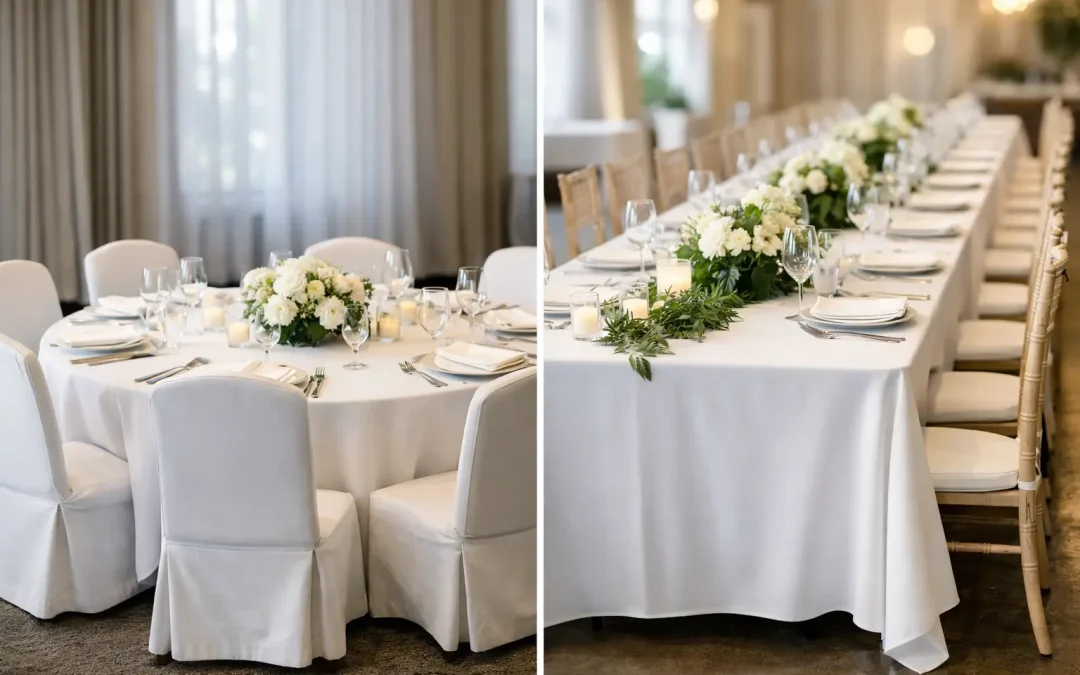
Round tables create a softer, more conversational layout. They naturally encourage guests to face one another, which makes them a favorite for weddings, galas, and social events where connection is part of the experience. A round table also breaks up a room visually, especially in larger spaces that benefit from a little movement and shape.
Banquet tables, often called rectangular tables, bring structure and direction. They can feel classic, tailored, and slightly more architectural in a room. For events with long sightlines, family-style dining, or a more editorial design approach, banquet tables often deliver a stronger visual statement.
Neither option is better across the board. The right choice comes down to how you want the event to look and how you need it to work.
When round tables make the most sense
Round tables are often the easier choice for guest comfort. Because everyone sits on a curve, conversation tends to feel balanced. No one is stuck at the far end of a long rectangle, and guests can usually interact with more people at the table without turning awkwardly.
For wedding receptions, this can be especially helpful when seating groups who may not all know one another. Round tables soften that dynamic. They make introductions feel more natural and help the room feel welcoming rather than rigid.
They also work beautifully with traditional reception layouts. If you want a dance floor centered in the room, a sweetheart table with balanced guest seating around it, or a layered arrangement of florals and candlelight, round tables often support that flow well. In many ballrooms and tented receptions, they create a sense of fullness without making the layout feel crowded.
There are practical advantages too. Round tables can improve circulation in some floor plans because guests and staff move around curved edges rather than sharp corners. That may not sound dramatic, but during dinner service, speeches, and dancing, small details like that matter.
Still, round tables are not perfect for every event. They typically use space less efficiently than rectangular tables, especially if you are working with a narrow room or trying to maximize seating. Large centerpieces can also take up valuable real estate, leaving less room for place settings, wine glasses, and shared items on the table.
When banquet tables are the stronger choice
Banquet tables offer a more intentional, design-forward look. They are often the right move when you want the tables themselves to help define the event aesthetic. Long rows under a sailcloth tent, paired with layered linens, taper candles, and low floral moments, can feel striking without trying too hard.
They are also efficient. In many venues, banquet tables let you seat more guests in a cleaner footprint. That is useful for corporate dinners, rehearsal dinners, fundraisers, and private events where capacity and layout discipline matter just as much as appearance.
Rectangular tables also pair well with family-style service or abundant tabletop styling. Bread baskets, shared plates, wine service, and elongated floral runners often sit more naturally on banquet tables than on rounds. If the meal is meant to feel communal and generous, a rectangular layout reinforces that mood.
For some events, banquet tables create a stronger sense of occasion. A head table, king’s table, or a series of long guest tables can feel elevated and curated in a way that is especially popular for modern weddings and upscale social gatherings.
The trade-off is conversation. Guests seated at the same long table may not be able to speak comfortably with everyone, especially at larger table lengths. That is not always a problem, but it is worth considering if guest interaction is a top priority.
Style matters, but so does room flow
The best table decision is rarely made from a mood board alone. A table may look beautiful in inspiration photos and still be the wrong fit for the venue.
Charleston-area events often take place in a mix of historic homes, waterfront properties, private clubs, outdoor tents, and event halls with very different dimensions. Ceiling height, entry points, dance floor placement, catering paths, and weather backup plans all influence what the room can comfortably support.
Round tables tend to perform well in square or open spaces. Banquet tables often shine in long, narrow rooms or layouts where you want to guide the eye in a certain direction. If the room needs clear paths for service staff, a bar, lounge seating, or entertainment, those functional zones should be mapped before the table shape is finalized.
That is one reason table planning benefits from an experienced rental partner. On paper, both options may seem workable. In the room itself, one will usually feel more graceful and efficient.
Guest experience should lead the decision
Hosts naturally think about appearance first, but guests remember how an event felt. Were they cramped? Could they hear each other? Was there enough space to settle in, dine comfortably, and move through the evening without interruption?
Round tables usually create a more traditional hospitality experience. Guests know where to orient themselves, and the seating feels familiar. For mixed-age groups, formal receptions, and events where people are spending a long time at the table, that comfort is valuable.
Banquet tables can feel more immersive and memorable, especially when the event is designed around shared dining and a dramatic tablecape. But they need enough width, enough elbow room, and enough aisle space to stay comfortable. If those details are overlooked, the room can start to feel tight even when it looks stunning.
A good rule is to decide what the table needs to do before deciding how it should photograph. The most successful events do both.
How to choose between round tables vs banquet tables
If conversation across the full table is the priority, round tables are often the better fit. If visual impact and efficient use of space matter most, banquet tables may be the stronger choice.
If your event is black-tie, floral-heavy, and centered around a dance floor, rounds often support that classic reception rhythm. If the event leans editorial, communal, or dinner-party inspired, banquet tables can create the cleaner line you are after.
It also does not have to be all one or the other. Many of the most polished layouts mix both. You might use rounds for the majority of guest seating and banquet tables for the head table, or use long tables in one section of the event and rounds in another. A thoughtful combination can solve both design and logistical needs without forcing a single format everywhere.
At Republic Event Rentals, that is often where the planning gets more refined. The best layouts are not chosen by trend alone. They are selected around the venue, guest experience, service plan, and overall atmosphere you want to create.
A final thought for hosts and planners
The right table should make the event feel effortless. Whether that means the warmth of round tables or the clean presence of banquet tables, the goal is the same: a room that welcomes guests beautifully and works just as well behind the scenes.