


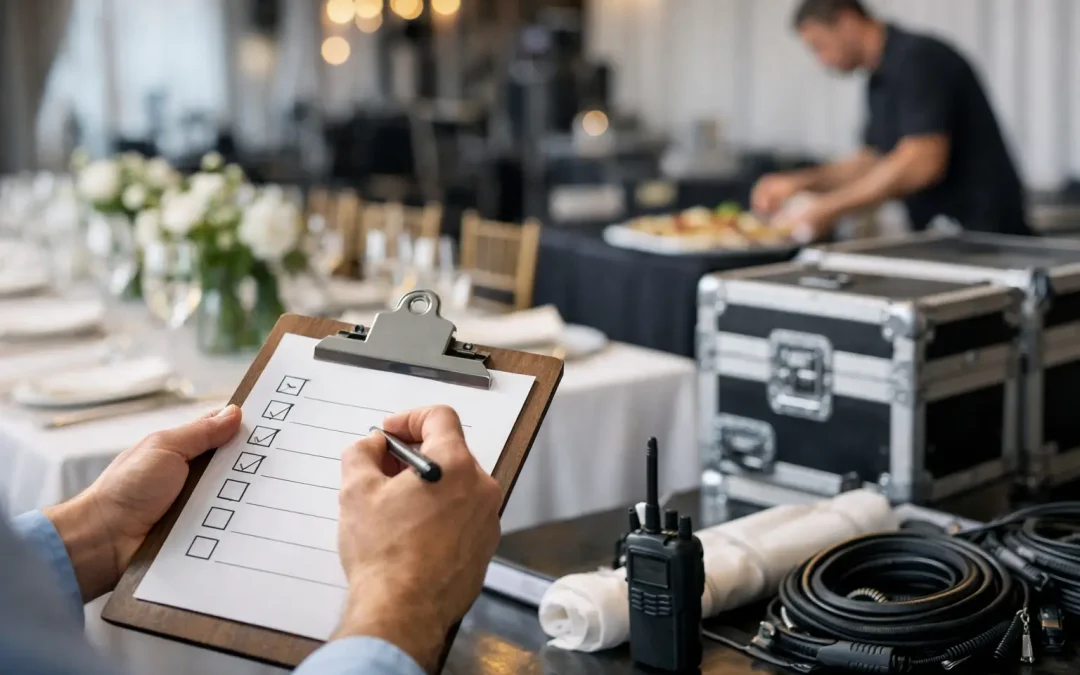
An elegant event can fall apart over something surprisingly small – a loading dock that closes at 4, a lawn too soft for a dance floor install, or a venue manager who was never told when rentals would arrive. That is why an event delivery setup checklist matters just as much as your table design or floral palette. If you want the day to feel polished, calm, and beautifully run, delivery and setup need the same attention as the guest experience.
For weddings, corporate gatherings, private dinners, and milestone celebrations, the best setups are rarely improvised. They are planned with enough detail to protect both the look of the event and the pace of the day. In Charleston and throughout the Lowcountry, that planning also needs to account for weather, historic properties, narrow access points, and venues with very specific rules.
What an event delivery setup checklist should cover
A strong event delivery setup checklist does more than confirm that tables and chairs are coming. It creates clarity around where items are going, when teams can access the site, who is approving placement, and what conditions may affect the installation. This is the difference between a rental order and a full event setup plan.
Start with the basics, but do not stop there. Item counts matter, of course, yet timing, access, and environment are what often determine whether setup feels efficient or rushed. A luxury event should never look like it was assembled under pressure, even if the schedule is tight.
Confirm the full rental scope
Before delivery day is scheduled, review the complete inventory list in context of the event itself. Tables, chairs, linens, glassware, flatware, dinnerware, bars, lounge seating, heaters, tents, and dance floors all have different setup needs. Some pieces simply need to be dropped in place. Others require measured layouts, level ground, power access, or coordination with catering and floral teams.
This is also the moment to catch gaps. A host may remember guest seating and overlook cocktail tables. A planner may finalize the lounge and forget back-of-house catering equipment. The closer the event gets, the more expensive these omissions become in time, labor, and stress.
Match delivery timing to the real schedule
The event timeline on paper is not always the timeline that matters for setup. A ceremony may start at 5:30, but if florals need tables staged by noon and a venue only allows access after 10 a.m., your delivery window becomes much narrower than it first appears.
Good scheduling considers who needs the space before and after the rental team. Planners, caterers, floral designers, entertainment crews, and photographers all interact with the setup in different ways. If the room is too crowded too early, everyone slows each other down. If rentals arrive too late, design teams lose the foundation they need to finish their work.
Venue details to include on your event delivery setup checklist
Venue information is where many preventable problems begin. A beautiful property may have limited parking, strict protection requirements for flooring, or no direct path to the tent site. Those details should be addressed long before the truck arrives.
Access, parking, and load-in paths
Every venue should be reviewed for practical access. That includes gate codes, service entrances, elevator use, loading dock reservations, parking limitations, and distance from unloading point to setup area. For historic homes and waterfront properties especially, charm and logistics do not always go hand in hand.
If an event is taking place on private property, access matters even more. Soft lawns, shell driveways, irrigation lines, and tight side yards can all affect installation. A tent, dance floor, or lounge grouping may be possible, but the team should know the conditions in advance.
Venue rules and on-site contacts
Some venues require certificates, specific delivery windows, or supervision during load-in. Others prohibit certain installation methods or have strict breakdown times tied to neighborhood noise rules. These are not minor details. They shape labor, scheduling, and what can realistically be installed.
Always confirm the day-of decision maker. If the rental crew arrives and the planner is with the bridal party, someone else should be available to answer placement questions and authorize adjustments.
Layout planning is where style meets function
A room can be beautifully furnished and still feel awkward if the setup ignores guest movement. Layout planning should support both the visual impression and the actual way people will use the event.
Begin with the guest experience. Consider arrival flow, where guests place drinks, how servers move between tables, and whether seated guests can comfortably navigate the room. A dance floor that looks perfect in a rendering may feel cramped once band equipment, a bar line, and service paths are added.
Placement notes that save time
Specific placement instructions help avoid guesswork during setup. Instead of saying “lounge near patio,” define which pieces belong there, how they should be oriented, and whether that area must stay open for cocktail service or photos. The same goes for bars, escort card tables, ceremony seating, and specialty stations.
This level of detail is especially helpful when multiple teams are building the event in stages. Clear instructions keep the look cohesive and reduce the need to move heavy pieces after florals, linens, or place settings are already installed.
Build in room for the unexpected
Even the best floor plan may need adjustment on site. A patch of ground may be uneven. Wind may affect an outdoor layout. A venue may request a wider path for staff access. A good checklist leaves space for these decisions instead of assuming every setup condition will match the original drawing exactly.
That flexibility is not a compromise in quality. It is often what protects it.
Weather, terrain, and Charleston-specific realities
In the Lowcountry, environmental conditions deserve their own section of the checklist. A lovely outdoor event in Charleston can shift quickly with heat, humidity, coastal wind, or sudden rain. Setup plans should reflect that from the start.
For tented events, confirm the surface type, drainage, stake permissions, and backup options if weather changes. For outdoor dining, think beyond the table setting and consider guest comfort. Shade, heaters, and stable surfaces under seating can make a dramatic difference in how refined the event feels.
Humidity also affects timing. Linens, tabletop pieces, candles, and floral elements all perform differently outdoors than in a climate-controlled venue. If an install is happening early in the day for an evening event, some elements may need to be staged later to preserve the final presentation.
Setup and breakdown deserve equal attention
Hosts often plan delivery carefully and treat breakdown as an afterthought. That can create problems at the very end of an otherwise beautiful event.
Breakdown timing should reflect the venue’s rules, neighborhood considerations, and what will still be happening on site when guests depart. If catering needs time to clear food service or a band has a scheduled strike, those pieces affect how and when rentals can be collected.
It also helps to know what is expected before pickup. Some rental partners ask that items be consolidated, scraped, or packed in a certain way, while others handle everything on site. Clear expectations protect your timeline and prevent surprise labor charges.
When full-service support makes the biggest difference
There is a point where managing setup details yourself stops being efficient, especially for weddings, tented events, multi-space celebrations, and high-touch corporate functions. The more layered the event, the more valuable it becomes to have one experienced team coordinating delivery, placement, and breakdown with the bigger picture in mind.
That is particularly true when design and logistics are closely tied. If your event depends on a carefully edited mix of tabletops, lounge pieces, bars, specialty furniture, and infrastructure, setup is no longer just a delivery task. It becomes part of the event production.
For many Charleston-area hosts and planners, that is where a partner like Republic Event Rentals brings real ease to the process. The value is not simply having beautiful inventory available. It is knowing the team understands how that inventory needs to arrive, be installed, and support the event from first load-in to final pickup.
A practical event delivery setup checklist to review before the date
Before your event week begins, make sure you can confidently answer these questions:
- Is the full rental order complete, with final counts and all supporting pieces included?
- Has the venue approved delivery and setup timing?
- Are load-in access points, parking instructions, and site conditions clearly documented?
- Does the setup team have a detailed layout with placement notes?
- Are weather backup plans in place for outdoor elements?
- Is there a confirmed on-site contact for delivery, setup, and breakdown?
- Have breakdown timing and post-event responsibilities been clarified?
If any answer is uncertain, it is worth resolving before the truck is on the road. Small uncertainties tend to become large disruptions once installation begins.
The most memorable events feel gracious from the start. Guests notice the candlelight, the lounge, the tabletop, and the overall atmosphere, but what they are really responding to is care. A thoughtful setup plan creates that feeling long before the first guest arrives.