

A lounge area can change the entire rhythm of an event. Guests step out of the crowd, settle into conversation, and stay longer when the setting feels inviting. That is why choosing the best event lounge furniture pieces is not just about filling space – it is about shaping how the event feels, photographs, and functions from start to finish.
For weddings, lounge furniture softens formal layouts and gives guests a place to gather between key moments. For corporate events, it creates a more relaxed setting for networking. For private parties, it adds polish while making the room feel layered and intentional. The right pieces do all three jobs at once: they look elevated, support guest comfort, and fit the pace of the occasion.
What makes the best event lounge furniture pieces stand out
The strongest lounge setups are never random. They are selected with scale, comfort, traffic flow, and visual balance in mind. A beautiful sofa that is too large for the footprint can make a tent or ballroom feel cramped. A sleek chair that looks stunning in photos but is uncomfortable after ten minutes will not serve guests well.
The best event lounge furniture pieces tend to share a few qualities. They are versatile enough to work across event styles, substantial enough to anchor a space, and refined enough to elevate the overall design. They also need to coordinate with surrounding rentals like cocktail tables, bars, linens, and lighting. Lounge furniture rarely works as a standalone design decision.
Another factor is practicality. Upholstery color, material, and silhouette all affect where a piece works best. Outdoor celebrations, waterfront settings, and tented events may call for different selections than an indoor ballroom reception. In coastal settings especially, lighter palettes and airy shapes often feel right, but they still need enough structure to avoid looking too casual.
1. Sofas that anchor the room
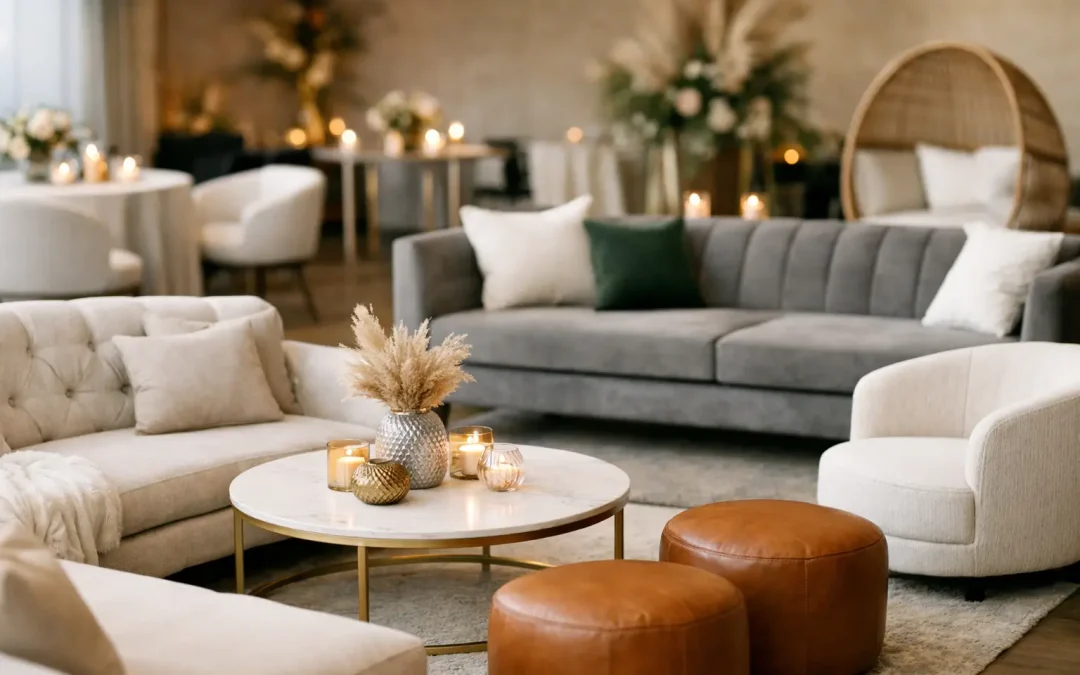
If there is one piece that defines a lounge arrangement, it is the sofa. It gives the setup presence and immediately signals that the space is meant for guests to settle in. A well-scaled sofa can make even a small lounge vignette feel finished.
Neutral sofas are often the safest and smartest investment for event design because they adapt so easily. Cream, sand, taupe, and soft gray work with nearly any palette, from classic black tie weddings to modern corporate gatherings. Curved silhouettes can feel softer and more fashion-forward, while clean-lined sofas bring structure to contemporary events.
That said, the right sofa depends on the mood. Plush upholstery feels warm and welcoming, while a more tailored profile reads crisp and formal. For cocktail-heavy events where guests sit briefly, a firmer seat can work well. For celebrations designed around lingering conversation, comfort matters more.
2. Accent chairs that add shape and flexibility
Accent chairs are among the most useful lounge pieces because they can shift easily within a floor plan. They help frame a seating area, create conversational balance, and add visual variation next to a sofa.
They also let you introduce a different material or silhouette without overwhelming the design. A pair of upholstered club chairs can make a lounge feel classic and grounded. Cane, wood-framed, or sculptural chairs can bring in texture and a lighter touch. In many layouts, chairs are what keep the arrangement from looking flat.
Flexibility is part of their appeal. If the guest count changes or the room needs to be adjusted during setup, accent chairs are easier to reposition than larger upholstered pieces. That makes them especially valuable for multi-use venues and events where every square foot matters.
3. Coffee tables that make the lounge feel intentional
A lounge without a coffee table often feels incomplete. Even when guests do not use it heavily, the table gives the seating group a center and helps the space read as purposeful rather than scattered.
This is one of the most overlooked best event lounge furniture pieces because planners and hosts sometimes focus only on seating. But a coffee table grounds the arrangement visually and gives guests a practical place for drinks, small plates, or personal items.
Material matters here. Wood tables bring warmth and are easy to blend into many aesthetics. Glass can look elegant and light, though it may be less forgiving in high-traffic settings. Stone-look or textured tables feel elevated, but weight and placement should be considered carefully. The choice should support both the design and the flow of service.
4. Side tables that improve comfort without stealing attention
Side tables rarely get top billing, but guests notice when they are missing. A sofa or chair becomes much more usable when there is a nearby surface for a cocktail or glass of water.
The best side tables are small enough to fit comfortably into the arrangement but substantial enough to look intentional. They help break up upholstery-heavy lounges and add another layer of material, whether that is wood, metal, or stone-inspired finish.
For larger events, side tables also support service. Guests do not want to balance drinks through an entire cocktail hour or reception. Thoughtful placement makes a lounge area feel more hospitable, which is the entire point.
5. Ottomans and poufs for relaxed, adaptable seating
Ottomans and poufs bring an ease that more structured furniture cannot always deliver. They can work as footrests, extra seating, or even soft-surface tables when styled appropriately. In lounges that need flexibility, they are extremely useful.
They are especially effective in social events where guests move in and out of groups. A pouf can be tucked under a table, pulled into conversation, or used to soften the overall silhouette of the setup. That kind of adaptability is valuable when an event needs to feel polished without becoming stiff.
There is a trade-off, though. Ottomans and poufs should support the main seating, not replace it. Too many can make the lounge feel informal or under-furnished. They work best as secondary pieces layered into a more complete arrangement.
6. Benches for entry moments and high-traffic spaces
Benches are often underestimated because they do not have the visual prominence of a sofa or the personality of an accent chair. But in the right setting, they solve several design and logistical needs at once.
They are ideal near entrances, tent openings, portrait areas, and transitional spaces where guests may want a brief place to sit without committing to a full lounge zone. They can also be useful at weddings when the design calls for a refined seating moment outside the dance floor or near the bar.
Because benches tend to have a smaller footprint, they work well in tighter layouts. The key is choosing a bench with enough design presence to feel elevated. Upholstered styles are typically the most versatile for luxury events.
Best event lounge furniture pieces for different event styles
The best lounge furniture setup depends on what the event needs the space to do. A wedding reception often benefits from layered seating that encourages guests to gather between dinner and dancing. That may mean a sofa, two chairs, a coffee table, and a pair of side tables arranged as a complete vignette.
A corporate event may call for cleaner lines and more modular flexibility. Lounge areas often need to support networking rather than long-form relaxation, so pieces should look polished while allowing easy movement. In that setting, chairs and smaller sofas often outperform oversized residential-style seating.
Private celebrations usually leave more room for personality. This is where texture, shape, and mood can come forward. A birthday dinner, holiday party, or garden celebration may benefit from softer silhouettes and warmer finishes that make the event feel layered and welcoming.
How to choose lounge furniture without overfilling the space
One of the most common mistakes is selecting too many pieces. Lounge furniture should create intimacy, not congestion. Guests need room to approach, sit down, stand up, and circulate naturally.
Start with the purpose of the area. If it is meant to be a focal point, give it enough presence to anchor the room. If it is meant to support flow around a dance floor, bar, or tent edge, keep the arrangement lighter. More furniture does not always mean more luxury. Often, restraint looks more elevated.
Scale also matters in relation to the venue. Historic homes, waterfront lawns, sailcloth tents, and hotel ballrooms all carry space differently. What feels perfectly proportioned in one setting can feel crowded in another. This is where experienced event guidance makes a real difference, especially when local conditions and venue logistics are part of the equation.
A lounge should look good and work hard
The most successful event lounges strike a balance between style and usefulness. They photograph beautifully, support guest comfort, and make the event feel thoughtfully layered. Sofas, accent chairs, coffee tables, side tables, ottomans, and benches each play a distinct role, but the strongest results come from how they work together.
When chosen well, lounge furniture does more than decorate a corner. It gives guests a place to connect, pause, and enjoy the event in a way that feels natural. That is often the detail people remember long after the last table has been cleared.