


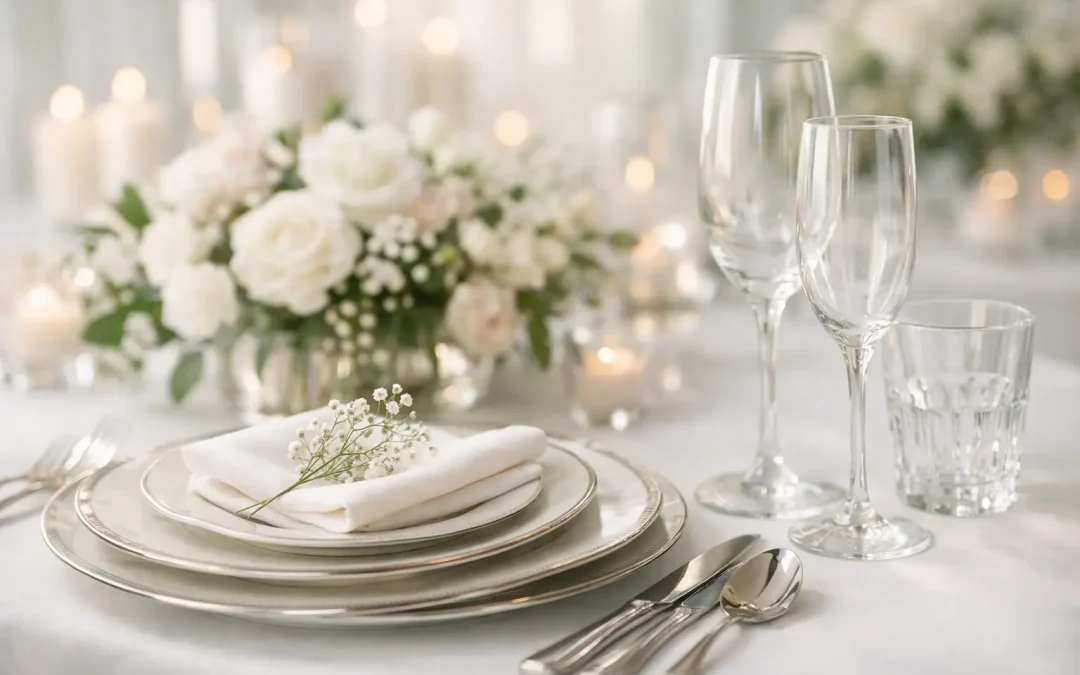
The table is where wedding design stops being an idea and starts feeling real. Flowers may set the mood, but formal tableware for weddings shapes the guest experience in a way everyone notices – from the first place setting to the last toast.
For couples planning a polished reception, tableware is not just a practical checklist item. It affects how the menu is served, how the room photographs, and whether the overall look feels refined or slightly off. The right mix of dinnerware, flatware, glassware, and linens creates a table that feels intentional, welcoming, and worthy of the occasion.
What formal tableware for weddings really includes
When people hear tableware, they often think only of plates and silverware. In reality, formal tableware for weddings is a full tabletop story. It includes dinner plates, salad or appetizer plates, chargers, flatware, water goblets, wine glasses, champagne coupes or flutes, coffee service, and the linens that frame each setting.
That broader view matters because every piece affects proportion and tone. A delicate china pattern can feel out of place with oversized modern stemware. Sleek flatware may sharpen a classic tablescape, while textured linens can soften a more tailored setting. Formal does not always mean ornate. Often, it means coordinated, balanced, and appropriate to the style of service.
Start with the style of the wedding
The best tableware choices begin with the overall atmosphere you want guests to feel. A black-tie ballroom reception usually calls for a more structured tabletop, often with chargers, layered plates, polished flatware, and stemware that reads elegant at first glance. A tented coastal wedding may still be formal, but the expression is different – lighter, airier, and often better suited to clean silhouettes, subtle texture, and glassware that feels elevated without looking heavy.
This is where many couples get stuck. They know they want a beautiful table, but not whether that beauty should feel classic, tailored, romantic, or contemporary. The answer usually sits in the venue, the floral plan, and the meal style. A historic property may naturally support timeless china and traditional shapes. A modern waterfront setting may benefit from a more restrained mix with crisp lines and understated shine.
Dinnerware sets the visual foundation
If there is one tabletop element that does the most visual work, it is the plate stack. Dinnerware anchors the place setting and helps the rest of the design read clearly. White or ivory plates remain a favorite for formal weddings because they are versatile, photograph beautifully, and allow food and floral details to stand out.
That said, neutral does not have to mean plain. A plate with a subtle rim, embossed texture, or fine metallic edge can add polish without competing for attention. Patterned china can also be stunning, especially for a garden wedding or a reception with a more layered design direction, but it works best when the rest of the table is edited carefully.
Chargers deserve attention here as well. They give each setting presence and create a finished look, particularly for plated dinners. Not every wedding needs them. If the menu is more relaxed or the table already has a great deal of visual texture, chargers can feel excessive. But for a truly formal reception, they often provide the structure that makes the entire table feel complete.
Flatware should match the tone, not just the plate
Flatware is easy to underestimate because guests use it without necessarily commenting on it. Still, they feel the difference. Weight, finish, and shape all contribute to the overall impression.
Traditional silver-tone flatware works in almost any formal setting. It is timeless, flexible, and easy to pair with a range of dinnerware and linen styles. Brushed gold, champagne, or matte black can also work beautifully, especially when they echo lighting, candleholders, or other metallic accents in the room.
The trade-off is cohesion. A statement flatware finish can sharpen the design, but it also asks the rest of the table to support it. If you already have a patterned plate, colored linen, and abundant floral movement, a bold flatware choice may tip the table from elevated to busy. In a quieter palette, though, it can add exactly the right amount of distinction.
Glassware brings height and hospitality
Great glassware does more than hold beverages. It adds sparkle, dimension, and rhythm across the table. At a formal wedding, guests usually need at least a water glass and a wine glass, with additional stemware depending on the bar program and dinner service.
The most effective glassware choice often comes down to silhouette. Traditional stemware feels graceful and classic. Cleaner, more contemporary profiles can bring freshness to a formal table without making it feel casual. Mixing styles can work, but only when the shapes still feel related.
This is also one of the most practical parts of planning. Formality should never interfere with service. If the dinner includes multiple courses, toasts, and wine pairings, the table needs enough room to function. An overcrowded place setting is not luxurious. It is difficult for guests and stressful for staff. A well-planned table always leaves space for movement.
Linens are what make the tabletop feel finished
Linens often determine whether a table feels flat or layered. The color sets the base mood, while the texture affects how formal the setting feels. Crisp white linens are enduring for a reason – they look clean, elegant, and adaptable. But soft neutrals, muted coastal tones, or richer evening shades can create a more customized atmosphere.
Napkins deserve more thought than they usually get. They are one of the easiest ways to introduce texture, contrast, or a subtle accent color. A tailored fold reads differently than a softly knotted napkin or a draped placement beneath the flatware. None is inherently better. It depends on whether the wedding leans traditional, romantic, or more editorial in style.
In Charleston and other coastal settings, linen selection also has a practical side. Light movement from outdoor air, humidity, and tented conditions can affect how fabrics behave over the course of an event. Beautiful choices still need to hold their shape and perform well during service.
Match the tableware to the menu and service style
A formal table should never be designed in isolation from the food. The menu and service style should guide the setup from the beginning. A plated multi-course dinner generally benefits from a more structured arrangement with defined glassware, chargers, and course-appropriate flatware. A station-based reception or family-style dinner may call for a slightly lighter approach, even if the look remains refined.
This is where experience matters. The prettiest layout on paper can become inconvenient if there is no space for bread service, shared dishes, or course transitions. Couples often focus on appearance first, which is understandable, but the strongest wedding tables balance design and flow equally well.
Coordination matters more than abundance
One of the easiest mistakes in formal wedding design is assuming that more pieces automatically mean more elegance. In practice, the most beautiful tables are usually edited. They have enough variation to feel rich, but not so much that the eye does not know where to land.
A clean plate, polished flatware, well-scaled stemware, and thoughtful linen can often do more than a crowded setting with too many materials competing at once. If your flowers are lush and expressive, the tableware can be quieter. If your floral plan is intentionally restrained, the tabletop can carry more visual detail. It is a balance, not a formula.
That is often where a full-service rental partner becomes especially valuable. Companies like Republic Event Rentals help clients think beyond individual items and toward a complete, workable table that suits both the event design and the logistics behind it.
How to know you have the right look
A well-chosen formal table setting should feel easy the moment you see it. Not plain, and not overworked. Just clear in its point of view. The pieces should make sense together, support the meal being served, and reflect the level of hospitality you want guests to experience.
If you are deciding between options, ask a few simple questions. Does this tableware suit the venue? Does it support the menu? Does it still look elegant once florals, candles, menus, and guest count are factored in? And just as important, can it be delivered, set, and cleared without adding unnecessary complexity to the day?
The right formal tableware for weddings does not call attention to itself for the sake of it. It creates a setting where every guest feels cared for, every course lands beautifully, and the entire reception feels as polished as the moment deserves. That is the kind of detail people may not name outright, but they remember it all the same.