


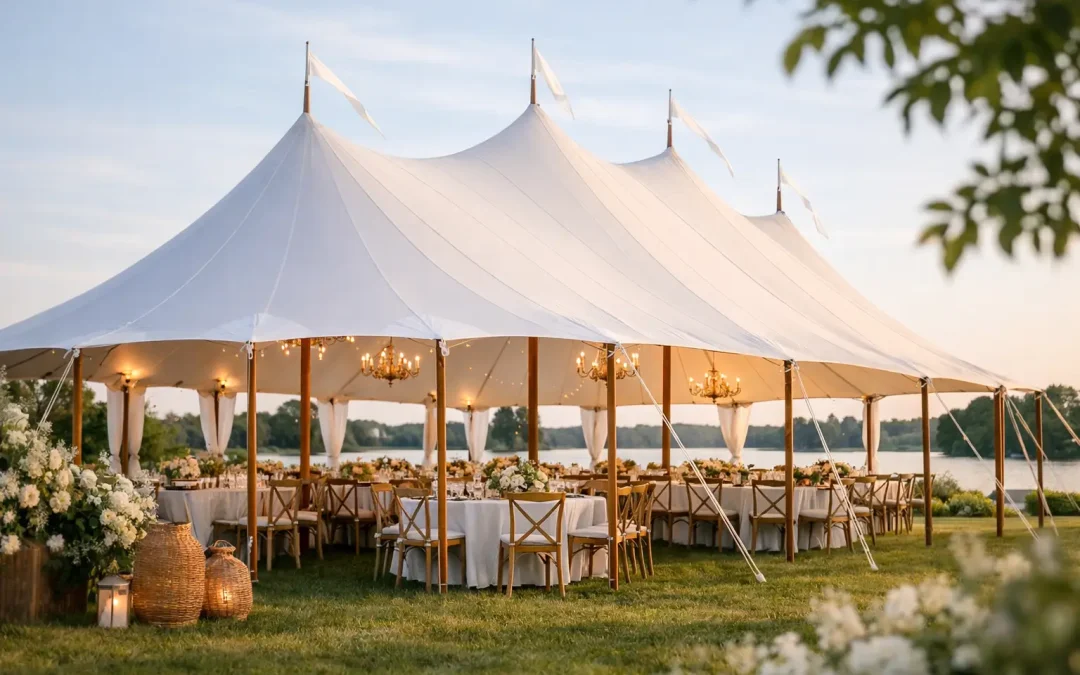
If you have ever stepped into a reception where the tent seemed to glow at sunset, there is a good chance you were standing inside a sailcloth tent. This sailcloth tent review is for hosts and planners who love that airy, refined look but also want to know whether it performs as beautifully as it photographs.
Sailcloth tents have become a favorite for weddings, private celebrations, and polished outdoor events because they offer something many frame tents and standard pole tents do not. They feel architectural without looking heavy. The peaks are graceful, the fabric lets in warm natural light, and the overall effect is elevated without trying too hard.
That said, visual appeal is only part of the story. A tent has to work with your site, your guest count, your weather plan, and your service flow. The right choice depends on more than aesthetics.
Sailcloth tent review: what makes it stand out
The first thing most people notice is the fabric. Sailcloth tents use a translucent material that softens daylight and creates a warm glow as the sun drops. For weddings and evening events, that quality is hard to overstate. It gives the entire space a flattering, romantic atmosphere before you add a single candle or strand of lighting.
The lines are another major advantage. Sailcloth tents feel lighter and more open than many traditional event tents. Wooden center poles and sculpted peaks bring in texture and height, which helps the structure feel intentional rather than purely functional. For events where design matters, that difference shows up immediately in photos and in the guest experience.
They also tend to complement beautiful outdoor settings rather than compete with them. If your venue has marsh views, live oaks, waterfront lawns, or a carefully landscaped garden, a sailcloth tent usually enhances the setting instead of blocking it off.
The strongest advantages of a sailcloth tent
For upscale events, the biggest win is the balance between elegance and practicality. A sailcloth tent gives you weather coverage and a defined event footprint while still feeling open to the surrounding environment. That makes it especially appealing for weddings where couples want the security of a tent without losing the charm of an outdoor celebration.
Lighting is where these tents really earn their reputation. During the day, the fabric allows in a soft natural brightness that can make florals, tablescapes, and linens look especially beautiful. In the evening, interior lighting tends to feel warmer and more dimensional under sailcloth than under opaque white vinyl. The result is less stark and more inviting.
There is also a strong design advantage in the structure itself. The center poles can frame a dance floor beautifully, and the higher peaks prevent the room from feeling compressed. Even when the footprint is not enormous, the tent can feel spacious.
From a guest perspective, sailcloth tents often feel more special than standard options. People may not know the technical name for the tent, but they notice the atmosphere. It reads as thoughtful, curated, and event-worthy.
Where a sailcloth tent may not be the best fit
This is where a balanced sailcloth tent review matters. These tents are not the right answer for every event.
Because sailcloth tents are typically installed as pole tents, they require staking into the ground. That means they are best suited for grass or other surfaces that can accommodate stakes. If your event is on concrete, a rooftop, or a site with installation restrictions, another tent style may be more appropriate.
The center poles are also part of the visual charm and part of the planning equation. Some clients love them. Others find them limiting if they are trying to create a very specific stage layout, unusually wide dance floor, or a clear-span interior. It depends on how you want the space to function.
Weather is another factor. Sailcloth tents provide protection from sun and light to moderate weather conditions, but tent selection should always be part of a broader weather strategy. Sidewalls, flooring, fans, heaters, and drainage planning may still be needed depending on the season and the site. A beautiful tent does not remove the need for practical event planning.
There is also the budget conversation. Sailcloth tents are a premium product, and they should be treated that way in your planning. If your priorities are purely utilitarian, a different tent style may deliver shelter at a lower cost. If your priorities include atmosphere, photography, and overall guest impression, sailcloth often justifies the investment.
Sailcloth tent review for weddings and social events
For weddings, sailcloth tents are often an excellent fit. Ceremony transitions, cocktail hours, seated dinners, and dancing all benefit from the soft, open look of the structure. They pair especially well with layered linens, natural wood, cane-back or cross-back chairs, statement bars, and floral installations that do not need a heavy architectural backdrop.
They also suit celebrations that want to feel polished but not overly formal. A black-tie waterfront wedding, a rehearsal dinner under the trees, or a milestone birthday with thoughtful tablescapes can all sit comfortably under sailcloth.
For corporate events, the answer is more nuanced. If the goal is hospitality, client entertaining, or a brand event with a warm upscale feel, sailcloth can work beautifully. If the event requires extensive AV, hard set staging, or a more controlled interior environment, another structure may be better suited.
Private hosts often appreciate how much the tent does on its own. Even before the furniture and tabletop pieces arrive, the structure already creates a mood. That can make the rest of the design process feel more cohesive.
Sizing and layout matter more than most clients expect
One of the most common mistakes in tent planning is choosing size based only on guest count. In reality, the layout drives the size almost as much as attendance does.
A seated dinner with round tables, a dance floor, buffet stations, bars, and lounge seating needs a very different footprint than a cocktail-style event for the same number of guests. Add a band, catering support space, or tented pathways, and the square footage grows quickly.
With sailcloth tents, scale also affects the look. A tent that is too small can feel crowded and diminish the airy effect people love. A tent that is oversized may look sparse unless the furnishings and floor plan are designed thoughtfully. The ideal installation feels intentional, with enough breathing room for service and guest movement.
This is where experienced rental planning makes a real difference. The best tent choice is not just about what looks pretty in a photo. It is about how guests arrive, where cocktails are served, how dinner flows, where the dance floor lands, and how the event feels from start to finish.
Site conditions can make or break the experience
A sailcloth tent is only as successful as the site beneath it. Level ground, drainage, access for installation, and overall footprint clearance all matter. Trees can be beautiful, but low branches may interfere with tent placement. Soft ground after rain can affect both installation and guest comfort. Long distances from load-in points can shape labor and timing.
In coastal markets like Charleston, weather and terrain deserve special attention. Humidity, wind, and sudden rain are part of outdoor event planning. That does not make sailcloth a poor choice. It simply means the tent should be selected and installed with local knowledge, proper accessories, and a realistic plan for conditions.
Flooring is another consideration many hosts overlook at first. On some properties, a tent over grass feels relaxed and perfectly appropriate. On others, flooring improves both comfort and polish, especially for formalwear, dining service, and dancing. The best approach depends on the venue, the season, and the tone of the event.
So, is a sailcloth tent worth it?
For many elevated events, yes. If your priority is a tent that feels as beautiful as the celebration itself, sailcloth is one of the strongest options available. It offers softness, height, warmth, and a sense of occasion that standard tents often do not match.
The trade-off is that it asks more from the site and the planning process. It is not the most flexible option for every surface or every floor plan. It also belongs in a premium budget conversation, especially when paired with the lighting, flooring, furnishings, and weather accessories that help it perform at its best.
Still, when the setting is right and the layout is handled well, a sailcloth tent can transform an outdoor event. It does not just cover the party. It becomes part of the design.
If you are weighing tent options, the smartest move is to think beyond shelter alone. Consider the feeling you want guests to have the moment they step inside, because the right tent shapes that experience long before dinner is served.