

A tent sets the tone of an event long before guests notice the florals or the table settings. When clients ask about sailcloth tent vs frame tent, they are usually deciding between two very different experiences – one that feels romantic and open-air, and one that offers clean structure and layout flexibility.
In Charleston and the surrounding Lowcountry, that choice matters even more. Coastal light, soft lawns, historic venues, uneven ground, heat, humidity, and the occasional windy forecast all shape what will work beautifully and what will work hard behind the scenes. The right tent is not just a design decision. It is part of how the entire event functions.
Sailcloth tent vs frame tent: the visual difference
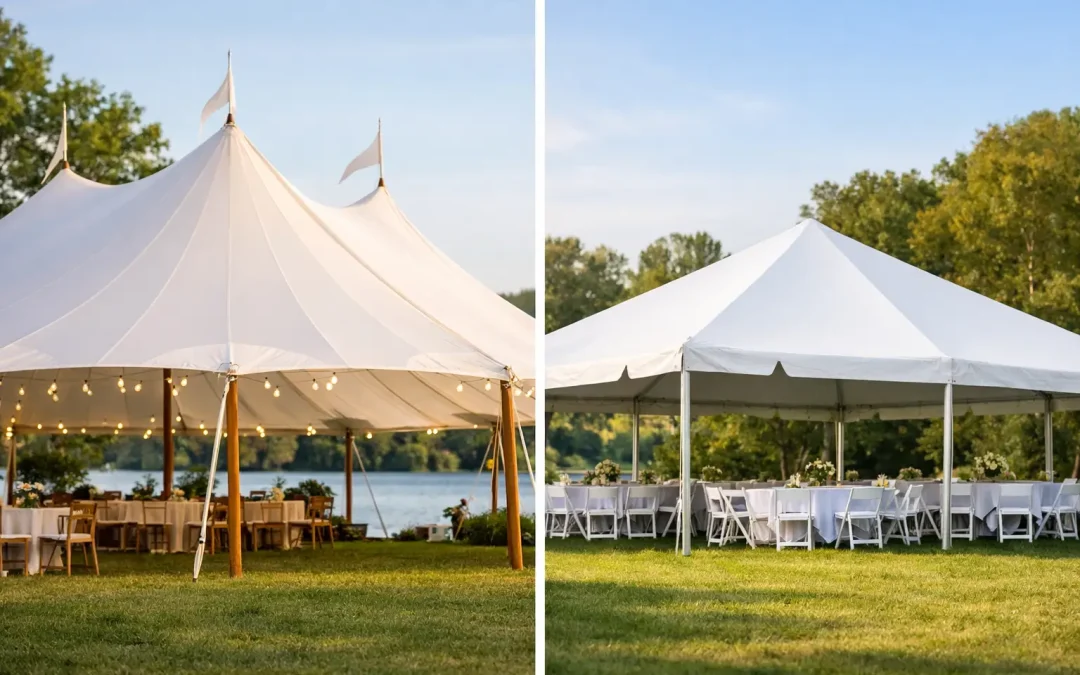
If your priority is atmosphere, a sailcloth tent often wins hearts quickly. It has sculptural peaks, translucent fabric, and a lighter, more organic presence outdoors. In the right setting, especially at waterfront properties, private estates, or open lawns, it creates a look that feels polished without feeling rigid. Daylight filters through the top beautifully, and in the evening it glows in a way that photographs especially well.
A frame tent reads differently. Its lines are more tailored and architectural, with a neat profile that can feel modern, classic, or understated depending on the event design. Rather than becoming the centerpiece, a frame tent often acts as a refined backdrop for everything happening underneath it. That can be a major advantage when the vision depends on a very specific floor plan, custom lighting, or a tightly curated guest experience.
Neither is automatically more luxurious. Luxury comes from fit – how well the structure suits the property, the event style, and the guest flow.
How each tent affects the layout
The biggest functional difference between these two styles is what happens inside the tent.
A sailcloth tent typically uses center poles. Those poles are part of its charm, but they do affect the floor plan. For many weddings and social events, that is not a drawback at all. The poles can frame a dance floor, divide dining areas naturally, or even become part of the decor with greenery or lighting. Still, if you need wide-open sightlines for a presentation, a very precise seating chart, or a large uninterrupted dance floor, the pole placement needs careful planning.
A frame tent is supported through its perimeter and frame system, which usually allows for a more open interior. That gives planners and hosts more freedom with table placement, staging, bars, catering zones, and guest circulation. Corporate events often benefit from this. So do private celebrations where every foot of usable space matters.
This is where the conversation shifts from sailcloth tent vs frame tent in theory to what your event actually needs. A tent can be beautiful, but if the layout feels cramped or awkward, guests will notice.
Site conditions often make the decision for you
Charleston events rarely happen in blank-slate conditions. A venue may have ancient oaks, narrow access points, paver courtyards, fragile turf, compact urban footprints, or waterfront exposure. Those details matter as much as the guest count.
Sailcloth tents are often best on grass or other staking-friendly surfaces where they have enough room to breathe. They shine in open spaces where the shape of the tent can be appreciated and where the surrounding landscape is part of the event design. If the site is tight, heavily hardscaped, or restricted from staking, a sailcloth option may become more complicated or may not be the best fit at all.
Frame tents tend to be more adaptable on challenging sites. They can work well in courtyards, patios, driveways, terrace settings, and other spaces where staking or pole placement is limited. They are also useful when a tent needs to fit close to a building or within a narrow footprint. For many Charleston properties, especially those with mixed surfaces or historic constraints, that flexibility is valuable.
A beautiful rendering never tells the full story. Site realities do.
Weather matters, especially in the Lowcountry
Tent selection in the Lowcountry should always account for weather, not just aesthetics. Heat management, airflow, rain planning, and wind exposure all deserve attention from the start.
Sailcloth tents are beloved for their airy look and the way they complement outdoor settings. In mild weather, they can feel especially inviting. But because they are often chosen for open, scenic environments, they may also be more exposed depending on the property. Rain plans, sidewall needs, flooring, and ground conditions all need to be considered carefully.
Frame tents can offer a more controlled setup when weather protection is a top priority. Their structure can make it easier to integrate sidewalls, flooring, and defined entrances in a way that feels orderly and intentional. For events that need a stronger sense of enclosure, or for shoulder-season dates when weather is less predictable, that can make a meaningful difference in guest comfort.
This does not mean one tent is good in weather and the other is not. It means each tent performs best when matched with the right site plan and backup strategy.
Which tent feels right for weddings?
For weddings, sailcloth tents are often chosen because they create instant romance. They feel especially natural for coastal celebrations, garden ceremonies, and receptions where the setting is part of the story. If the goal is soft elegance with a little movement and glow, sailcloth is hard to ignore.
That said, a frame tent can be just as elevated for a wedding, especially when the event design leans more tailored than organic. Clean-lined chandeliers, layered draping, a custom bar, patterned dance floor, or a strong black-and-white palette can all feel stunning under a frame tent. If the venue footprint is complex or the reception needs exact zoning for dining, dancing, and catering, a frame tent may support the vision more effectively.
The best wedding tent is not the one that looks prettiest in isolation. It is the one that makes the entire event feel composed, comfortable, and effortless.
Sailcloth tent vs frame tent for corporate and private events
Corporate events usually place a premium on functionality. Registration, branding, presentations, lounge areas, and food service all need to work smoothly. In those settings, frame tents are often the practical favorite because they allow for clean layouts and unobstructed movement.
Private events can go either way. A sailcloth tent is a strong choice for milestone birthdays, anniversary dinners, showers, and holiday gatherings that want a gracious outdoor feel. A frame tent may be the better answer when the event is on a driveway, next to the home, or in a space where every inch needs to be used wisely.
This is also where service matters. A well-planned tent installation should account for more than the tent itself. Flooring, lighting, fans or heaters, lounge furniture, dining tables, bars, and catering support all influence which structure makes the most sense. That is often why clients work with a partner like Republic Event Rentals – not just to rent pieces, but to make sure the tent supports the event as a whole.
Questions to ask before choosing
Before settling on one tent style, it helps to answer a few practical questions. What surface is the tent going on? How much clear interior space do you need? Is the event more about atmosphere or layout precision? Will weather protection need to be more comprehensive? How close does the tent need to sit to a building, garden wall, or existing hardscape?
It also helps to think about timing. A daytime luncheon on a lawn may point in one direction, while an evening reception with entertainment, catering support, and a large dance floor may point in another. The same guest count can require a very different tent plan depending on how the event unfolds.
The right tent is the one that supports the entire experience
The sailcloth tent vs frame tent decision is rarely about which option is better overall. It is about which one fits your property, your guest experience, and your design priorities with the least compromise.
If you want a tent that feels airy, romantic, and visually expressive in an open outdoor setting, sailcloth may be the right choice. If you need flexibility, cleaner interior clearance, or a structure that adapts more easily to a complex site, a frame tent may serve the event better.
The most memorable events feel beautiful because every practical choice was made with care. Start with the site, let the layout guide the conversation, and choose the tent that makes hospitality feel easy from the first guest arrival to the last dance.