

A tent that looks perfect on paper can feel crowded the moment chairs are pulled back, servers start moving, and the band begins setup. That is why an event tent sizing guide matters so much. The right tent does more than cover a guest count – it protects the flow, comfort, and overall experience of the event.
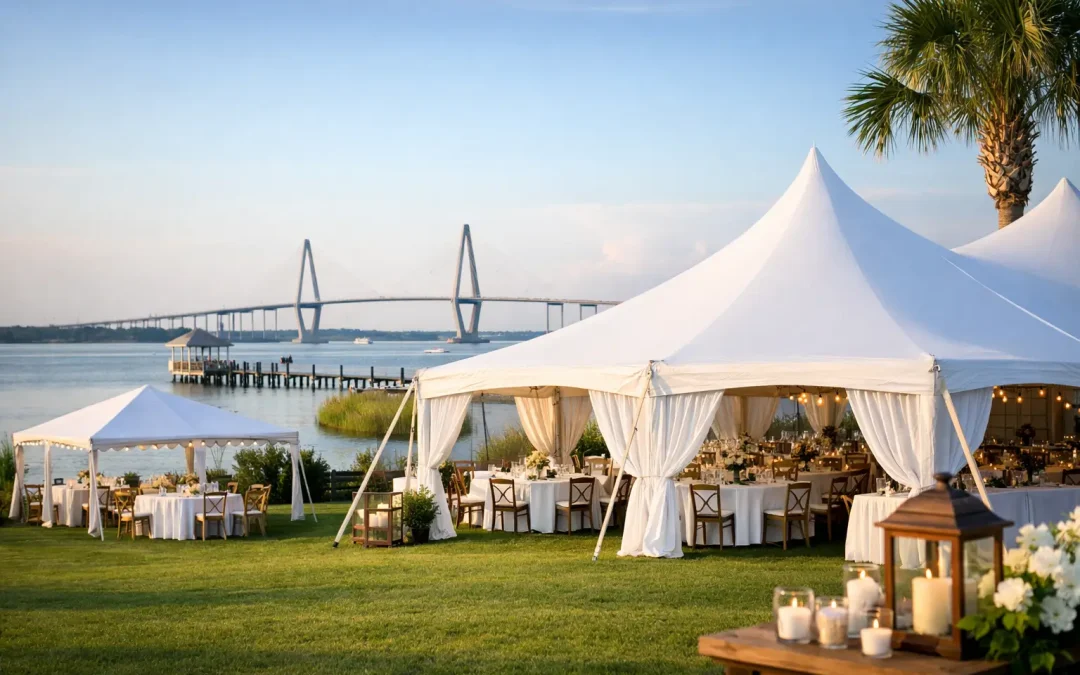
In Charleston and the surrounding Lowcountry, tent sizing also has a practical layer. Weather shifts quickly, ground conditions vary by venue, and many events need to balance open-air charm with a dependable backup plan. A well-sized tent should feel generous, not oversized and empty, and never squeezed.
How to use an event tent sizing guide
The first number most hosts reach for is guest count, and that is a good place to start. But guest count alone does not tell you how much tent space you actually need. A seated dinner for 100 guests requires something very different from a cocktail-style welcome party for the same number. Once you add a dance floor, bar, buffet, lounge seating, or staging, the footprint changes quickly.
Think of tent sizing as a layout decision, not just a coverage decision. You are planning room for people, furniture, service paths, and the event moments that make the gathering feel polished. If guests will be seated for a full meal, your tent needs to support tables, chairs, and comfortable clearance around each one. If the event is more social and standing-room oriented, you can often work within a smaller footprint, but you still need circulation so the space feels easy and inviting.
Start with your event style
A cocktail reception usually needs the least amount of tent space per guest. With scattered highboys, a bar, and a few soft seating moments, guests tend to move throughout the evening. That format gives you more flexibility, especially for welcome parties, rehearsal gatherings, and corporate mixers.
A plated dinner needs more square footage because every guest has an assigned seat and tables require breathing room. Round tables, farm tables, and mixed seating styles all affect the layout slightly differently. If you want the evening to feel refined rather than tightly packed, that extra space matters.
Buffet service also changes sizing. A buffet line takes up more room than many hosts expect because it is not just the table itself – it is the queue, the server access, and the circulation around it. The same is true for satellite bars, dessert displays, escort card tables, or a specialty moment like a raw bar or caviar station.
Common tent sizing ranges by guest count
These ranges are useful for early planning, but they work best as a starting point. Final sizing should always reflect your exact floor plan.
For around 50 guests, a smaller tent may be appropriate for a cocktail event, while a seated dinner often needs a mid-size footprint to keep tables comfortably spaced. For 100 guests, many hosts are surprised by how quickly a tent grows once dining, a bar, and service space are included. For 150 to 200 guests, tent selection becomes more strategic because the event may require multiple connected spaces or a larger structure that can support dining and dancing under one roof.
As a simple rule, seated events need noticeably more room than standing receptions, and events with multiple activations need more room than their guest count suggests. If your vision includes dinner, dancing, and lounge seating, treat those as separate space needs rather than assuming one open tent will somehow absorb everything.
What takes up space inside a tent
Tables and chairs are the obvious starting point, but they are only part of the equation. Guests need room to sit down and stand up easily. Servers need clear paths. Planners, caterers, and photographers all benefit from a layout that does not force constant bottlenecks.
A dance floor can become the make-or-break element in your sizing plan. If dancing is central to the evening, it should not be squeezed into the leftover corner of the tent. The same goes for the band or DJ area. Entertainment setup often requires more square footage than hosts initially expect, especially when speakers, lighting, or staging come into play.
Bars also have a larger footprint than most early estimates allow. A well-placed bar needs room for guest approach, service behind the bar, and circulation around it. If you are planning a high-end guest experience, giving the bar enough space helps the entire event feel more relaxed.
Tent size planning for weddings
Wedding tents usually need the most detailed planning because they combine ceremony backup, dining, dancing, rentals, and guest comfort. A tent that fits reception tables may not leave room for a band, lounge grouping, or indoor-style entry moment. If you are building a layered wedding design, the tent has to support both beauty and movement.
For Charleston weddings in particular, it is wise to account for weather contingencies from the start. A tent that is only large enough for the ideal forecast can become stressful if sidewalls, heaters, or a rain-adjusted layout are suddenly needed. Leaving room for those shifts makes the day feel far more effortless.
Event tent sizing guide for corporate and social events
Corporate events and private parties often have more flexibility, but they still benefit from precise sizing. A networking reception may prioritize open flow and branded moments, while a holiday dinner may need more formal seating and catering support. Birthday parties, showers, and anniversary celebrations often blend multiple styles in one event, which means the tent has to carry more than one function.
That is where experienced layout planning helps. A tent should support the tone of the event just as much as the practical setup. Spacious enough to feel gracious, structured enough to keep service smooth.
Charleston-specific factors that affect tent size
In the Lowcountry, tent sizing is never just about guest count. Wind exposure, heat, seasonal humidity, and site access all influence what works well. At a waterfront property or open lawn, the tent may need additional perimeter space for anchoring or installation conditions. At a historic venue or private residence, tree lines, gardens, and drive access can shape the available footprint.
Ground surface matters too. A grassy lawn may seem straightforward, but slope, drainage, and soft ground after rain can affect tent placement and what flooring is needed. If flooring is added, that can influence both layout and budget. These are the kinds of details that are easy to overlook early and expensive to correct later.
That is also why local expertise matters. A tent plan that looks fine in a generic sizing chart may need adjustments for an actual Charleston property. Republic Event Rentals regularly works with the conditions, venues, and event styles common to the area, which helps translate vision into a setup that is both beautiful and workable.
When to size up
If you are deciding between two tent sizes, the larger option is often the better choice when guest comfort is a priority. This is especially true for weddings, formal dinners, and any event where guests will stay for several hours. A slightly more generous tent tends to feel more elegant and easier to service.
Sizing up also makes sense when your guest count may increase, when weather backup is essential, or when you know the event design will evolve. Florals, statement bars, lounges, and specialty stations all add presence. It is much easier to refine a spacious layout than to rescue a cramped one.
That said, bigger is not always better. An oversized tent can feel sparse if the event design does not fill it appropriately. The goal is proportion. You want enough room for the event to breathe, while still feeling cohesive and intentional.
The best way to get tent sizing right
The most accurate event tent sizing guide is a real floor plan built around your actual guest count, service style, and rental selections. That includes table layouts, entertainment, bars, catering needs, and weather contingencies. Once those pieces are mapped, tent size becomes much clearer.
This is where a full-service rental partner adds real value. Instead of guessing from a chart, you can plan around how the event will truly function. That approach helps avoid common issues like overcrowded dining layouts, undersized dance areas, or tents that leave no room for service support.
A beautiful event is never just about what fits. It is about how the space feels once guests arrive, settle in, and enjoy the evening. If your tent creates comfort, flow, and a sense of ease, you chose the right size.