


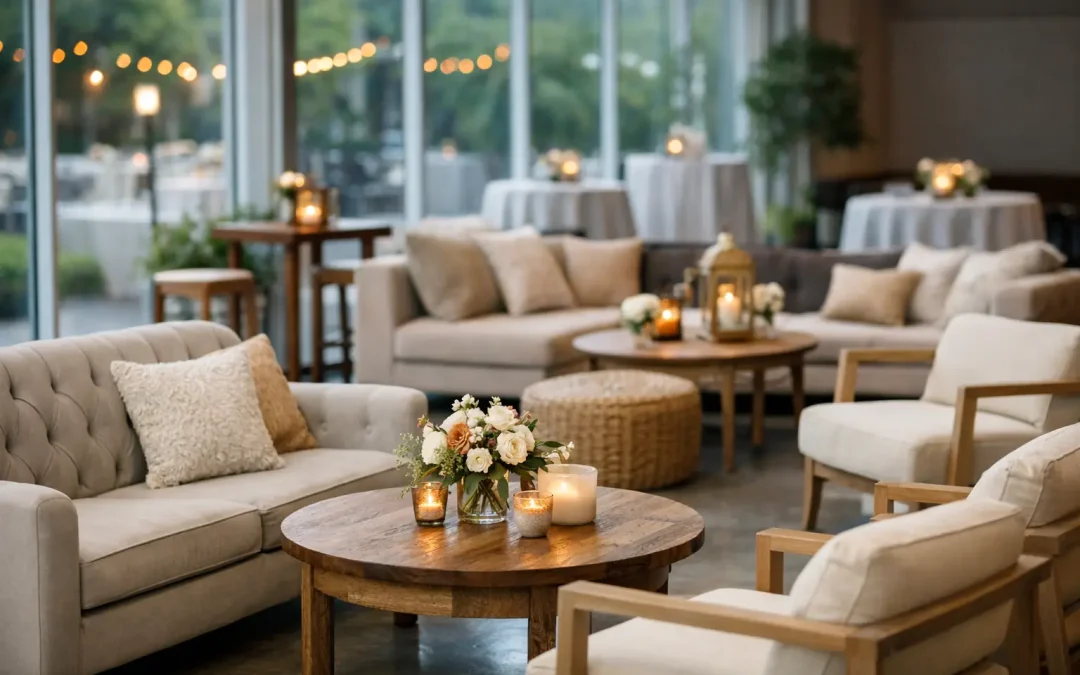
A beautiful lounge can change the entire feel of an event space. It gives guests a place to settle in, softens a large room, and adds the kind of layered design that makes a celebration feel thoughtful rather than simply furnished. If you are wondering how to plan lounge seating, the answer starts with more than picking a few attractive sofas. The best lounge setups balance comfort, flow, scale, and style so the space looks polished and actually gets used.
At weddings, lounge seating often becomes the bridge between ceremony and reception, cocktail hour and dinner, or dancing and conversation. At corporate events and private parties, it can create natural gathering areas that feel more welcoming than standard rows of tables and chairs. The goal is not to fill space for the sake of filling it. The goal is to create places where people want to linger.
Start with the purpose of the lounge
Before you choose a single piece, decide what the lounge is meant to do. A lounge near the dance floor will function differently than one placed at an outdoor cocktail hour or inside a tented reception. Some lounges are designed for quick conversation and visual impact. Others are meant to encourage guests to stay awhile.
This is where many event layouts either succeed or miss the mark. If the seating looks stunning but sits too far from the action, guests may ignore it. If it is too close to a bar line or service path, it can feel cramped no matter how lovely the furniture is. Purpose should drive placement, and placement should drive the furniture mix.
For a wedding, you may want one statement lounge for the couple’s portrait area and several smaller seating moments for guests. For a corporate event, you may need a more structured arrangement that supports networking without feeling stiff. For a private celebration, comfort may matter more than volume, especially if you are hosting a multigenerational crowd.
How to plan lounge seating around guest count
Guest count matters, but not in the way many people assume. You do not need lounge seating for every guest unless the event is designed as a fully seated cocktail-style experience. In most cases, lounge furniture works best as a complement to dining tables, cocktail tables, bars, and open mingling space.
A good rule is to think about how many people are likely to use the lounge at one time, not how many people are invited overall. At a wedding with 150 guests and a full reception layout, maybe 20 to 30 guests will use lounge seating at once. At a networking event with heavy mingling and no formal dinner, that number may be higher.
The size of the event also affects whether one large lounge or several smaller groupings make more sense. One central arrangement can create a strong visual focal point, but several smaller lounges often feel more natural and keep guests from clustering in only one area. If your venue has multiple zones, breaking the seating into a few curated moments usually improves flow.
Let the floor plan lead
The most successful lounge designs respect the architecture of the event. That means paying attention to entrances, exits, bars, buffets, dance floors, stages, and service routes before finalizing furniture placement.
In Charleston venues especially, layout decisions can shift depending on porches, courtyards, lawns, historic interiors, and tented spaces. A lounge that works beautifully in a ballroom may need a different footprint outdoors, where wind, uneven ground, and sun exposure come into play. This is one of the biggest reasons lounge seating should never be planned in isolation from the rest of the event design.
Leave enough room for guests to move comfortably around each grouping. If people need to squeeze between a sofa and a cocktail table or reroute around the back of a chair to reach the bar, the arrangement is too tight. On the other hand, if pieces are spaced too far apart, the lounge loses intimacy and starts to feel disconnected.
Scale is just as important as clearance. Oversized sectionals can overwhelm a smaller venue, while too many petite pieces can look scattered in a large tent or expansive lawn setting. The furniture should feel proportionate to the room, not simply attractive on its own.
Build each lounge like a conversation area
The best way to plan lounge seating is to think in terms of conversation clusters. Most lounges need a clear anchor, usually a sofa, paired with complementary seating and a table that gives the arrangement a finished center.
A common mistake is creating a lounge with plenty of seats but no real connection between them. When chairs are angled away from one another or a coffee table is missing, guests do not know how to use the space. Even at a standing event, lounge furniture should suggest an easy, inviting place to gather.
In most layouts, a sofa, two chairs, and a central table create a balanced base. From there, you can add side tables, ottomans, or accent pieces depending on the footprint and the formality of the event. If you are planning multiple lounges, repeat the visual rhythm without making every grouping identical. Cohesion matters, but a room feels more refined when each area has slight variation.
Match the lounge style to the event tone
Lounge seating should support the broader design story. That does not mean every piece has to match perfectly, but the materials, silhouettes, and colors should feel intentional alongside your tables, linens, florals, and venue.
For a classic Charleston wedding, that may mean elegant neutral upholstery, warm wood tones, and tailored shapes that feel timeless rather than trendy. For a coastal celebration, lighter textures and airy palettes may feel right. For a corporate gathering, cleaner lines and restrained color often create a more polished impression.
There is always a trade-off between making a lounge stand out and making it blend. A bold lounge can serve as a design feature, especially in a minimal venue. But if every piece competes for attention, the space can start to feel busy. Usually, one or two standout elements are enough, while the rest of the arrangement does the quieter work of grounding the room.
Think about comfort from a guest’s point of view
A lounge can photograph beautifully and still fall short in real life. Comfort depends on seat height, cushion firmness, table access, and how easily guests can enter and exit the arrangement in event attire.
This matters more than many hosts expect. Deep, low sofas may look dramatic, but they are not always ideal for guests in cocktail attire or older family members who prefer firmer support. Armless accent chairs can be visually light and useful in small spaces, but too many can make a lounge feel less settled. The right mix depends on your crowd.
You should also consider what guests need within reach. If drinks and small plates are part of the event, every lounge needs enough tabletop surface to be functional. A beautiful seating area without places to set a glass becomes decorative rather than useful very quickly.
Use lounges to improve the energy of the event
Lounge seating is not just a design detail. It influences how people move, gather, and stay engaged throughout the event.
A well-placed lounge can soften a large room and make it feel fuller earlier in the evening. It can encourage conversation away from congested areas like the bar or entrance. It can also give guests a reason to remain in a specific zone, which is especially helpful in venues with outdoor and indoor transitions.
At the same time, too much lounge seating can lower the energy if it pulls people too far from key moments. If dancing is the focus, place lounges close enough to the action that seated guests still feel part of it. If networking is the goal, keep the arrangements open and approachable rather than tucked into distant corners.
How to plan lounge seating for indoor and outdoor events
Indoor lounges usually offer more flexibility because the environment is controlled, but outdoor lounges often create the most memorable atmosphere. They just require more practical planning.
On lawns and courtyards, stability matters. Furniture should sit securely, and soft seating should make sense for the weather and season. Charleston events often call for contingency thinking around heat, humidity, coastal breezes, and the occasional sudden rain shower. Shade, tent coverage, and proximity to heaters can all affect whether a lounge feels inviting or abandoned.
Outdoor layouts also benefit from stronger visual definition. Rugs, lighting, and thoughtful grouping help anchor the seating so it feels like part of the event rather than furniture placed on a lawn. With a full-service partner like Republic Event Rentals, those details can be planned together so the lounge supports both design and logistics.
Don’t treat lounge seating as an afterthought
The most polished events plan lounge furniture early, not at the very end once the main rentals are selected. When lounge seating is considered from the beginning, it can shape the floor plan, improve guest flow, and add depth to the overall design. When it is added late, it often ends up wherever there is leftover space.
If you are deciding how much to invest, think about impact rather than quantity. A few well-placed, well-scaled lounge areas usually do more for the guest experience than a larger number of disconnected pieces. Good lounge seating should feel natural, elegant, and easy to use.
When the layout is right, guests may never comment on the spacing, scale, or flow. They will simply settle in, stay longer, and remember how welcoming the event felt. That is usually the clearest sign you planned it well.