

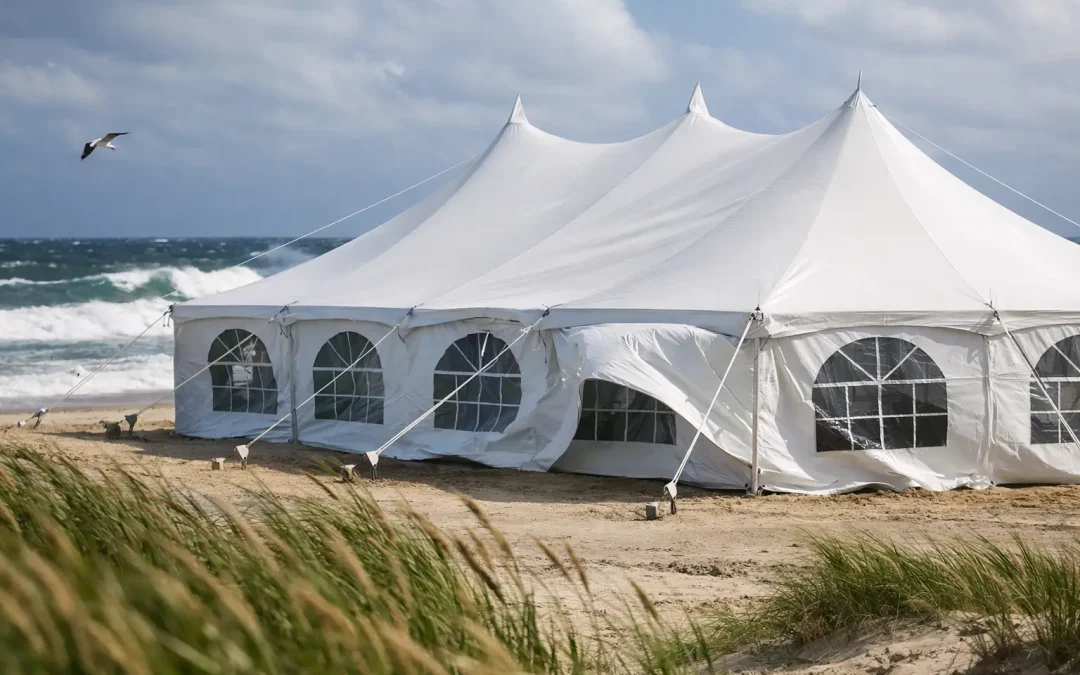
A calm waterfront forecast can change quickly in Charleston. One hour you have soft marsh breezes and golden light, and by cocktail hour the wind has picked up enough to rattle glassware and put everyone on edge. That is why a common planning question is simple and smart: can rental tents handle coastal wind? The short answer is yes, many can, but only when the tent, installation method, site conditions, and weather plan all match the setting.
For coastal events, the tent itself is only part of the equation. Wind performance depends on engineering, anchoring, layout, and professional setup just as much as fabric and frame. If you are planning a wedding, dinner party, fundraiser, or corporate gathering near the water, the right tent can absolutely create a beautiful and dependable event environment. It just needs to be chosen with real coastal conditions in mind.
Can rental tents handle coastal wind in Charleston?
They can, but not all tents perform the same way. A tent that works well for a sheltered garden may not be the right choice for an exposed lawn near the harbor or beachfront property. Coastal wind behaves differently than a light inland breeze. It can be steadier, stronger, and more unpredictable, especially in open spaces with little protection from trees, buildings, or elevation changes.
In Charleston and the surrounding Lowcountry, that means tent planning should never be based on appearance alone. A sailcloth silhouette may be elegant, and a clear top may be striking, but every tent style has limits. The question is less “Can it work?” and more “Is this the right structure for this particular site and forecast?”
That is where local experience matters. A professional rental team will look at the venue’s exposure, ground surface, event footprint, guest count, and season before recommending a tent. That process may feel more detailed than expected, but it is what helps prevent expensive last-minute changes and unnecessary risk.
What affects whether rental tents can handle coastal wind?
The biggest factor is tent type. Frame tents, pole tents, sailcloth tents, and clear span structures all behave differently under wind load. Some are better suited to open, breezy sites, while others are ideal for more protected properties where aesthetics are the top priority and conditions are easier to control.
Anchoring is just as important. A beautifully designed tent is only as secure as the way it is installed. On grass, tents may be staked into the ground. On hard surfaces or places where staking is not possible, ballasts or weighted anchoring systems may be required. The right solution depends on the venue and on the tent manufacturer’s installation requirements.
Site exposure also changes everything. A tent on a private estate tucked behind mature oaks will experience wind differently than one set up on a wide-open lawn beside the water. Even the orientation of the tent matters. Open ends that face prevailing wind can increase pressure inside the structure, while strategic placement may reduce that effect.
Then there is tent size. Larger tents are not automatically more vulnerable, but they do require more planning. Bigger footprints create more surface area for wind to interact with, which means engineering and anchoring become even more critical. Sidewalls, flooring, and interior installations can also affect how the structure responds.
Why professional installation matters more near the coast
This is not a category where shortcuts pay off. Coastal tenting should always be handled by a professional crew that understands manufacturer guidelines, wind ratings, local permitting requirements, and how to adapt to changing conditions.
Professional installation includes more than raising the tent. It means reviewing the site in advance, identifying underground utility concerns, confirming staking feasibility, checking for drainage issues, and planning for accessories like sidewalls, lighting, flooring, and climate control. Every one of those elements can affect safety and comfort.
For example, sidewalls can be useful in wind and light rain, but they also change airflow. In some cases they improve guest comfort. In others, they need to be managed carefully depending on wind direction and forecast. The same goes for doors, drape, and tent leg draping. Beautiful details still need to function well in live conditions.
A full-service partner such as Republic Event Rentals approaches tenting as both a design decision and an operational one. That balance matters in Charleston, where style is expected but weather rarely follows the mood board.
The trade-offs between beauty and wind performance
Most clients are not choosing between a “pretty” tent and a “safe” one. With the right planning, you can have both. Still, there are trade-offs worth understanding.
Pole and sailcloth tents often bring the soft, romantic profile many couples love. They can be stunning for coastal weddings, especially on lawns and private properties. But they also require specific staking conditions and may not be the best fit for every exposed location.
Frame tents offer more flexibility in certain settings because they do not rely on center poles in the same way. That can help with layout, especially for dance floors, long dining tables, bars, and lounge groupings. In some cases, they are also a practical choice for tighter or more complex footprints.
For highly exposed sites or events where weather resilience is the top concern, engineered structures may be the stronger option. They are typically less whimsical in appearance than sailcloth, but they offer confidence and versatility, especially when paired with flooring, sidewalls, and climate considerations.
The right answer depends on what matters most for your event: visual style, layout flexibility, or maximum weather preparedness. Often, the best solution is the one that balances all three rather than overcommitting to one.
What to ask before booking a tent for a coastal event
If you are comparing options, ask how the tent will be anchored at your venue and whether the site has any restrictions that affect installation. Ask whether the tent style being proposed is appropriate for an exposed coastal setting, not just whether it is available.
It is also worth asking what happens if the forecast changes. A strong rental partner should be able to explain weather thresholds, sidewall options, installation timing, and whether a backup plan should be considered. That backup might involve choosing a different structure from the start, adjusting the layout, or shifting certain event elements under more protected coverage.
You should also ask about the details that affect guest experience during windier conditions. Will dining tables feel stable? How will lounge furniture, bar setups, florals, and candles be managed? Is flooring recommended? These questions may sound small, but they shape whether the event feels polished or improvised when the wind picks up.
Can rental tents handle coastal wind for weddings and private events?
Yes, especially when the event is designed around the environment instead of pretending the environment does not exist. Charleston’s coastal charm is part of the appeal, and a tented event can be one of the most elegant ways to host outdoors. The key is respecting the setting.
For weddings, that may mean selecting a tent style that supports both the visual direction and the location’s actual exposure. For corporate events, it may mean prioritizing dependable guest flow, staging, and covered service areas. For private celebrations at home, it may mean using a tent to extend hospitality while also protecting the investment in rentals, catering, and decor.
The best tented events feel effortless to guests, but they are never casual behind the scenes. They are planned carefully, installed correctly, and supported by teams who know when a site is charming and when it is challenging.
When a tent may not be the whole answer
There are situations where the question is not just whether a tent can handle the wind, but whether the overall event plan should be adjusted. Extremely exposed sites, severe weather forecasts, or soft ground conditions after heavy rain may call for a different setup, a smaller footprint, or a stronger structure than originally envisioned.
That is not a failure of the tent. It is simply good event planning. The goal is not to force a concept to work at all costs. The goal is to host beautifully and responsibly, with enough flexibility to protect the guest experience.
A thoughtful rental partner will tell you when your first idea is strong and when it needs refinement. That kind of honesty is part of luxury service too.
Coastal events always carry a little weather suspense, and that is part of their character. With the right tent, the right installation, and a team that understands Charleston conditions, you can plan with confidence and still keep the setting that made you choose the coast in the first place.