


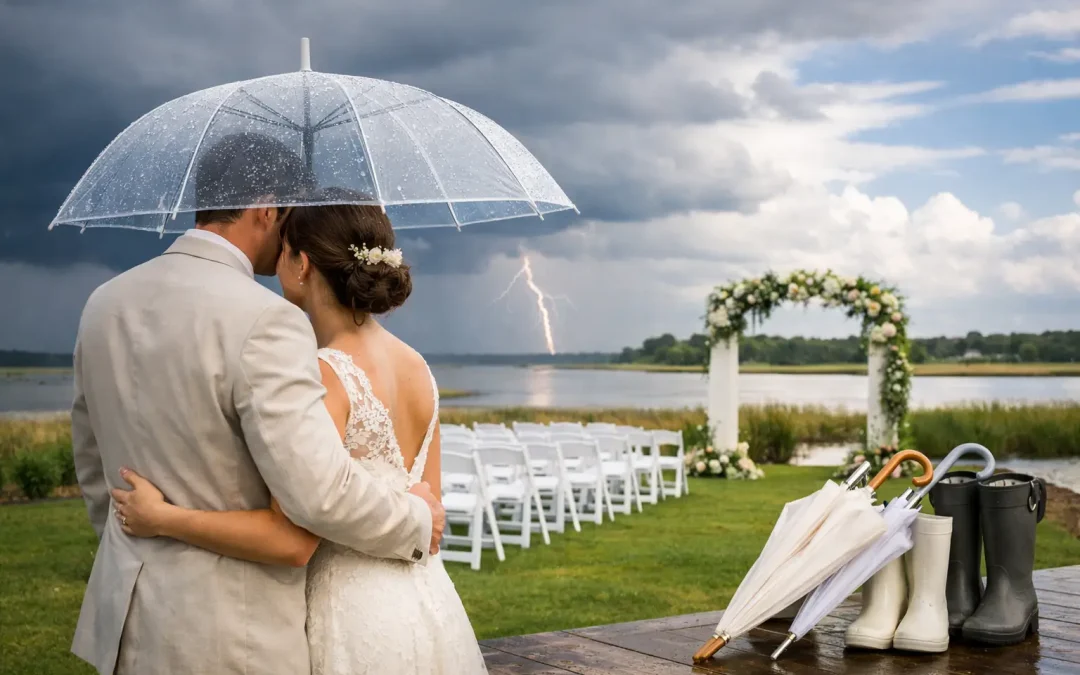
Charleston wedding weather can turn quickly. A ceremony starts in soft sunshine, then the breeze picks up off the marsh, the humidity settles in, or a fast-moving shower rolls through just before guests take their seats. That is exactly why a lowcountry wedding weather backup plan should be part of the design conversation from the start, not a last-minute fix.
The best backup plans do more than keep everyone dry. They protect the look of the event, preserve the timeline, and keep guests comfortable without making the day feel compromised. In the Lowcountry, that takes a little more thought than simply reserving a few umbrellas and hoping for the best.
What a lowcountry wedding weather backup plan really needs to cover
Most couples think first about rain, and that makes sense. But weather risk in the Charleston area is wider than that. Heat can be just as disruptive as a downpour. Wind can affect candlelight, place settings, signage, florals, and even whether guests can hear the ceremony. Damp ground can complicate seating layouts, dance floor placement, and catering access.
A strong plan accounts for four things at once: precipitation, temperature, wind, and timing. Timing matters because weather rarely behaves on a full-day schedule. You may only need coverage for the ceremony, or you may need a tented dinner with an open-air cocktail hour. The right solution depends on when the exposure happens and how much flexibility your venue allows.
That is why the smartest approach is not asking, “What if it rains?” It is asking, “What parts of the day are vulnerable, and what would keep them beautiful and functional?”
Start with the venue, not the forecast
A forecast can change several times before wedding day. Your venue conditions are much more reliable for planning. Some Lowcountry venues offer natural protection through covered porches, indoor rooms, sailcloth tent pads, or mature tree canopies. Others are stunning because they are exposed – waterfront lawns, open fields, historic courtyards, rooftop spaces.
Each setting creates a different backup strategy. A waterfront property may need wind planning well before it needs rain planning. A garden venue may have shade, but poor drainage after a storm. A tent-friendly lawn may solve for rain, but still need cooling and flooring to feel comfortable in late spring or summer.
This is where local experience matters. Charleston-area weddings are shaped by live oaks, salt air, marsh moisture, afternoon storms, and uneven ground. A beautiful event setup has to respect those conditions, not fight them.
The best backup plan is usually designed in from day one
Couples sometimes worry that planning a weather backup will dilute the original vision. In practice, the opposite is usually true. When the backup is considered early, it can be styled with the same intention as the primary plan. Rentals, layout, lighting, linens, and lounge pieces can all be selected with enough flexibility to work beautifully in more than one setting.
A tent is the most obvious example, but not every wedding needs one. Sometimes a covered veranda and an indoor dining room are enough. Sometimes a clear-top structure is worth the investment because the event still feels open to the landscape. Sometimes a full tent is necessary, but the interior details – flooring, chandeliers, draping, refined seating, and layered tabletop rentals – are what keep it from feeling like Plan B.
That distinction matters. Guests can tell when a wedding has been reworked under pressure. They can also tell when a couple and planner prepared thoughtfully. One feels stressful. The other feels polished.
How to build a lowcountry wedding weather backup plan without overcorrecting
The goal is not to prepare for every imaginable scenario with maximum expense. It is to make strategic decisions that fit your season, venue, guest count, and style.
For spring and summer weddings, heat management often deserves as much attention as storm coverage. Shaded ceremony seating, cold beverage stations, fans, and tented dining can dramatically improve the guest experience. If your event is in the afternoon, direct sun may be your biggest issue even if rain never appears.
For fall weddings, wind and temperature swings become more relevant. The afternoon may feel lovely, while the evening turns cool enough for guests to leave the lawn early unless there are heaters or a covered space. Coastal breeze also affects candles, escort displays, lightweight linens, and any paper goods left unsecured.
Winter weddings in Charleston are usually milder than in many other markets, but “mild” is not the same as comfortable at night. If the celebration includes outdoor cocktails or lounge seating, warmth should be addressed with the same care as aesthetics.
There is always a trade-off. A fully tented event gives protection and planning certainty, but it changes the visual feel and budget. A flexible indoor-outdoor layout preserves openness, but may require faster decision-making and more coordination on wedding week. Neither is automatically better. The right choice depends on what matters most to you.
Rentals that make the backup plan feel intentional
Weather planning works best when infrastructure and design are treated as one conversation. The practical pieces should support the aesthetic, not interrupt it.
Tents are often the foundation, but the details underneath are what shape the guest experience. Flooring helps with muddy ground, heel stability, and overall finish. A proper dance floor creates structure and protects against soft terrain. Thoughtful seating layouts keep transitions smooth if the ceremony needs to move. Bars, lounge groupings, and catering support pieces can also help an event continue gracefully even if the original layout changes.
Tabletop and linen choices matter more than people expect in a weather backup plan. Heavier linens perform better in a breeze. Glassware and flatware should be selected with outdoor service in mind. Napkin presentation, place card placement, and menu cards may need slight adjustments if there is wind or moisture in the air.
If the event needs heating, cooling, or covered service areas, those elements should be planned to blend into the overall environment. The most successful weddings do not separate beauty from logistics. They combine them.
Decision timing is everything
One of the hardest parts of wedding weather planning is deciding when to activate Plan B. Call it too early and you may feel like you gave up on a beautiful outdoor setting. Wait too long and vendor setup, guest communication, and the ceremony flow become harder to manage.
That is why a clear decision deadline matters. Usually, the best approach is to agree in advance on who makes the final call, what weather conditions trigger it, and what time the decision must be made. This should not be vague. It should be practical and specific.
For example, if tent installation, floor placement, or a room flip requires lead time, that timing should shape the decision window. If a venue has a strong indoor option already set aside, there may be more flexibility. The point is to remove confusion before wedding week begins.
This is also where a service-minded rental partner can make a real difference. Teams that understand Charleston venues and coastal conditions can help assess what is realistic, what needs to be reserved in advance, and what should never be left to chance. For couples who want both elevated design and operational ease, that guidance is often the difference between stress and confidence.
Guest comfort is part of the luxury
A weather backup plan is not only about protecting flowers, linens, or furniture. It is about hospitality. Guests remember how a wedding felt. Were they shaded during the ceremony? Could they hear the vows over the wind? Did dinner stay comfortable after sunset? Did the room feel calm and welcoming, even after weather changed the setup?
Luxury does not mean pretending the forecast does not exist. It means preparing so thoroughly that guests barely notice the adjustment.
That might look like a tented cocktail hour with beautiful bars and soft seating instead of a scramble indoors. It might mean heaters placed where guests gather naturally, not just where there was open space. It might mean adjusting the floor plan so servers, musicians, and photographers can still move easily under cover. These are small choices, but they shape the entire experience.
What couples regret most
Most weather-related wedding regret comes from one of two places. Either there was no backup plan at all, or the backup was treated as a stripped-down emergency version of the real event.
The better mindset is simple: your wedding deserves a primary vision and a secondary version that still feels like your wedding. Not identical, but equally considered. That is especially true in the Lowcountry, where natural beauty is part of the appeal and weather is part of the reality.
If you are planning a Charleston celebration, build for both. Ask how the ceremony shifts if rain arrives. Ask how dinner feels if the air stays heavy and warm. Ask what changes if the breeze turns stronger than expected. And ask those questions early enough that the answers can still be elegant.
A well-planned weather backup does not take away from the magic of an outdoor wedding. It gives that magic a place to land, even when the forecast has other ideas.