


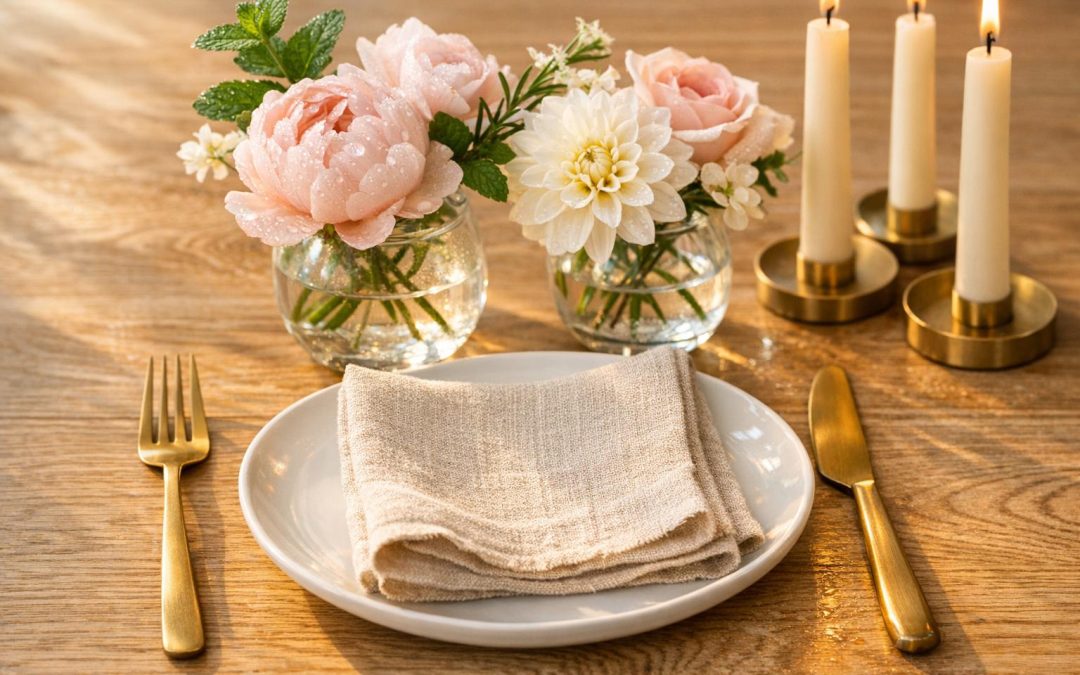
Creating a beautiful and memorable tablescape doesn’t require a professional decorator – especially when you can harness the natural charm of garden flowers and thoughtfully chosen decor. Whether it’s an intimate dinner party, a wedding rehearsal dinner, or a stylish corporate event, mastering the art of table setting allows you to elevate your gathering with ease.
Drawing inspiration from nature, this guide blends aesthetic styling with practical tips, helping you create a dinner table that’s both striking and functional. From choosing the right textiles to arranging show-stopping blooms, follow these steps for a sophisticated and harmonious setup.
The Art of Table Setting: Where to Begin
When setting a dinner table, it’s important to start with a cohesive vision. In the video, the creator begins by selecting key visual elements – textiles, place settings, and floral arrangements – while ensuring they complement one another. By grounding the design in a central theme (in this case, a dinner with seafood), each aspect of the tablescape contributes to a unified, polished look.
1. Choosing the Right Textiles
The tablecloth and napkins are the foundation of the design, setting the tone for the entire table. Start by choosing napkins with a pattern, color, or texture that speaks to your event’s theme. For example, the creator opted for napkins inspired by seafood to tie into the meal’s focus.
To find the perfect tablecloth:
- Lay out several options and compare them to your chosen napkins.
- Consider balance: Avoid overly bold patterns if you’re incorporating intricate floral arrangements or decorative plates.
- Look for complementary tones that harmonize with the overall color palette.
In the video, the creator selected a floral-patterned tablecloth with green and brick-red hues. Although the simpler option seemed promising at first, the floral design ultimately added more visual interest and depth.
2. Selecting Dinnerware and Place Settings
Once your textiles are in place, it’s time to choose your dinnerware. Consider whether you want your plates to serve as a neutral backdrop or as an accent piece. For instance:
- Neutral plates (such as creamy white) are versatile and won’t compete with other design elements.
- Decorative plates with floral or colorful details can enhance the theme and create visual layers.
The video’s creator opted for floral plates that echoed the tablecloth’s design – a choice that tied the elements together seamlessly while adding charm to the overall presentation.
3. Arranging Garden Flowers for Maximum Impact
No tablescape is complete without a stunning floral centerpiece. Using seasonal garden blooms, the creator demonstrates how to craft an arrangement that’s bold yet practical. The key takeaways here are:
Think Big, Simplify Small
Instead of multiple small arrangements, focus on creating one centerpiece that serves as a focal point. This approach not only commands attention but also leaves plenty of room for food and conversation.
Layer Your Flowers
- Start with structure: Use sturdy flowers like sedum as the base to anchor the arrangement.
- Add variety: Incorporate multiple textures and shapes by using a mix of flowers such as dahlias, roses, and echinacea.
- Remove excess foliage: Strip leaves from stems to keep the arrangement clean and airy.
In the video, the creator’s thoughtful layering of sedum, dahlias, roses, and rose hips resulted in a dynamic composition. Adding terracotta pots with candles further enhanced the organic, garden-inspired feel.
Tie It All Together
If your centerpiece feels disconnected from the rest of the table, consider adding small pops of color to bridge the elements. For example, a touch of blue in the floral arrangement reflected the napkins’ accents, creating a unified look.
4. Functional Elegance: Practical Tips for Hosting
While aesthetics are important, functionality should never be overlooked. Keep these tips in mind for a seamless dining experience:
- Avoid overcrowding: A single, removable centerpiece allows guests to have unobstructed views and room for shared dishes.
- Stay tidy: Prepare floral arrangements off the table to prevent mess and minimize cleanup.
- Incorporate ambiance: Use candles or other soft lighting to create a warm and inviting atmosphere.
By combining thoughtful design with practical considerations, you can ensure that your table not only looks beautiful but also enhances your guests’ comfort and experience.
Key Takeaways
- Start with a clear theme: Let your event’s purpose or menu guide your tablescape design.
- Choose complementary textiles: Pair patterned napkins with tablecloths that enhance, not overwhelm, the design.
- Layer thoughtfully: Build floral arrangements using a mix of textures and heights for a dynamic centerpiece.
- Opt for a single bold statement: A large centerpiece is both striking and space-efficient, leaving room for food and conversation.
- Match colors across elements: Tie your napkins, plates, and flowers together with shared hues for a cohesive look.
- Prioritize functionality: Keep the table clean, organized, and guest-friendly.
Conclusion
Setting a beautiful dinner table with garden flowers combines creativity with thoughtful planning. By starting with a central theme and layering complementary elements – from textiles to flowers – you can create a tablescape that’s elegant, inviting, and uniquely yours. Whether you’re hosting a casual gathering or a formal event, these techniques ensure your table leaves a lasting impression on your guests.
Embrace the art of tablescaping and let your vision shine through every detail. With nature as your inspiration, your next celebration is bound to be both stylish and unforgettable.
Source: "From Garden to Table | Setting a Beautiful Dinner Table with Fresh Flowers" – Little French garden, YouTube, Aug 26, 2025 – https://www.youtube.com/watch?v=ZuSDrOdr0W0